



WHITE RIVER JUNCTION – Everyone knows the deer fly–but do you really know the deer fly?
With approximately 29 species in the genus Chrysops in Vermont, there is a lot to know. For example, larvae can live up to three years as decomposers and predators in water, and the eyes of adult deer flies are among the most psychedelic things in the natural world. A few species even have color patterns that rival any butterfly. Males (which are rarely encountered) don’t bite and are potential pollinators since they visit flowers for nectar.
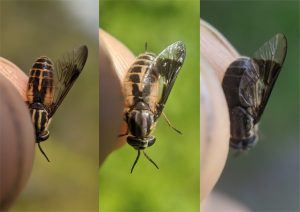
In many ways, they are the perfect group for nature enthusiasts: ubiquitous, diverse, easy to collect, and relatively easy to identify, yet for some reason, they don’t get the attention they deserve.
July is an ideal time for deer fly appreciation since diversity seems to peak early in the month and overall abundance climbs through the end of the month. Boggy, forested areas are great places to find uncommon species, but every site seems to have a unique suite of species, with as many as 10 different species in a single area.
So next time you swat one off the dog or pull one from your hair, take a second to appreciate it and then photograph it for the Vermont Atlas of Life on iNaturalist. A clear shot of the wings and abdomen is enough to identify many species, though side and face shots are also helpful. A straightforward and well-illustrated key can be found at cjai.biologicalsurvey.ca/articles/tm-08/. There are also plenty of other Tabanidae that you may encounter as well, including some frighteningly large ones and a genus (Stonemyia) that only visits flowers and doesn’t suck blood. Just maybe, come September this year, you will find yourself missing deer flies.
Spencer Hardy is a staff member at the Vermont Center for Ecostudies.

