

GREENSBORO – Zoryan Ivahkiv-Gray gave the second talk in the Greensboro Summer Lecture Series at the Greensboro United Church of Christ on Thursday, Aug. 1, about creating a pollinator community in Greensboro.
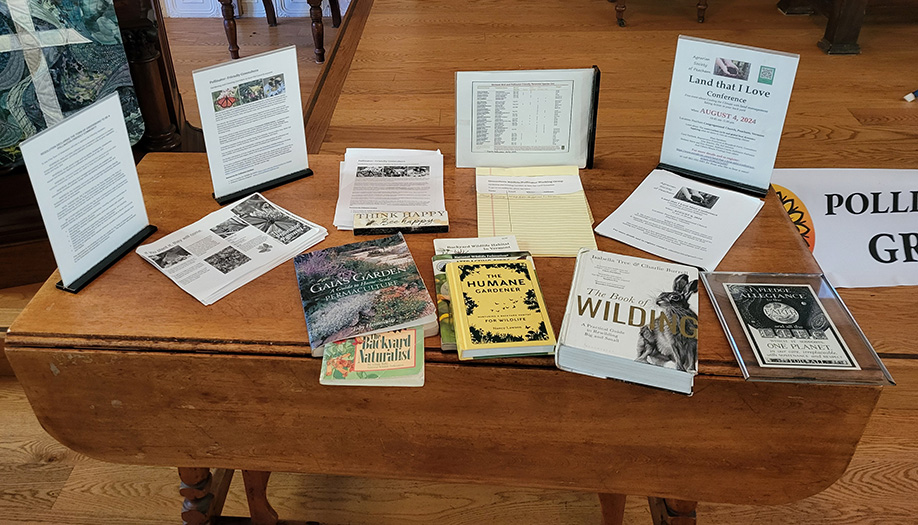
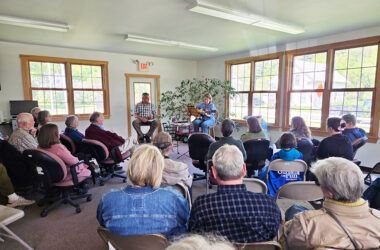
A collection of resources related to pollinators displayed by Zoryan Ivahkiv-Gray at his Summer Lecture “Creating a Pollinator Community,” on Thursday, August 1 in the Greensboro United Church Sanctuary. Gray shared the history of identifying the problem for pollinators and developing the solutions that have resulted in a pollinator-friendly Greensboro.
Ivahkiv-Gray went through the problems with the measurable current decline of pollinators for vegetables and fruits locally and worldwide, practical solutions to this serious issue that we all can get involved with, and a brief overview of the Greensboro pollinator movement. His talk was a very well organized and illustrated presentation.
First, why is the pollination of plants so important? In order for plants to produce mature seeds, generally to spread and propagate the next generation, and in particular as vegetables and fruit for our food, pollen has to be transferred from the male parts of the flower to the female parts. While some of this is accomplished by wind, 75% of the pollination occurs by various insects such as bees, flies, wasps and butterflies as well as hummingbirds during the day and by moths at night. Cross pollination, where pollen is carried to other, similar plants on the bodies of pollinators, has evolutionary advantages such as adding to the complexity of genetic strains.
There are over 350 thousand species of pollinators in the world They have evolved over millions of years in symbiotic relationships with plants have a very specific connection to a specific plant, like monarch butterflies to milkweed flowers. The combinations of pesticides used widely in large scale agribusiness crops, such as corn, much warmer temperatures due to increased carbon dioxide in the atmosphere and habitat destruction has resulted in a significant decrease in pollinators, which in turn is endangering our food supply.
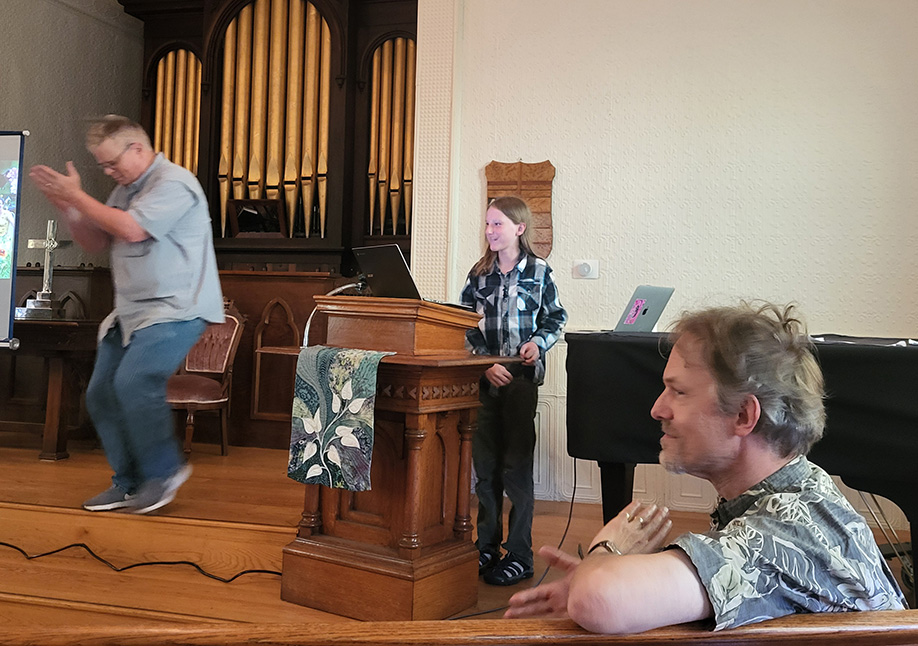
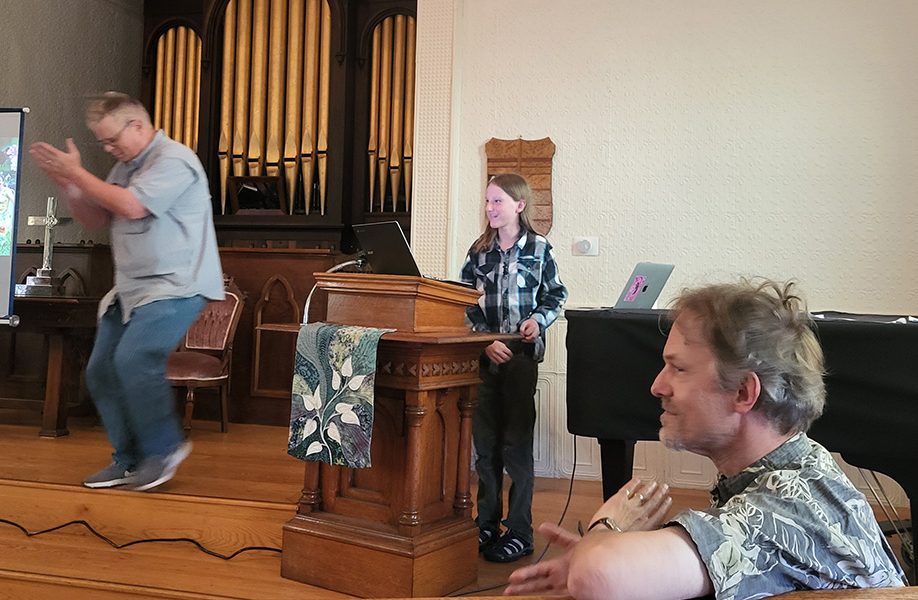
Zoryan Ivahkiv-Gray (left) being introduced by Pastor Ed Sunday-Winters at Gray’s Greensboro Summer Lecture “Creating a Pollinator Community,” Thursday, August 1 in the Greensboro United Church Sanctuary as his Dad, Adrian Ivakhiv looks on.
So, what can we all do to reverse this decline? Ivahkiv-Gray, who is 15 years old, has been coming to Greensboro in the summers with his parents for all his life. For the past few years he has been experimenting with workable solutions at the home of his grandparents Clive Gray and Nancy Hill, on Greensboro’s Baker Hill Road.
He has replaced parts of the grass lawn with wildflower gardens along the road simply by not mowing there and letting native flowers emerge, practicing permaculture vegetable gardening with companion plants that help repel unwanted predators, by planting a variety of shrubs and by making brush piles for animals to winter over within. Already he has seen an increase in bumblebees, fireflies, swallowtail butterflies and warblers in the vicinity.
Ivahkiv-Gray has made presentations about the importance of pollinators at the State House in Montpelier and on Central Vermont radio stations, been interviewed by VTDigger and spoken out at several other locations around the state.
Positive signs are the passage of laws banning the use of certain pesticide coated seeds that have been linked to the decline of bees and hive collapse by Quebec, New York State, and now Vermont.
A very important part of the movement is to educate everyone about the benefits to the environment with personal conversations and putting up signs explaining what can be done around the home, stimulating meaningful discussions.
This spring a Pollinator Declaration was introduced at the Greensboro Town Meeting and passed, encouraging people to avoid using pesticides and to cultivate more areas of native plants in order to create a Pollinator Friendly Community.
Ivahkiv-Gray and other local residents have formed the Greensboro Wildlife/Pollinator Working Group, that has been studying the possibilities of developing pollinator corridors and pathways to expand wildlife habitats in coordination with the Greensboro Conservation Commission. More information on their work can be found at [email protected].
One of the German philosopher Emmanuel Kant’s rules of thumb was the question, “If everyone was doing what I am doing, would that be a good thing?” In this matter, it certainly would be a good thing if we all avoided pesticides, practiced organic gardening, replaced our lawns with wildflower areas and worked toward a more wildlife friendly environment. This is the real power we have, both as individuals and as communities, to reverse negative effects of climate change.

David K. Rodgers
David K. Rodgers is a writer, mason and card carrying dilettante, who dabbles and babbles in art. He has lived in East Craftsbury for the past 40 years.
