


NORTHFIELD – Weeding is often a reality of summer landscape maintenance. Some people don’t mind weeding, some highly dislike it, and other people fall somewhere in between.
Weeds are not necessarily a certain group of species. They are plants that are unwanted in a particular area. Therefore, a weed to one person may not be a weed for another.
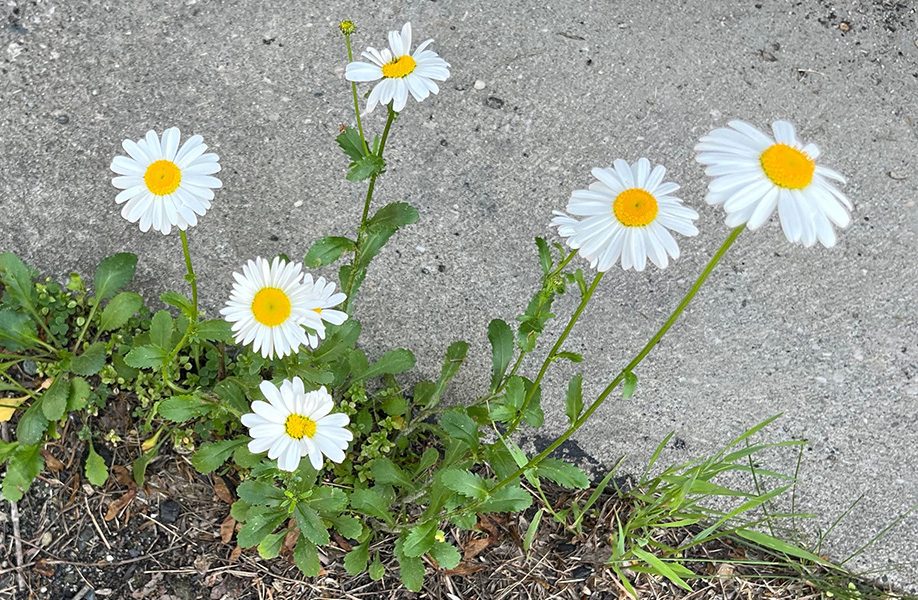
Unwanted plants grow everywhere from vegetable gardens to perennial beds, in the mulch under trees, in pollinator gardens and even in hardscapes like driveways, gravel drip edges, hardpack paths and patios.
Most often, weeds can be removed by hand or using hand tools such as weeder hoes, stirrup hoes or hand weeders. While this works well enough in the soft soil of garden beds, or even lawns, weeds that grow in rocky, compacted areas like hardscape surfaces are another story.
One way to manage stubborn weeds that grow in patios, driveways or paths is flame weeding. Flame weeders are hand-held, propane-powered torches that use high heat to disrupt plant growth.
Contrary to what the name implies, these tools are not for lighting plants on fire. In fact, this is a scenario that should be carefully avoided. The heat from the torch ruptures the walls in the plant cells. Soon after, the plant wilts and dies.
This method works best on broad-leaved plants. It will not be as effective on weeds that are grasses. Some plants may need multiple flame weeding attempts as new growth starts to appear.
Avoid flame weeding near buildings or flammable materials like plastic, mulch, dry plants or plant material. Flame weeding should only be done when the weather conditions would not cause a fire to spread. This means avoiding dry, windy weather, and areas with dried plants or plant matter. Keep a bucket of water nearby whenever flame weeding.
Use protection when flame weeding by wearing gloves, closed-toe shoes and clothing that will help prevent burning.
If flame weeding for the first time, try a small area to see how it works, and test how much flaming is needed. Each weed only needs to be flamed enough to start wilting and dulling in color before you move onto another weed.
If this still seems like a lot of time and effort, consider prioritizing the areas that you weed, or even changing the way you look at them. Weeds are a part of life, and we can choose to be bothered by them, or work with them, live with them or weed them out by hand or through flaming.
Bonnie Kirn Donahue is a UVM Extension Master Gardener and landscape architect from Northfield.

Bonnie Kirn Donahue
Bonnie Kirn Donahue is a UVM Extension Master Gardener and landscape architect from Northfield.
