


photo by Nathaniel Sharp
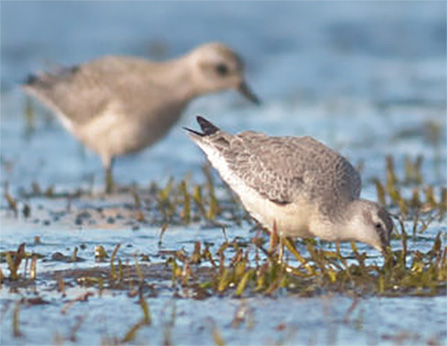
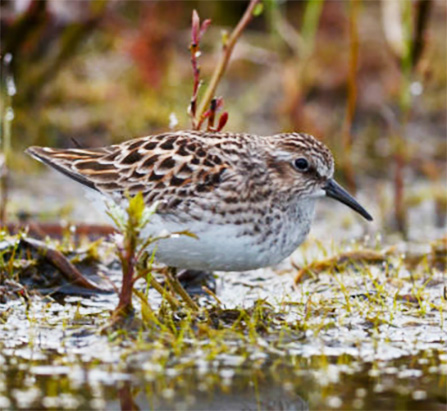
WHITE RIVER JUNCTION – Autumn bird migration in Vermont often brings to mind graceful flocks of Common Nighthawks and Canada Geese wheeling their way south, or perhaps the famously confusing fall warblers that move through the state in huge numbers. In this land-locked state, one would be forgiven for overlooking the migration of shorebirds often associated with brackish mudflats and the seacoast. Still, they can be some of the most exciting and interesting birds found in Vermont this time of year.
A group that includes sandpipers, plovers, godwits, dowitchers, and others, shorebirds have a tiny window to successfully breed, many of them in northern tundra, before making their globe-spanning migratory journeys to places as far away as South America’s tip. With such a short breeding season bookended by massive trans-oceanic migrations, Fall migration for some shorebirds can actually start as early as July. However, September is when we can expect to see the greatest diversity and numbers of shorebirds anywhere there are mudflats (or their equivalents) in the state.
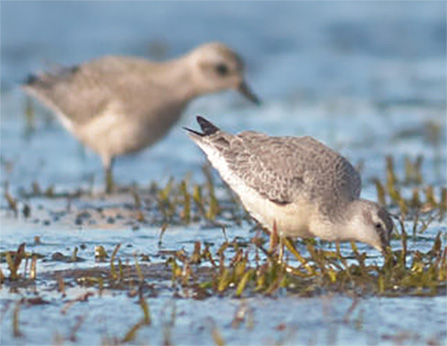
photo by Nathaniel Sharp
Many of the major shorebird hotspots are in the Champlain Valley. Places like Delta Park IBA and Dead Creek WMA can be magnets for these birds, especially during years when lake water levels are low and vast mudflats are exposed. Away from Lake Champlain, look for shorebirds anywhere there might be wet, exposed mud to poke around in search of food. In some cases, manure pits and muddy river edges can provide just enough habitat for a migrating shorebird or two to stop for some much-needed refueling on their long journey south.
Nathaniel Sharp is a staff member at the Vermont Center for Ecostudies.

