


VERMONT — Since 2020, those wishing to attend schools in-person have had to confront a range of face mask requirements. A group of dedicated Vermonters who are concerned about the negative effects of masks in schools has crafted a bill to prohibit educational institutions from requiring any student, staff or visitor to wear a mask for in-person attendance.
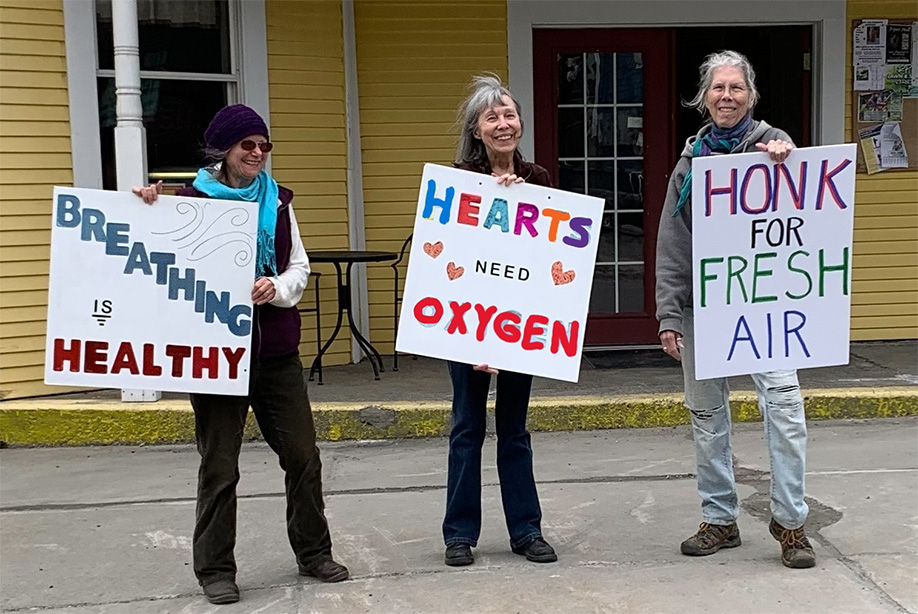
House Bill 393, “An act relating to the prohibition of requiring face masks in schools,” was crafted with legal and technical assistance from National Health Freedom Action and is now awaiting consideration by the Vermont House Committee on Education.
The group supporting the bill was organized by me, a health educator and director of Vermont Stands Up. I point out that masking requirements imposed on students and staff over the past five years have included a range of unscientific practices, such as double-masking, playing sports and outside recess with masks on and requiring people to wear them all day in hot environments.
As a health educator, the negative impacts of making people wear masks in school are impossible for me to ignore.
The hygiene and skin issues, the social development and speech impacts. Not being able to read my student’s faces to know how they are feeling or send encouragement with a smile. Then, of course, the numerous and largely unknown risks involved in long-term restriction of respiration, especially for growing bodies.
The Agency of Education has no evidence masks are safe or effective in these settings, and neither do the Centers for Disease Control. [Editor’s note: Considerable evidence from peer-reviewed studies is publicly available with an example from a CDC publication cited below.] It would be unethical to conduct such a study, I have concluded.
In the fall of 2021, facing a second year of mask requirements in order for his children to attend school with their friends, one parent at a school board meeting shared the following comments:
“I want [my kids] there with you [in school] and to have the chance to develop and be around their friends and everything, but I don’t want them to choke on their mask all day.
“Our children complain about this. I’m sure you guys see it in the classroom… I’m sure it’s very stressful on your end. We also hear about it every single night, how they hate wearing the mask, how they get headaches. It’s just not good for them, and it is giving them social issues, as well.”
When it comes to the decision to impose mask mandates in schools, everyone’s top concern is to protect students with special health needs. Now that the bill is officially introduced, the group’s next goal is to have expert testimony heard so that these concerns can be fully addressed.
Organizers are encouraging the House Committee on Education to hear testimony from Megan Mansell, who has the experience necessary to understand what it takes to protect children with special health needs. Mansell has served as former district education director over special populations integration, supervising the use of proper personal protective equipment (PPE) in hazardous environments and complying with the legal protection acts which ensure our safety in schools and workplace settings (ADA/OSHA/IDEA).
Two years ago, Mansell was in Burlington, at The Forum to Assess the Respiratory Hazards of Masks. The conference was held in response to the continuing mask requirements in at least one Vermont school that year. Mansell explained why face masks in schools do not meet their intended purpose of preventing viral transmission and believing that they do so can put vulnerable students at greater risk.
She explains: “Every mask you have ever seen on a child is unregulated, untested, and unsafe, with zero efficacy, fit, term of wear, or medical clearance standards. Zero.”
Dr. Vickie D. Master, chiropractor, a Children’s Health Defense New England chapter leader and advocate for this bill, is adamant about ending masks in schools. “Mask wearing in schools creates difficulty concentrating, socially connecting and leads to lower school attendance. It’s time for officials to start considering what’s in the best interest of the students and faculty.”
Readers can find the references and videos linked above at amyvt.com.
Amy Hornblas is a resident of Marshfield.
Editor’s note: The CDC web site includes a publicly available report seeming to contradict some statements made by Hornblas. Andrejko KL, Pry JM, Myers JF, et al. Effectiveness of Face Mask or Respirator Use in Indoor Public Settings for Prevention of SARS-CoV-2 Infection — California, February–December 2021. MMWR Morb Mortal Wkly Rep 2022;71:212–216. DOI: http://dx.doi.org/10.15585/mmwr.mm7106e1

