





BOLTON — Rudbeckia hirta. Solanum lycopersicum. Acer saccharum. Have you ever seen these names on plant tags or seed packets and wondered where they came from? We can thank Carl Linnaeus for taxonomy, the study of categorizing and naming organisms, and binomial nomenclature, the precise, two-termed naming system we use today.

photo by Bronislaw Drozka
Carl Linnaeus was a Swedish professor, scientist and doctor who was born in 1707. From a young age, Linnaeus was fascinated by the plants growing in his father’s garden.
At the time, plants were scientifically named in Latin by describing their features. These names were often long and described multiple unique plant traits. Linnaeus was determined to learn as many as he could, sometimes neglecting his formal studies.
Linnaeus began studying medicine when he was 19 years old. Notable naturalists and botanists of the time noticed his interest and ability. They invited him to become a botany teaching assistant at Uppsala University. During his 20s, Linnaeus continued to study, travel and collect specimens.
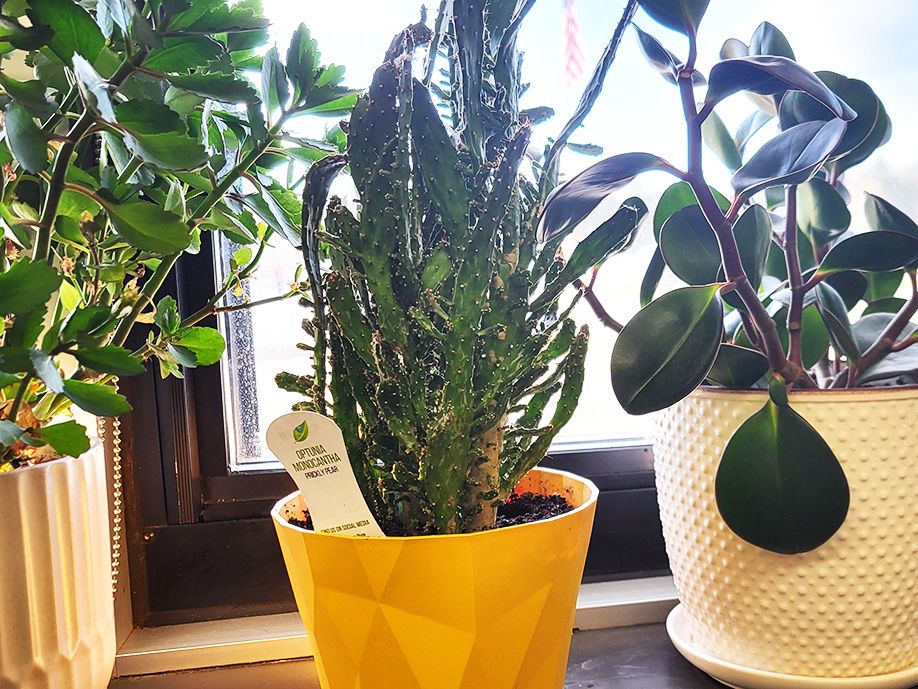
photo by Andrea Klepper
While traveling and collecting detailed information on the natural world, Linnaeus completed his medical degree, practiced medicine and became a professor of botany.
Linnaeus proposed a system to classify and describe these specimens by sorting and relating them to other known organisms. He first described this system in his 1735 work, “Systema Naturae.”
According to this initial system, plants and animals were sorted into a kingdom, class, order, genus and species. These categories are ranked from most general to most specific. This is why we use the genus and species names to precisely identify organisms.
Over time, scientific discoveries have expanded this system to include the ranks of kingdom, phylum, class, order, family, genus and species. Discoveries have required the addition of kingdoms to include non-plant and animal living things, like bacteria, fungi and single-celled organisms.
We call this system of giving scientific names binomial nomenclature. “Binomial” means two names and “nomenclature” means naming system.
Scientists italicize the two terms in a scientific name. The first is the genus and is always capitalized. The second is the species.
Plants that are a specific variety have an additional name after this. For example, Rudbeckia hirta var. hirta is the black-eyed Susan native to the eastern United States while Rudbeckia hirta var. floridana is a variety native to Florida. Sometimes, the variety name will appear in quotations instead.
Home gardeners can use scientific names to confidently obtain the exact plants they need.
One year when I was selecting seeds for my garden, I was excited to see huckleberry seeds. Thinking about my travels on the west coast and experiences with huckleberry jam and pie, I ordered the seeds.
I planted the seeds and was truly disappointed by my results. I had to add a lot of sugar to make the jam palatable, and the flavor was quite different. When I looked more closely at the seed packet, I noticed that the botanical, or scientific, name was actually Solanum scabrum, not the Vaccinium ovatum I was hoping for.
Next time you spot an interesting plant, take a closer look at its scientific name. This detail can ensure you get exactly what you expect. Thanks to Carl Linnaeus, we have a universal language to connect scientists and gardeners around the world.
Andrea Knepper is a UVM Extension Master Gardener from Bolton.

Andrea Knepper
Andrea Knepper is a UVM Extension Master Gardener from Fayston.
