
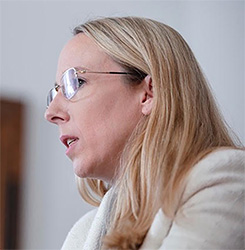



MONTPELIER – Education Secretary Zoie Saunders had sent a letter Friday requesting school district
leaders to respond within 10 days. Federal guidance argues schools have used diversity programs,
“social-emotional” learning and “culturally responsive” teaching to discriminate against students.
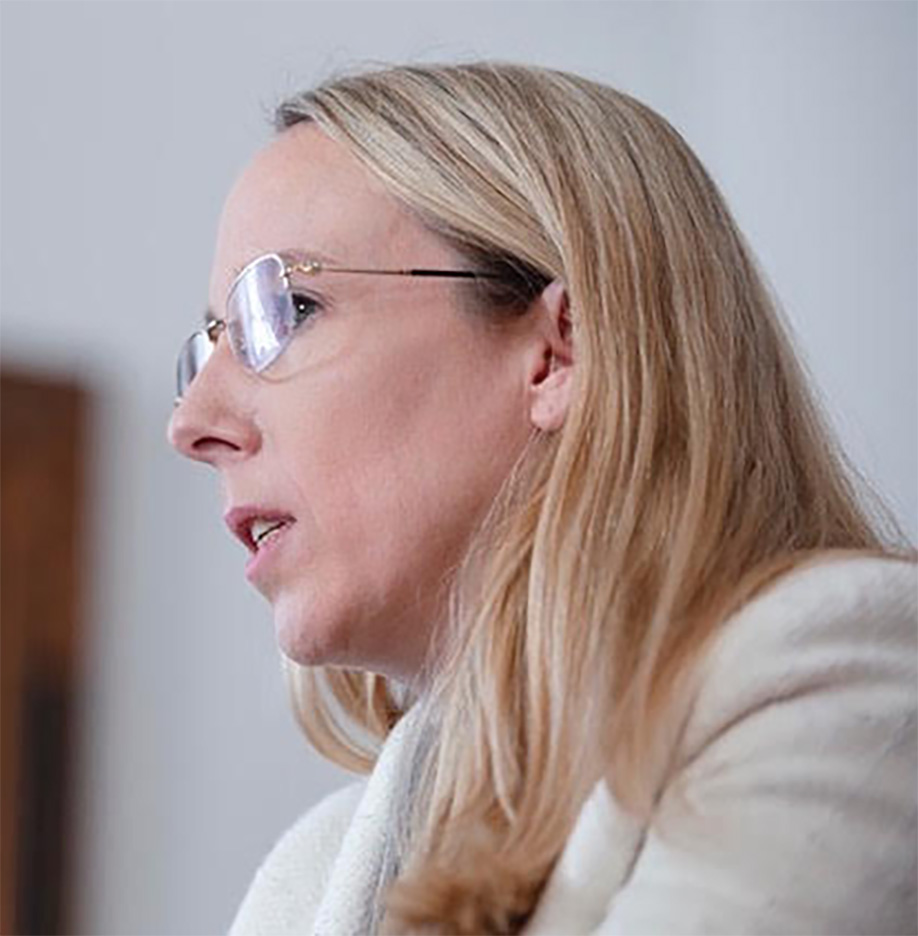
Wednesday, Feb. 12.
photo by Glenn Russell/VTDigger
Following a federal directive that schools ban “illegal” diversity, equity and inclusion-related programs, the Vermont Agency of Education last Friday asked school districts to submit compliance certifications.
But just three days later, after initially defending and clarifying the decision in the face of public backlash, Education Secretary Zoie Saunders backtracked late Monday afternoon, informing superintendents the state would instead send a single statewide certification.
“To be clear, the Agency of Education and the Attorney General’s Office continue to support diversity,
equity, and inclusion practices in our schools. Our communication on Friday was intended to make you
aware of the directive from the U.S. Department of Education regarding Title VI,” Saunders wrote
Monday afternoon, “and to reinforce that diversity, equity, and inclusion practices are lawful and
supported in Vermont. In no way, did AOE direct schools to ban DEI.”
So why all the confusion?
On Friday, Saunders told school district leaders they had 10 days to submit their certification, but also
said the agency believed certification required only that districts “reaffirm . . . compliance with existing
law.”
That communication came in response to President Donald Trump and his administration, who have
threatened to withhold funding to public schools that fail to comply with the expansive directive.
A letter dated April 3, from the U.S. Department of Education said noncompliance with the diversity
programming ban could result in schools losing a crucial stream of money meant to support economically disadvantaged students, known as Title I, among other sources of federal dollars. The letter cited Title VI of the Civil Rights Act of 1964, which prohibits discrimination in schools based on “race, color or national origin,” and also cited a 2023 U.S. Supreme Court Case against Harvard University and the University of North Carolina that restricted affirmative action.
Saunders, in the letter to district leaders, wrote that the federal restriction includes “policies or programs under any name that treat students differently based on race, engage in racial stereotyping, or create hostile environments for students of particular races.”
Programs highlighting specific cultures or heritages “would not in and of themselves” violate federal
regulations, the letter said. “We do not view this Certification to be announcing any new interpretation of Title VI,” Saunders wrote, adding that the agency’s “initial legal review” determined the federal letter only required the state to “reaffirm our compliance with existing law.”
But guidance from the federal education department cited by Saunders seems to restrict a variety of
practices, arguing that school districts have “veil(ed) discriminatory policies” under initiatives like diversity programming, “social-emotional learning” and “culturally responsive” teaching.
Following news of the agency’s letter to districts, Saunders released an initial public statement around 3
p.m. on Monday saying the federal demands would not require Vermont’s schools to change practices.
And in that communication, Vermont’s top education official gave no indication the agency would alter its request for districts to confirm their compliance with Trump’s directive.
“The political rhetoric around this federal directive is designed to create outrage in our communities,
confusion in our schools, and self-censorship in our policy making. But we are not going to allow the
chaos to control how we feel, or how we respond,” Saunders said in the statement. “Our priority is to
protect Vermont’s values, preserve essential federal funding, and support schools in creating positive
school environments free from the type of bullying and manipulation we see in our national politics
today.”
In the same press release, Vermont Attorney General Charity Clark said Vermont was in compliance with federal law.
“We will continue to protect Vermonters against any unlawful actions by the federal government,” Clark said.
One neighboring state, meanwhile, took a different tack. Soon after the Trump administration sent states last week’s letter, New York announced it would not comply.
Vermont and other states’ responses to the federal government are due April 14, and the state agency
said last week that its response was supposed to include school districts’ “compliance issues” and “the
Agency’s proposed enforcement plans” for those districts.
Before Saunders, in consultation with Clark, decided to rescind the state’s request for districts’
certifications, the Agency of Education’s actions drew criticism from the public education community.
Representatives from the Vermont School Boards Association, Vermont Principals’ Association, Vermont Superintendents Association and Vermont-NEA, the state teachers’ union, met with state leaders Monday. They later penned a letter to Saunders and Clark calling Vermont’s approach to the federal directive “not workable.”
“Expecting individual superintendents to certify compliance based on a cover letter (that they have not
yet seen) that clarifies the legal boundaries of their certification will lead to a patchwork of responses that could put Vermont and local school districts at risk,” the organizations wrote.
The coalition urged Vermont to follow New York’s lead and reject the certification process. That strong
approach, they wrote, “would also send a powerful message to students and families across the state.”
Hours later, the Agency of Education appeared to heed their advice. In her late afternoon message to
superintendents, Saunders wrote that “AOE has received feedback throughout the day regarding the
need for clarity on the intent of the certification and the state’s specific response.”
“We understand that many in the community are concerned because of the political rhetoric surrounding DEI,” she added.
News of Saunders’ letter spread quickly on social media over the weekend. Already, plans for a
Wednesday protest had circulated online.
At least one district, Winooski, said it wouldn’t comply with the certification.
“I notified the Secretary that I will not be signing anything,” Wilmer Chavarria, the district’s
superintendent, wrote in an email to staff shared with VTDigger. “I also requested that the state grow
some courage and stop complying so quickly and without hesitation to the politically-driven threats of the executive.”
Winooski’s school board will address the compliance certification at a regularly scheduled board meeting Wednesday, according to Chavarria’s message.
In Vermont, ethnic studies have been a larger part of the education landscape since the passage of Act 1
in 2019. The law, which the Legislature approved unanimously and Gov. Phil Scott signed, required
public schools to incorporate ethnic studies into their curricula. The legislation charged a panel with
making suggestions for better including the history and contributions of underrepresented groups in
Vermont’s classrooms.

