



VERMONT – Several years ago, Linda Suter looked for a small house on the market in central Vermont, hoping to downsize. She was living alone in a three-bedroom Montpelier home that she’d owned for nearly two decades, but could no longer afford it. Real estate prospects that fit her budget and needs, however, were slim.
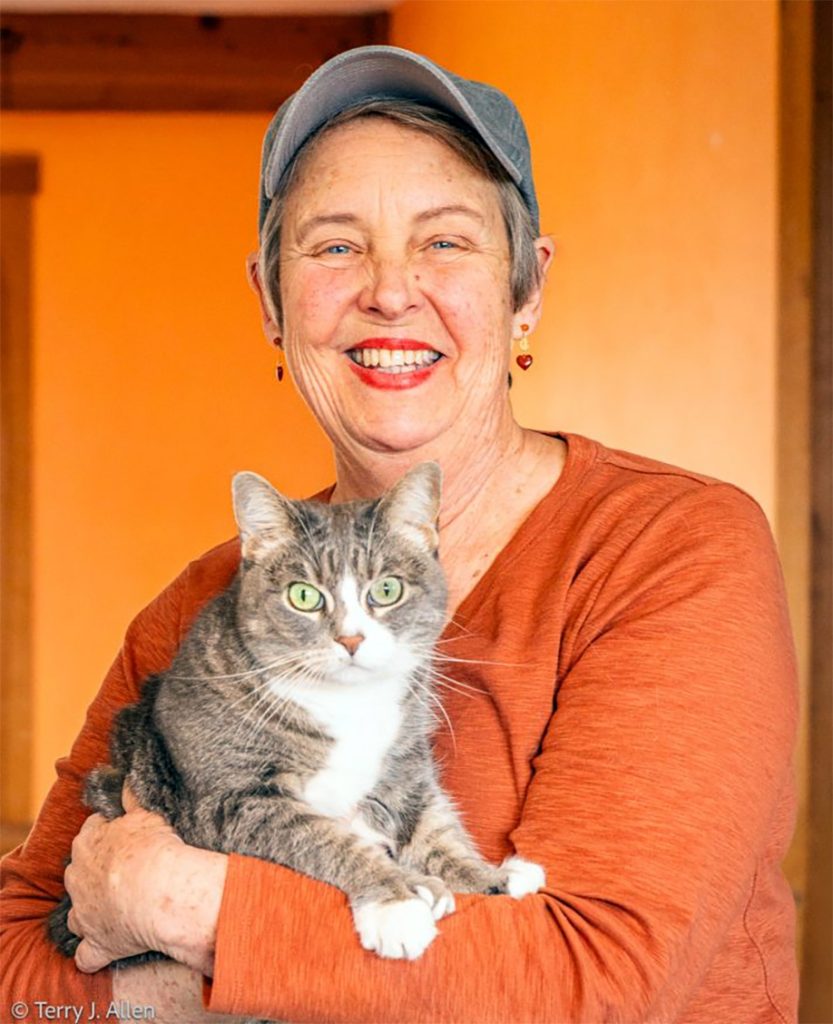
photo by Terry J. Allen
Suter, 82, also realized she didn’t actually want to move away. “I have a big garden and I love living here,” she said. Each year, she grows lots of perennials and some vegetables in her yard.
This year, she decided to rent out a room in her house through HomeShare Vermont, a nonprofit organization that screens and matches people looking for affordable rental options with homeowners who have extra space to rent out and who could use some form of support, whether extra income, help with household tasks, or a presence in the home.
HomeShare currently serves Addison, Chittenden, Franklin, Grand Isle, Lamoille, Orange, Washington, and Windsor counties, plus some towns in the Northeast Kingdom and Rutland County.
Last year, its caseworkers matched 274 people who shared 169 homes across the state, with an average monthly rent of $359 and an average stay of 21 months. Twenty-three of those matches were in Washington County.
Low-income seniors, who make up the majority of hosts, earned $354,000 in rental income, according to the organization.
U.S. Census Bureau data and research from the mortgage giant Freddie Mac shows that 28% of single-family homes in the U.S. were occupied by just one person last year, with 61- to 79-year-olds making up the largest portion of sole-person households. That can be expensive. In Montpelier, where Suter is based, the median monthly cost of homeownership from 2019 to 2023 was $2,015 with a mortgage and $994 for a home that’s paid off.
It can also be lonely. “I needed the money,” Suter said, “but I also needed the company.” Her grandchildren, for whom she provided childcare in past years, are now away in college. She found herself wanting another presence in the house. “I just felt like it would be safer with someone here,” she said.
Joe Lerner, 75, now shares the home with Suter and her 13-year-old dog Kipper. “I feel like we’re slowly becoming friends. I think we can help each other mutually,” Suter said. “We both like to have milk in our coffee and some bananas around, so we share both of those. It works for us.”
HomeShare Vermont aims to tackle housing affordability issues on the “guest” side of the equation too. Last year, 90% of guests who matched under the program were living on a low income.
The organization gets far more applications than makes matches. It matched 23 people in Washington County after receiving a total of 88 applications, 31 from hosts and 57 from guests.
The cost of rent under the program averages far below market-rate rent pricing, within a range of $0 to $650, or up to $850 for housing arrangements without shared communal space, such as an Accessory Dwelling Unit (ADU). By contrast, the average rent in Vermont as of this March is $2,100 per month, and $2,200 per month in Montpelier, up $700 from the previous year, according to data from Zillow.
Often, renters, or what HomeShare Vermont calls “guests,” typically provide some combination of non-medical services in exchange for reduced rent. Hosts’ needs vary from cooking to pet care, to help with technology, to keeping them company more generally. Over 30,000 hours of service were completed for hosts last year.
Of the roughly 40 home listings posted to the HomeShare Vermont website currently, a younger host in Burlington who lives with chronic illness is offering rent of $200 monthly in exchange for about 15 hours of shopping, meal preparation, and transportation. Another host in Bethel is offering free rent in exchange for some housework, shared meals, and a guest to accompany him to an activity he loves, fairs. And in Ludlow, a host is requesting $400 per month for “help sorting through 50 years of memories.”
These services offer value beyond just financial savings on rent. HomeShare Vermont director Connor Timmons said for older Vermonters or people living with disabilities, it can mean “they’re enjoying their lives more, because they can access more parts of their lives.”
Sequana Skye, 69, is nearing the end of her nine-month HomeShare agreement in Plainfield. She pays $850 per month to live in the property owner’s house and is tasked with providing 10 hours of service per week for the co-owner of the home, an older man who lives in an ADU on the property. She drives him to appointments and checks in on him each morning. “I also set up a bird feeder outside his window that he’s just enthralled by,” she said.
She also provides some hours of personal care each week for him, negotiated beyond the HomeShare agreement, since she worked for years as a registered nurse.
Skye called her home-sharing arrangement “pretty perfect,” but noted that these tasks sometimes exceeded the agreed-upon number of weekly hours. “I did, at times, feel tethered to the house. I really wasn’t, but it’s more of a psychological thing where I’ve felt like I’m responsible for this older person. I wanted to be there if he needed me,” she said.
While trading services for rent isn’t always a perfect formula, Skye said that “overall the situation was an ideal kind of transition for me, from displaced housing to the next step.”
Skye applied to HomeShare last September after her apartment in Plainfield village was damaged from flooding in July. She had lived in the unit for about a year and loved it. “I had a neighbor, and a porch, and a deck near the brook where I’d sit, have coffee, and watch the birds in the morning. It felt like paradise to me,” she said. “Having that wiped out was really traumatizing. I haven’t loved a lot of places I’ve lived, but I really, really loved that apartment.”
Skye will soon be moving into a different rental she found on the market, but said she would consider HomeShare again in the future. She was impressed with how her caseworker at the organization, Sarah Hudak, one of two caseworkers in central Vermont, was dedicated to matching Skye with a host and provided support throughout the terms of the agreement.
Hudak said matching hosts with guests takes a good deal of work, and brainstorming that “it’s kind of like arranging a marriage, because living with someone is a really intimate thing.”
The organization’s five caseworkers do in-depth interviews with applicants and visit hosts’ homes. “I try to get their life story and a good sense of their personalities,” Hudak said.
Matching can be challenging, Hudak said, when hosts’ homes need repairs to make their space more livable, like fixes to heating systems and windows, or when guests need housing more quickly than the three months it can take HomeShare to move through the application process. Guests also tend to be less interested in getting matched with hosts in rural areas, since job prospects in those regions can be low. Most, she said, are seeking housing in more urban areas such as Burlington, Montpelier, or Waterbury.
The organization gets far more applications than it makes matches.
Even before thinking about compatibility, caseworkers call several references and do a series of background checks. A criminal record will render any applicant ineligible for the program.
Caseworkers also ask references whether an applicant has mental health challenges that would make living with them unsafe, according to Timmons. “But we encourage people to be open about what they’re dealing with. There are all kinds of challenges that are totally compatible and actually make people better off to be living with someone else,” he said. “If the pandemic has taught us anything, it’s that being alone in your home is not a great recipe for long-term mental health, at any age.”
In an informal sense, shared-living models have a long history in the United States, dating back to the 19th century when it was common for middle-class homeowners to take in boarders, often immigrants and single young workers. People increasingly turned to it during the economic collapse of the 1930s, but in the post World War II era, zoning laws discouraged these
arrangements.
More structured programs emerged in the 1970s, with social service agencies and nonprofits typically partnering older households with younger tenants to address housing affordability challenges while also enabling older adults to remain in their homes as they age.
HomeShare Vermont started up in 1982 in Chittenden county, expanding to additional counties and towns over the years.
The organization is currently awaiting funding approval for a planned expansion to cover the rest of Windsor and Windham counties, and all the counties in the Northeast Kingdom. Timmons said the goal is to share employees based at existing organizations in those areas rather than setting up new offices and hiring additional HomeShare staff. That will save taxpayers money, he said, “and that feels critical right now, with how tight things feel with budgets.”
About half of the organization’s budget, set at $826,000 for this year, comes from state and federal dollars, including a federal Medicaid waiver for services designed to facilitate aging in place. Timmons called this a “wildly good investment.” He said it would be far more costly to fund placements in long-term-care and assisted-living facilities, and “besides, we are very far from having those beds exist,” he said.
The remainder of HomeShare’s budget comes from private donations and Vermont towns.
These investments address the financial realities of the housing crisis and a broken eldercare system, Timmons said, and as Skye put it, the urgent need for new ways of living together.
“The floods last year taught me that we all have to change how we live,” she said. “McMansions no longer make sense. Older folks are living alone and winters are hard. And we need to figure out, quite literally, how to live in community.”
This article first appeared in the Montpelier Bridge, montpelierbridge.org

