


GREENSBORO – In her book, “The Gnostic Gospels,” Elaine Pagels describes a bounty of early Christian writings rediscovered in Egypt in 1945. They had been banned by authoritarian church leaders in the fourth century. But some faithful monks defied that dictate and carefully buried those texts for posterity.
One major feature of those writings is their advocacy for direct spiritual experience. They called it gnosis (Greek for “inner knowing”). Such knowing goes beyond mere intellectual knowledge and points instead to a direct sensing of the spiritual realm. And that, in turn, involves developing a sustained spiritual practice.
This experiential strand of early Christianity de-emphasized organized church structure. Spiritual community, though valued, was seen as an important resource more than a binding authority. And although gnostic Christians revered Jesus, they didn’t view him as granting salvation from the outside in, but as a spiritual force offering awakening and healing from the inside out. This view of religion was minimally hierarchical and located the transformative divine power much more in changing the inner consciousness of the seeker than in accepting the outer requirements of the church.
The predominant church hierarchy increasingly demanded assent to creeds and doctrines, and obedience to the male clergy. After Christianity won majority status and became the official faith of Rome by the end of the fourth century, its bishops and priests used their newfound political power to try to establish their beliefs by force. This included an attempt to expunge the gnostic texts from history.
For those seeking spiritual renewal today, however, this experiential emphasis is a valuable resource. It highlights the priority of spirituality over religion and helps us see that the essential goal of the spiritual life is not, per se, to affiliate with any specific religion. The deeper goal is to develop a repertoire of tools for directly accessing the spiritual dimension of reality, a process that can utilize resources from any number of religious and/or spiritual traditions.
Although there is no single superior religion with all the answers, specific religions can continue to play a major role in fostering such spiritual awareness. Existing religious groups and meeting-places can, and must, continue to be vital centers of community and connection.
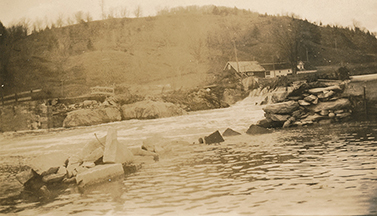
Consider this analogy. Just as the first 13 American colonies had to yield their individual primacy to constitute a new nation, so too can our historic faiths move beyond the limitation of belonging to, and believing in, only their own religious grouping. In this process, they must learn to shift away from competition against other traditions and toward greater cooperation with them. For only by so doing can they come to create (as those 13 colonies did) a new congress of spiritual seekers and finders. When each new American state had to yield primacy to the emerging nation of united states, that did not require Vermont, for example (or Virginia, etc.) to fold its tent. Rather, each state continued to be a vital entity with an ongoing role in serving our land.
Likewise with our religions, yielding their primacy does not mean losing their significance. In my view, the real job of religion has never been to claim primacy, power or superiority. The deeper role of all religions is, first, to enable direct spiritual awareness; and, second, to embody the way of faith and loving-kindness that most of them teach their own adherents to practice. The real role of our religions is to become servants, and not masters, of new and continually evolving manifestations of spiritual experience, connection, compassion and community.
Is that not a big part of what we humans greatly need right now?
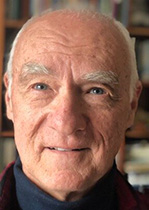
Anthony Acheson
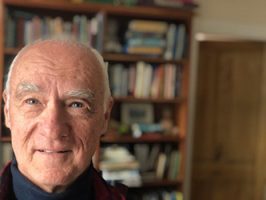
Anthony Acheson is a retired minister ordained in the United Church of Christ (UCC). He was Pastor of the Greensboro UCC from 1999 to 2015. Some of this material has been adapted from his 2021 book of essays, “Beyond Denial.”He welcomes comment and conversation at [email protected] . Samples of his writing can be read at https://www.anthonyeacheson.com .
