


MONTPELIER – Vermont’s 2025 legislative session ended on Monday evening, normally the session ends around Mother’s Day. November’s election demonstrated that Vermonters wanted change and that work took longer than is customary. Significant changes were made to healthcare, housing, and education.
Going into the session everyone knew that healthcare was struggling. Vermont Blue Cross Blue Shield’s troubles have been widely reported as have the finances of Vermont hospitals. But we learned in January and February that it was even worse. The legislature passed legislation that limits UVM Medical Centers’ impact on the system and reduces the pricing of specific drugs that have become very popular and expensive. Drug pricing changes alone are projected to save our healthcare system $47M.
Healthcare, in my opinion, is the most complicated and costly issue facing the legislature. Vermont has some of the most expensive health insurance in the nation and UVM Medical Center might be the most expensive hospital in the world. Vermont’s aging population is a significant cost pressure as is the dramatic increase in the cost of a number of popular new procedures and medications. Expect a lot more legislative work on healthcare in 2026.
Housing received a major boost in legislation passed this session. Laws were passed that would make it easier and less expensive for towns to provide the infrastructure required for home building. Builders indicate that home-building projects just don’t pencil out for most Vermonters if the builder has to take on the public infrastructure expenses of roads, sidewalks, sewer and water. An expansion of Vermont’s Tax Infrastructure Financing (TIF) program will make housing projects more affordable and ease Vermont’s housing crunch. These changes along with last year’s Act 250 changes should increase home-building.
Education transformation and funding reform have begun. H.454 passed both the House and Senate on the last day of the session and is now headed to the Governor’s desk; Gov. Scott intends to sign it. H.454 effectively ends Act 60 in the 2028-2029 school year. Instead, districts will receive a 100% payment which reflects the cost of providing an excellent education. Districts may request up to 5% additional with voter approval.
H.454 marks a critical step toward reforming the way we fund and structure our schools. It begins to shift the system toward greater sustainability and predictability, so communities can plan responsibly and families can better afford to live and thrive in Vermont. Importantly, almost every town in Vermont will see lower homestead property taxes under this bill compared to the unsustainable trajectory that Vermont is suffering from.
H.454 is not the last word on education reform. Many critical decisions will need to be made in 2026 as well, including governance reform and how to fund secondary education and career and technical education. Currently, Vermont has 119 school districts and 52 supervisory unions. A task force will meet over the summer and fall and then recommend a new district map in January to the legislature.
There are other issues as well. Please be in touch on issues that matter to you.
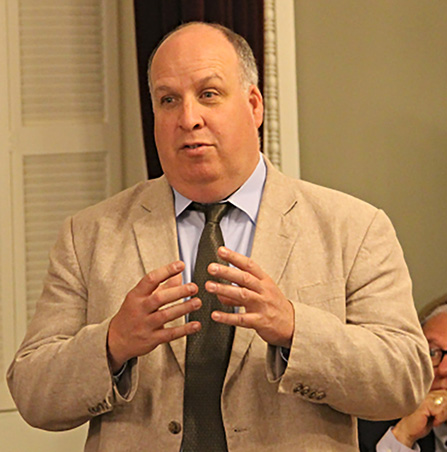
Scott Beck resides in St. Johnsbury, and is the Caledonia County Senator.

Sen. Scott Beck
Sen. Scott Beck is the Senate Minority Leader and represents Caledonia County
