
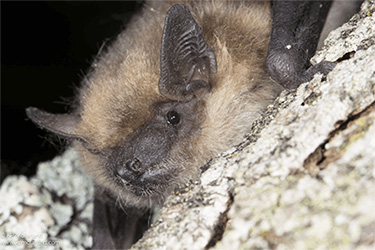



WHITE RIVER JUNCTION – Hear a new rustling up above? It could be mice. Or it could be another small, adorable, furry critter with wings.
Little Brown and Big Brown Bats, also referred to as house bats, are common visitors to residences from about mid-April to October (although the Big Brown Bat may overwinter in attics). These two species are frequently found in buildings, and sometimes in tree hollows or under peeling bark.
During the summer months, females of both species form colonies, sometimes in large numbers, in attics, barns, sheds, or under shingles. This is where they give birth and raise their young. Males also frequent buildings, either alone or in small groups. The females give birth to a single pup in late June or July. At birth each weighs less than an ounce with flesh colored skin covered with fine silky hair. They open their eyes for the first time within 24 hours. The pups in the colony will sometimes huddle close together for warmth while their mothers go out to forage for insects during the night. They won’t be able to fly for 21 to 28 days.
The Little Brown Bat used to be one of the most common tenants in some buildings and bat houses, but due to the devastating effects of a fungal disease known as White-Nose Syndrome, this species has suffered a 95 percent population decline in recent years and are now protected in Vermont. By putting up a bat house, you can provide critical roosting sites for bats (that aren’t in your own attic!) and benefit from their insect-eating abilities. Especially in the summer, many bats and their pups are short-term visitors, so no need to panic. But if you do have evidence of long-term residents, Vermont Fish & Wildlife has information on what to do.

Kent McFarland
Kent McFarland is a member of the staff at the Vermont Center for Ecostudies.
