


VERMONT – As hiking season kicks into high gear, officials from Vermont’s Department of Forests, Parks and Recreation; the Vermont Agency of Agriculture, Food and Markets; and the Vermont Trails and Greenways Council are urging outdoor enthusiasts to help safeguard forests by cleaning their boots, clothing and gear before and after hitting the trails.
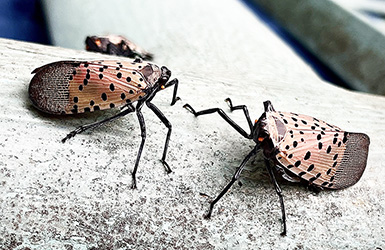
This simple step plays a critical role in stopping the spread of destructive invasive insects, such as the spotted lanternfly, hemlock woolly adelgid and jumping worms. Although spotted lanternfly has not yet become established in Vermont, it is established in neighboring states and could easily be transported here.
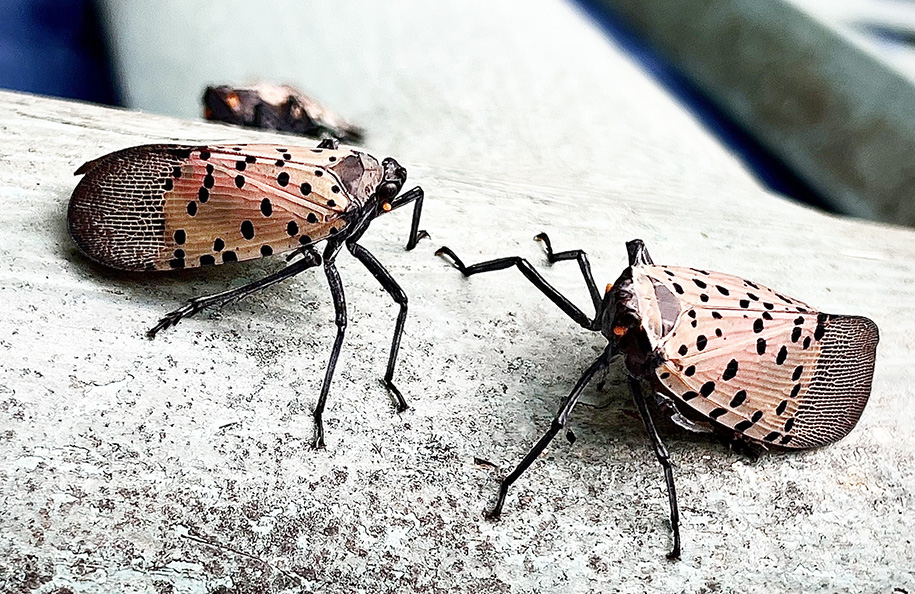
Photo by Edward Sikora
Hemlock woolly adelgid is established in southern Vermont and is already killing hemlock stands there. Identifying new infestations early is key to managing this pest.
Jumping worms and their cocoons and egg cases may spread by a number of ways including through compost, leaf litter, nursery plants, untreated mulch or soil and bait for fishing. To date, they have been found in 12 of Vermont’s 14 counties.
“Forest pests can hitch a ride on muddy boots, backpacks, tent fabric and pet fur,” says Ginger Nickerson, University of Vermont Extension forest pest educator. “By taking a minute to brush off your gear before and after outdoor adventures, you’re helping protect the trees and ecosystems that make our outdoor spaces so special.”
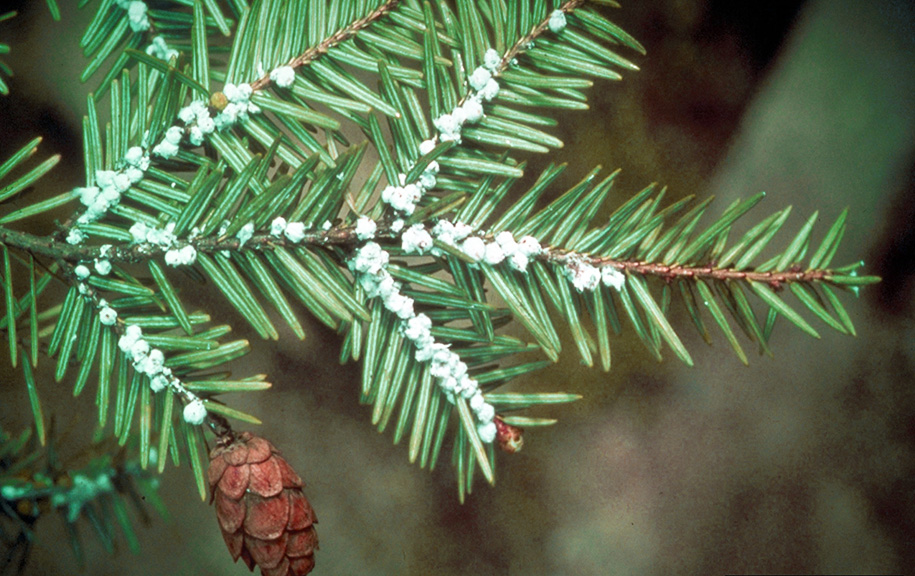
Photo by Connecticut Agricultural Experiment Station
These introduced and destructive insects can harm native trees and ecosystems and cause thousands of dollars in economic damage. Many are small and hard to see. Their eggs can be easily transported unnoticed in dirt in boot treads or in the folds of fabric, infesting previously uninfested areas.
What can help? Check boots, clothing, gear and vehicles before and after outings, remove any insects, egg masses, seeds or plant debris and brush off horses and pets when you leave the trail.
“Your small actions can have a big impact,” Nickerson explains. “Let’s work together to keep our forests healthy for generations to come.”
For more information on invasive species and how to help stop their spread, visit vtinvasives.org.
To request waterproof copies of the poster for local trails, contact [email protected].

