


MORRISVILLE − Anyone who reads the news or pays even limited attention to what’s happening in Montpelier knows that Vermont’s education and healthcare systems are nearing a breaking point. Declining birth rates, shrinking student populations and double-digit increases in both property taxes and health insurance premiums are making it difficult, if not impossible, for Vermont families to make ends meet.
According to the Agency of Human Services, our healthcare system is in the midst of an affordability crisis at a time when Vermonters can least afford it. Individuals and businesses alike are watching healthcare costs for themselves and their employees rise beyond what they can reasonably pay. At the same time, healthcare providers and insurers are facing negative operating margins and uncertain financial futures. Something has to change and Vermont’s Act 68, enacted in 2025, is an early step toward that change.
Act 68 directs hospitals to make nearly $106 million in spending cuts for fiscal year 2026, with further reductions in subsequent years — including an estimated $135 million in savings from a new cap on provider-administered drug prices (Act 55 of 2025). These cuts will undoubtedly reshape how healthcare is delivered in Vermont, and that leads us to the first hard choice: do we resist change and cling to the status quo, or do we explore solutions that could both lower costs and increase access to primary care and other services?
On the education side, similar challenges are driving big decisions. Act 73, recently passed by the legislature and signed by the governor, will reduce the number of school districts from 185 to, possibly, fewer than 20. It also sets minimum class sizes and aims to eliminate duplicative administrative costs. The upside is that school funding will be less dependent on property taxes. School funding will still be done through property taxes, but it will now fund all schools with a foundation formula based on a base rate per pupil with additional funds for student needs. The downside is that many of the state’s smaller schools may need to merge with larger, nearby ones.
In the coming year, [Act 68] focus groups will identify $106 million in potential savings, short-term, medium-term, and long-term, by analyzing and rethinking areas such as payer-provider contracting, hospital reserve fund usage, shifting care to non-hospital settings, regionalizing services and administration, and reducing discretionary spending. While the choices will be difficult, the potential opportunities are significant. Much depends on how open Vermonters are to change.
Let’s break these five areas down:
Payer-Provider Contracting: One group will explore how consumers, providers, and the state can better share healthcare-related costs, ensuring access to high-quality care for all Vermonters.
Hospital Reserve Funds: Another group will assess how much “cash on hand” hospitals truly need, and whether some of those funds can be responsibly redirected.
Non-Hospital Care: Some groups will consider ways to shift appropriate services out of hospitals and into less expensive settings.
Shared Services: By regionalizing services like IT, administration, and purchasing, we can reduce duplication and improve efficiency.
Discretionary Spending: Focus groups will examine which expenses are essential and which can be eliminated without compromising care.
Each group will submit a proposal to the state with specific strategies and estimated cost savings. Some may find immediate opportunities, especially in contracting, reserve fund use, and discretionary spending. Others, such as shifting care and regionalizing services, may yield a mix of short-, medium-, and long-term solutions.
But the work doesn’t stop there. Over the longer term, focus groups will also develop hospital-specific transformation plans, identify ways to strengthen primary care access and sustainability, and propose regional service delivery models to reduce duplication while preserving access.
With change comes uncertainty, and with uncertainty, resistance. But if we’re willing to think outside the box and move beyond “the way we’ve always done things,” we could not only lower costs but also increase access and quality. If we can reduce duplication and establish regional centers of excellence, where compassionate care is delivered by well-compensated professionals at sustainable costs, we may finally be on the path to solving Vermont’s healthcare crisis. It all starts with a shift in mindset.
Act 68 and Act 73 are here to stay. If we truly want to attract new families and businesses to Vermont, and if we want our young people to stay and become the next generation of doctors, nurses, educators, and tradespeople, we must rethink how we educate and provide care. The time is now. The choices may be hard, but the opportunities to build are stronger.
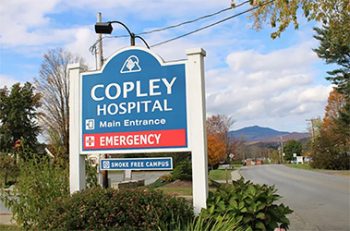
Carl Szlachetka is a member of the Copley Hospital Board of Trustees

