


WATERBURY – The U.S. Department of Agriculture’s Wildlife Services, in coordination with the Vermont Department of Health and the Vermont Fish & Wildlife Department, began an annual rabies vaccine bait drop, August 1, to help combat rising rabies rates in wildlife.
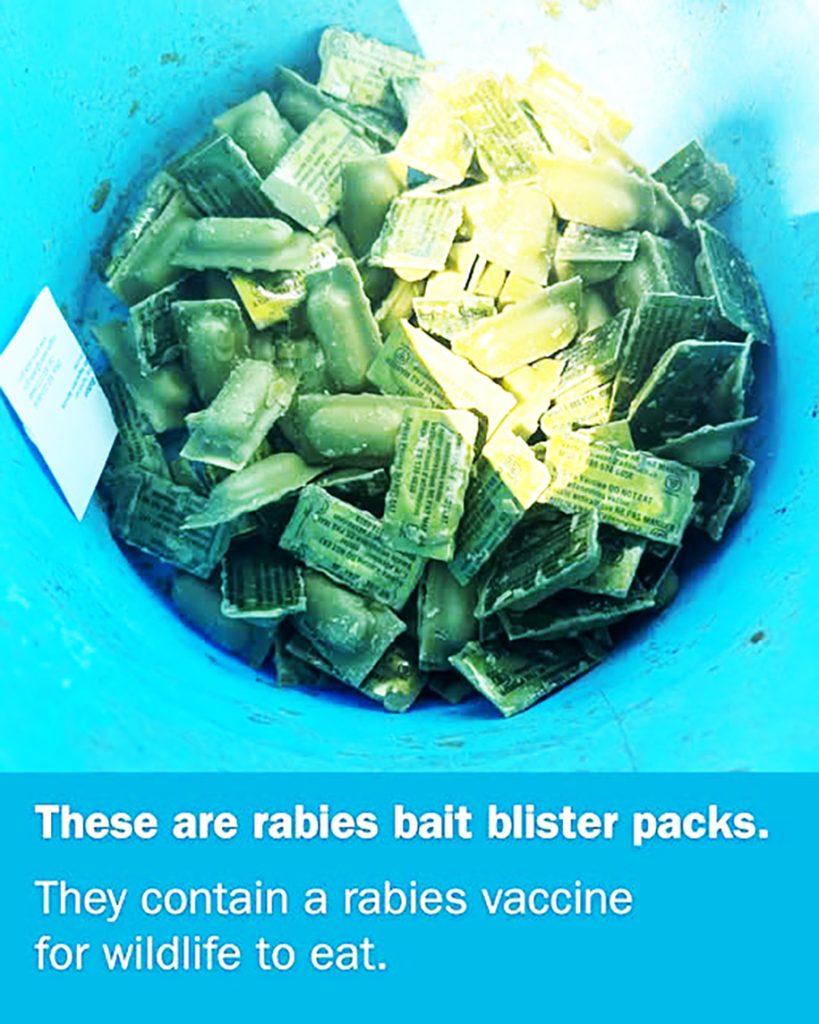
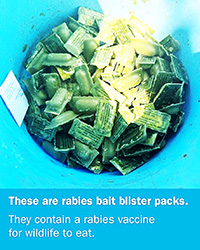
U.S. Department of Agriculture and Vermont Health Department, who arrange for the drops and ask that they be left for wildlife to eat.
photo courtesy Vermont Department of Health
The vaccine, in the form of a sweet-smelling oral bait that is attractive for raccoons and skunks to eat, will be dropped from low-flying airplanes in rural areas, by helicopter in suburban areas, and placed on foot and by hand from slow-moving vehicles in residential areas.
In the local area, rabies bait drops are scheduled to occur in Hardwick, Stannard, Walden, Wolcott, Craftsbury, Greensboro, Cabot, Calais, Marshfield, Plainfield and Woodbury.
Statewide, the rabies bait distribution will deliver approximately 762,000 rabies vaccine baits in areas of Addison, Caledonia, Chittenden, Essex, Franklin, Grand Isle, Lamoille, Orange, Orleans and Washington Counties.
Officials say that the bait drops, now done twice a year, help slow the spread of the rabies virus among wildlife, but that it takes time for enough animals to become immune. So far this year, 32 animals in Vermont have tested positive for rabies, 20 of which were raccoons. In 2024, 66 animals were rabid, which was a 74% increase from 2023 and a 69% increase from the 15-year average of 39 rabies cases reported annually in Vermont since 2010.
“Rabies cases have been rising in Vermont in recent years, and this year is no exception,” said Natalie Kwit, DVM, state public health veterinarian with the Health Department. “Over time, the increased frequency and scope of these bait drops will help protect people and domestic animals who may come into contact with wildlife.”
Without treatment, rabies is fatal to both humans and animals. The virus is spread primarily through the bite of an infected animal. In Vermont, rabies is most often detected in raccoons, skunks, foxes, bats and woodchucks. Pets and livestock can also get the disease, especially if they have not been vaccinated for rabies.
The vaccine bait packs are not poisonous and are not harmful to people, pets or wildlife. When an animal bites into the bait, vaccine releases into their mouth and they develop immunity from rabies. Humans and pets cannot get rabies from contact with the bait, but are asked to leave the bait undisturbed if they encounter it. If contact with bait occurs, the contact area should be immediately washed with warm water and soap.
Each bait carries a toll-free number that people can call if they have additional questions concerning bait contact. If your pet or a child brings one home, let officials know by calling the Vermont Rabies Hotline at 1-800-4-RABIES (1-800-472-2437) or call the toll-free number printed on the bait.
Follow these guidelines to keep your family, pets and livestock safe: If you see a sick or strange-behaving wild or stray animal, or if you are concerned about a rabies exposure, call the Vermont Rabies Hotline (1-800-4-RABIES).
If you are bitten by an animal, wash the wound well with soap and water and contact your health care provider as soon as possible.
If your pet or farm animal was bitten by a wild or stray animal, contact your veterinarian. State law requires dogs and cats to be vaccinated for rabies, even barn cats. Rabies is rare in vaccinated animals.
Always feed pets inside the house and keep them indoors at night. If they are outdoors during the day, keep them on a leash or in an enclosed space. Pets that roam free are more likely to be exposed to rabies.
Do not touch or pick up wild or stray animals, even young animals, or try to make them into pets. You can’t tell if an animal has rabies just by looking at it.
For more information, including a complete list of towns where the bait drop will take place, see the Rabies Vaccine Bait Drop Fact Sheet at healthvermont.gov. Learn more about rabies in Vermont at HealthVermont.gov/Rabies.

