

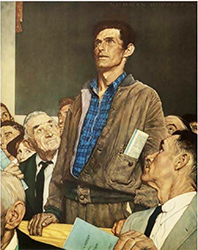
Voters at Hardwick’s town meeting will be asked to decide on Article 6, a 1% local option tax on meals, alcohol and rooms.
So far, I have seen very little information about this tax or why we should vote one way or the other. I am sharing my own research and analysis in case it helps others make up their mind about it.
The state of Vermont gives towns the option to impose a 1% tax on sales, meals, alcohol and rooms. Towns can choose to tax all, some or none of those categories. Places with larger economies like Burlington and Stowe have chosen to tax all of them, while small towns with lots of rentals and few other businesses, like Elmore, tax only rooms. Most towns do not impose any local option tax (LOT).
The Hardwick Select Board has proposed to adopt a LOT on meals, alcohol and rooms, but not sales.
If the LOT passes, Hardwick will receive 75% of money collected from the LOT, minus some administrative fees; the rest of the money will go to the state.
The select board has not given a specific estimate of how much money the LOT will raise, though they have mentioned figures from $50,000 up to $177,000. The higher number is extremely unlikely: Hardwick would have to sell over $23 million in meals, alcohol and rooms to raise that much revenue. That’s more than either St. Johnsbury or Morrisville, which have at least twice as many such establishments as Hardwick.
I estimate Hardwick could receive between $40,000 and $75,000 per year from the LOT.
State data shows Hardwick restaurants sold $5 million in meals over the last fiscal year, which would have brought less than $37,500 to Hardwick.
The state does not publish data on alcohol and rooms for Hardwick since there are so few proprietors, but we can estimate a figure.
For other towns, apart from prominent resort destinations like Stowe and Killington, meals sales amount to much more than alcohol and rooms combined. So we can assume alcohol and rooms together will be less than $5 million. Let’s assume a reasonable lower bound is one tenth of that, $500,000.
That puts the taxable sales in Hardwick in the range of $5.5 million to $10 million. Taxed at 1%, the LOT would raise between $55,000 and $100,000. After the state’s 25% share, we arrive at the Hardwick estimate of between $40,000 and $75,000.
We can look at the town of Londonderry, which has had a rooms, meals and alcohol LOT for a couple years to check that estimate. Londonderry has a slightly smaller population than Hardwick, but is also more of a tourist destination, with a small ski resort. They have a similar number of restaurants which do a similar amount of meals sales as Hardwick. In the last fiscal year, Londonderry brought in $41,085 from their LOT and are budgeting for $50,000 next year.
Tapping into a new source of revenue could help make the town finances more stable and resilient. The more sources of revenue we have, the less pressure we put on property taxes. This makes property taxes less susceptible to dramatic year over year increases, such as we have seen recently.
The LOT also helps capture revenue from visitors, who rely on town resources like roads, sidewalks and emergency services, but do not directly pay for any of them.
Lastly, the tax is small and revocable. For many people, 1% is affordable, and the tax can be repealed with a town vote in the future.
Local option taxes apply to everyone the same. Even if the goal is to target wealthy tourists, in practice it’s impossible to tax so precisely. The cost of a pizza and a beer, which are already taxed highly at 9% and 10% respectively, will incur an additional 1% tax for all of us. It doesn’t matter if you live in Hardwick or not; whether you have $100 to your name or $1 million. For the wealthy, the extra tax is hardly noticeable. For those who have less, every dollar counts.
Towns that impose LOTs usually have a plan for how to use the revenue. The Hardwick Select Board has not offered any specific plan, though they have discussed a couple ideas, such as purchasing a new dump truck, or offsetting property taxes.
If the new tax revenue is used to offset property taxes, owners of the most valuable properties will receive the largest benefits. Concretely, if the town raises $75,000 a year, owners of the highest valued properties will see their property tax bills reduced by hundreds of dollars. This includes multiple second home owners who live out of state. In contrast, most property owners who live in Hardwick will see a benefit of less than $50.
Hundreds of Hardwick residents are renters, not owners. Many of them will pay the LOT going out to eat and see little direct benefit. In effect, they would be further subsidizing their landlords’ property taxes, on top of the rent they already pay. At the same time, nearly a quarter of properties on the grand list have owners who live outside of Hardwick. These owners will receive a property tax break, despite many of them never paying into the pot.
There are several other downsides. For one, it creates additional work for local businesses to collect this tax. It’s also likely that the revenue will not be very stable, as its fate is tied to forces outside the town’s control. For example, according to the state tourism agency, Canadian tourist spending in Vermont dropped 44% last year, which would directly reduce revenue from the new tax.
If the measure does pass, or if we consider it again in the future, we need a clearer plan.
To start, the town should put in writing how the money is intended to be used.
Any new policy should maximize the benefit to Hardwick residents and minimize impacts.
For example, we could use LOT revenue to establish a fund to help residents afford fuel, utilities or home repairs. The town should also monitor and review the tax annually to ensure it’s meeting its goals, and ask voters to re-approve it periodically.
I plan to vote “no” on Article 6. While I agree the town needs new revenue sources, I don’t support a regressive tax with marginal benefit and no clear vision. I hope to hear from supporters of the measure about why they think it’s a good idea.
Joe Nudell is running for Hardwick Select Board

