


HARDWICK – We continue to pay close attention to our legislators and the Governor in Montpelier.
As I write this report, we have the Senate and House converging on a bit of a showdown on Act 73 legislation. The House adopted H.955, which has a built in period of time for local districts to voluntarily merge.
There is a whole system set up where neighboring districts can form “study committees” to explore mergers that make sense. Districts will be pre-assigned to specific geographic areas on the map, but can petition to move outside those boundaries.
The bill also calls for the state to pay for the facilitation of these study committees.
This is very similar to the study committees that were part of Act 64. It is presumed that the Senate will dismantle this bill because of the confluent process that may put reorganization too far out on a timeline. The Senate appears more aligned with the Governor in an escalated version of redistricting. The Senate Appropriations Committee approved its version of a budget on April 21.
With respect to the Yield, which has a direct impact on our tax rates, there is another divergence. The House voted out a bill that has the Yield set at $9,170. The Senate Finance Committee just passed a Yield bill that set it at $9,395.The latter Yield is more in line with the Governor’s proposal to use the state’s carryover revenues for taxpayer relief. I think the Yield will end up on the higher side.
Here are some additional legislative updates related to education, as summarized on April 28 by the Vermont School Boards Association:
H.955: An act relating to next steps in transforming Vermont’s education system has passed the House and is now under consideration in the Senate Education Committee. With a bill in excess of 150 pages, it took Senate Education most of last week to walk through it in its entirety with legislative counsel and the joint fiscal office. This week, the committee will hear testimony on CESAs (Cooperative Educational Services Areas), school governance structures, and school construction options.
H.931: An act relating to miscellaneous changes in education law was reviewed by the Senate Education Committee last week, where they decided to move the section concerning class size out of H.931 and into H.955 with the idea that this issue is strongly related to a number of contingencies set out in Act 73. The committee is also considering adding additional language regarding performance-based contracting and a healthcare cost study.
H.930: An act relating to addressing and preventing chronic absenteeism was in the Senate Education Committee where they took testimony from the AOE [Agency of Education] last week, which incorporated suggested revisions from VSBA [Vermont School Boards Association], helping to distinguish the concepts of “chronic absenteeism” and “truancy” as well as more clearly structured the processes of drafting model policies and procedures.
H.949/S.220: The Senate Finance Committee incorporated the language of S.220 into the Yield Bill before voting it out of committee. This bill will move to House Ways & Means later this week, where significant testimony will be heard this Thursday from various interested parties with a focus on the proposed change in the excess spending threshold from 118% to 112%.
VSBA and VSA [Vermont Superintendents Association] advocated for changes to S.227 (immigration protocols in schools) to clarify the content of the model policy required by the bill and the relationship of procedures to policy. These changes were incorporated into S.227 as passed by the House Education Committee. S.227 heads to a vote of the full House this week.
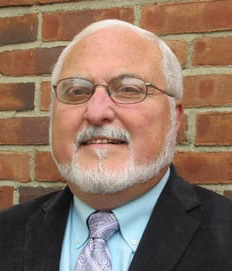
Excerpted from the OSSU May Message from Superintendent Dr. David Baker.

Dr. David Baker
Dr. David Baker is the Orleans Southwest Supervisory Union Superintendent
