
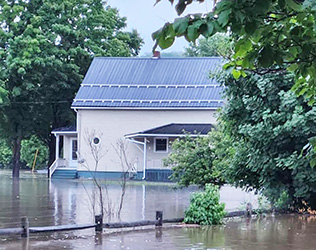


HARDWICK – After five flooding events in just two years, including three that triggered federal disaster declarations, residents of Hardwick’s Granite Street Historic District are working with the town to take a proactive approach to protecting their neighborhood.
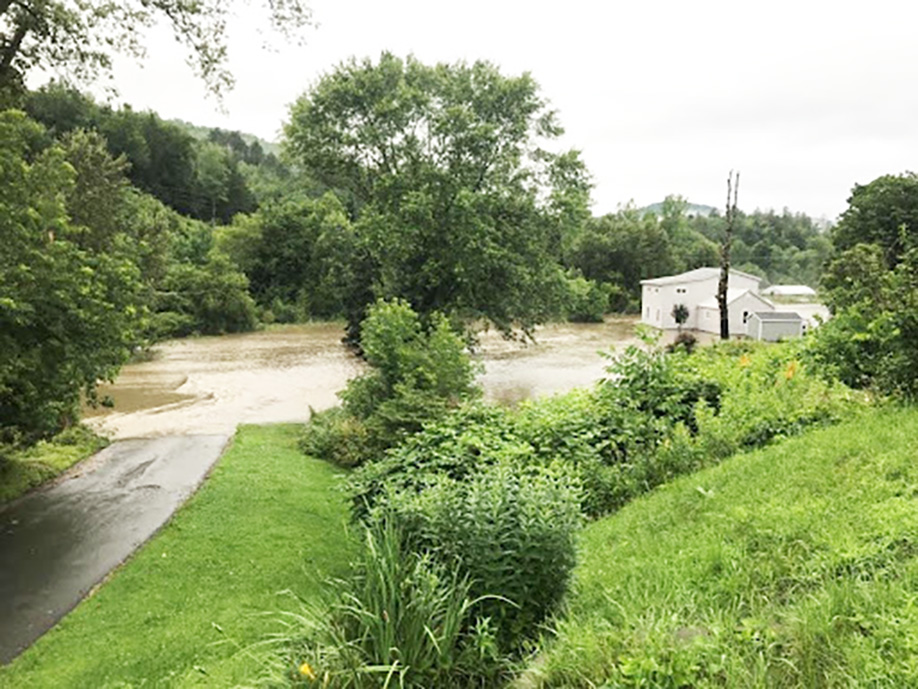
photo by Kristen Leahy
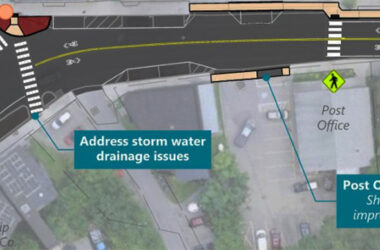
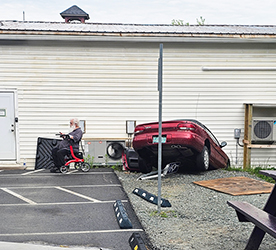
The area has been hit particularly hard by repeated Cooper Brook flooding. In July 2023, then again in July 2024, floodwaters entered basements and overwhelmed the town’s aging stormwater infrastructure. While the town responded quickly with emergency clean-up and repairs to infrastructure, both residents and town officials recognized the urgent need for long-term solutions.
With support from a Vermont Department of Housing and Community Development 2025 Municipal Planning Grant, the town is now working with the Center for an Agricultural Economy (CAE) and local residents to develop a Granite Street Flood Resiliency Plan. The goal is to help homeowners remain in place while reducing future flood risks.
The planning process will include an inventory of flood-proofing needs for all 65 structures in the historic district, the creation of a neighborhood emergency preparedness network and engineering assessments for nature-based and green infrastructure improvements. Proposed ideas include restoring the stormwater garden on Cottage Street that is not working as envisioned, expanding flood storage capacity at Atkins Field and installing dry flood-proofing systems in historic granite basements. Other community-suggested measures include backflow preventers, temporary road closures during high water, backup generators to power shared sump pumps and a workshop series on emergency preparedness.
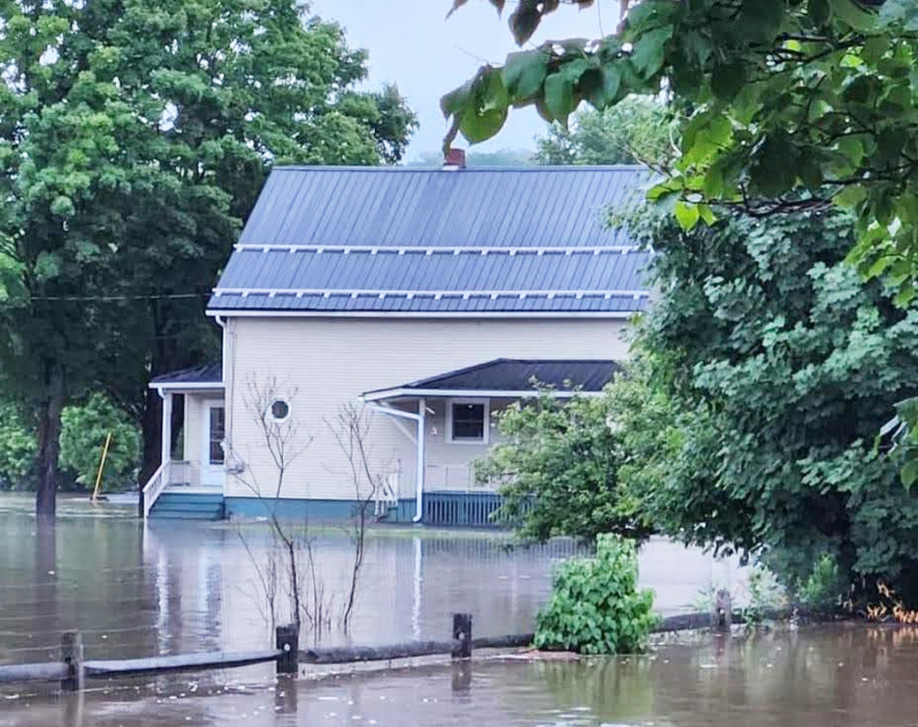
photo by Lori Ferland
Community engagement has played a central role from the early stages of resiliency planning for the area. In August 2024, more than 20 residents gathered at Atkins Field for a shared meal and neighborhood planning session. Attendees voiced concerns about sump pump access, yard drainage, soil buildup from plowing and ensuring the safety of neighbors during future emergencies. Initial suggestions, such as the removal of an elevated section on Granite Street at Atkins Field, were implemented, but the neighborhood’s input indicated that a larger planning process was needed.
Collaboration has been a cornerstone of the effort. Before the 2024 flood, one resident purchased a high-capacity sump pump that was shared among several households. In future events, the Hardwick Supply and Support Center, located at the Hardwick Police Station and Senior Center during emergencies, will be equipped to loan out similar tools and equipment.
To build on this momentum, CAE has submitted a second grant application to support the engineering and implementation of the plan’s recommendations.
The long-term vision is clear: help the Granite Street Historic District’s neighborhood stay viable while preparing for the realities of a changing climate. To move this vision forward, the Town of Hardwick has issued a Request for Qualifications (RFQ) to select a consulting firm that will help guide the next phase of the planning process.
This work marks a shift in Hardwick’s flood response; from recovery to resilience, and highlights the power of community-led planning.
Kristen Leahy is the Hardwick resilience and adaptation coordinator and zoning and floodplain administrator.

