
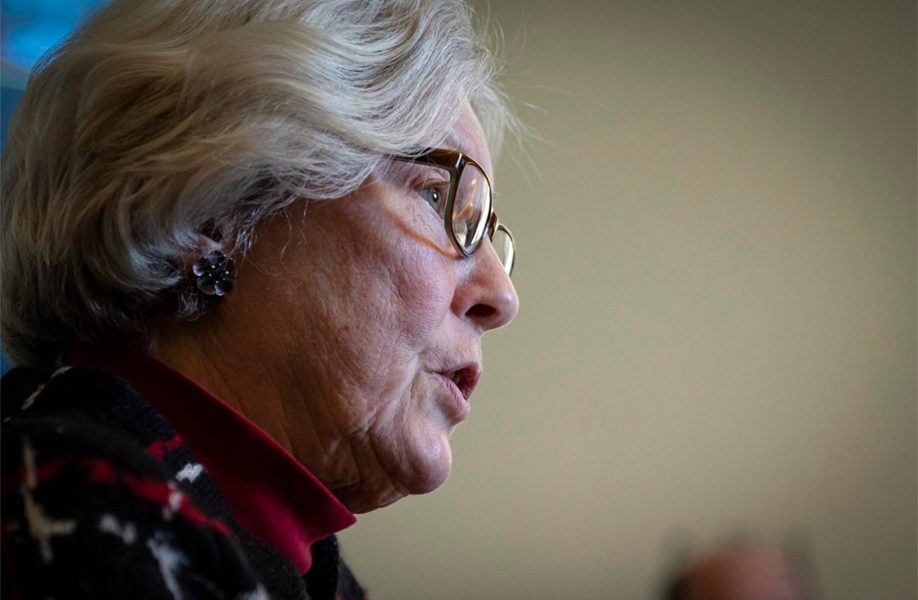



MONTPELIER – After 35 years in state government, Jane Kitchel is able to sit on the sidelines now as the legislature gets to work in the new year. Last year, after the session was over, she said it was a difficult decision to walk away from the position she held for 20 years as Vermont State Senator and sit out the election. She wants to start doing some traveling and other things she’s put off.
Kitchel sees the lasting effects of her time in the legislature as being about her effects on people, where she says she always emphasized responsibility. She looks at her work in the Senate as being about “how to make government serve people better and be more effective” by asking “who benefits and what’s the collateral impact.”
She’s going to miss caring for her colleagues, she said.
Her work to support Dr. Dynasaur, which has had a huge impact on the health of children in the Northeast Kingdom, is part of what she sees as her legacy.
Supporting small rural utilities in Lyndonville, Barton and Hardwick has been important too, she said.
Her response to unusual situations is another important part of the work she’s done. When state tax policies changed to make the Caspian Lake Beach in Greensboro taxable, she was able to keep the public resource available by helping exempt it from taxes.
On the lack of adequate and affordable housing, she pointed out, “It’s a tough issue,” we have no option except to “manage our way out of it. . . A whole lot of different strategies are needed because it’s not just a state issue, but a national issue too,” she said. “It’s not something the state by itself can solve.”
“Vermont is attractive. That creates challenges managing growth without negative effects on people who have been in the state a long time,” she noted.
Prioritizing ARPA funds allocated to the Vermont Housing Conservation Board will help with new housing, rehab of existing housing and land conservation, she said.
Challenges include unpredictable permitting, which can be streamlined to make the process more predictable, she noted, and suggested one option will be looking at different types of housing to meet the state’s needs.
Kitchel identifies tax policies, incentives and regulation as playing a part in meeting Vermont’s housing needs too.
With school funding, she said it’s a matter of the available funding vs. the expense. “We can’t have the kind of increases we’re seeing.” The governor’s proposal for a one-time fix wouldn’t solve the structural problem, she said. “It wasn’t sound and wouldn’t solve the problem next year.”
“The local vote impacts state funding of education,” she said. “Local votes are making tax decisions for every other taxpayer in Vermont.”
The Education Fund to meet those needs comes from all over, the general fund, the lottery and 25% of the rooms and meals tax, she pointed out. “Bonding agencies are worried that more of state funds are going to education.”
Discontent and anger is directed to the legislature, but it’s not the legislature alone that will solve the problem. “A different approach is needed for school and municipal budgets.
She thinks education itself needs attention. “The whole word approach isn’t working and attention must be given to looking at how data is being acted on. It’s important to focus on feedback loops because “students deserve better,” she pointed out.
The state college system has been stabilized and the transformation plan is fully funded with a fiscal commitment to support the system. She said, “A promise made is a debt unpaid.”
Developing a plan to resolve underfunding the state’s pension system improved the outlook on bonding.
She sees the issue last session between Rep. Mary Morrissey, who eventually gave a public apology to Rep. Jim Carroll, after repeatedly pouring water in his bag, as a personal issue; a rare exception to respectful interaction in the statehouse.
“Respect for differing views and differences of opinion in committee meetings and hearings is important in the legislature,” she said.
Kitchel said the demands on legislators are increasing every year. The volume of emails is growing in a citizens legislature, where she would receive 100 or more each day. Email blasts from public interests have lost their impact, while adding to the time demands.
Kitchel said a letter is the most effective way to contact a Vermont legislator.

Paul Fixx is editor of The Hardwick Gazette and lives in Hardwick.
