
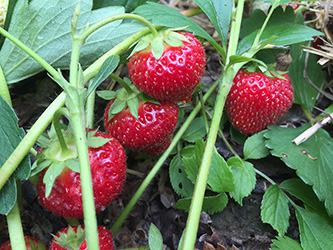


BURLINGTON – There’s nothing like the taste of a fresh-picked strawberry. Sweet, juicy and flavorful, it’s the first fruit to ripen on our local farms, and this year’s crop is a good one.
The buds that produce strawberries were formed last fall. Growers then tucked the plants away under a layer of straw to protect them from winter damage. Flowers that opened this spring turned into berries in about a month.
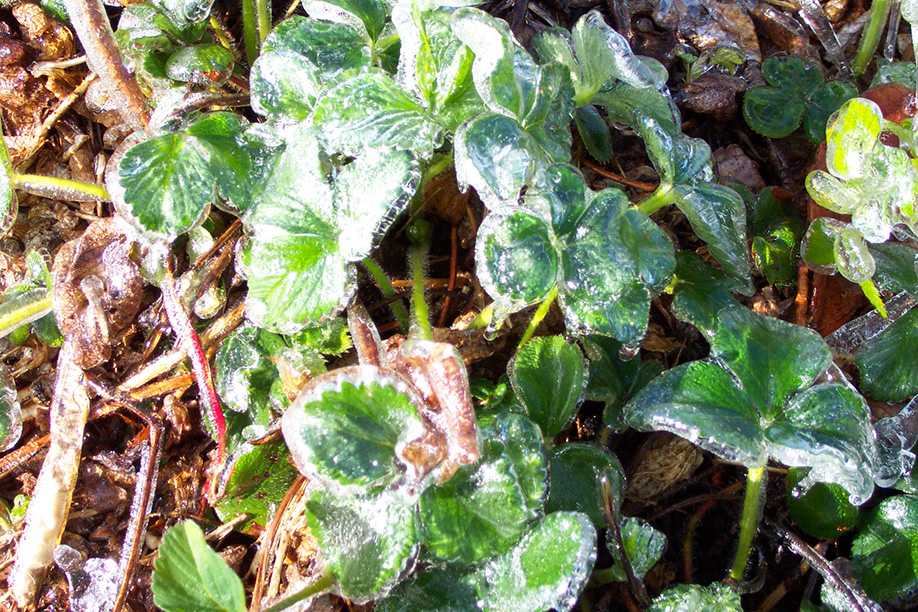
photo Vern Grubinger
Strawberries are grown on many diversified vegetable and berry farms. They’re an important crop because they provide early season income and have a high value per acre. However, the risks are also high. In addition to potential winter injury, early spring frosts, heat waves during harvest and a variety of pests can lead to crop losses.
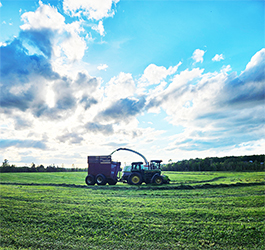
The 2022 U.S. Department of Agriculture’s (USDA) Census of Agriculture counted 125 farms with 168 acres of strawberries in Vermont. A typical yield is about 6,000 pounds an acre, so over a million pounds of Vermont strawberries must be picked, sold and eaten in a relatively short time. Almost all these berries are sold directly to customers or to local stores and distributors.
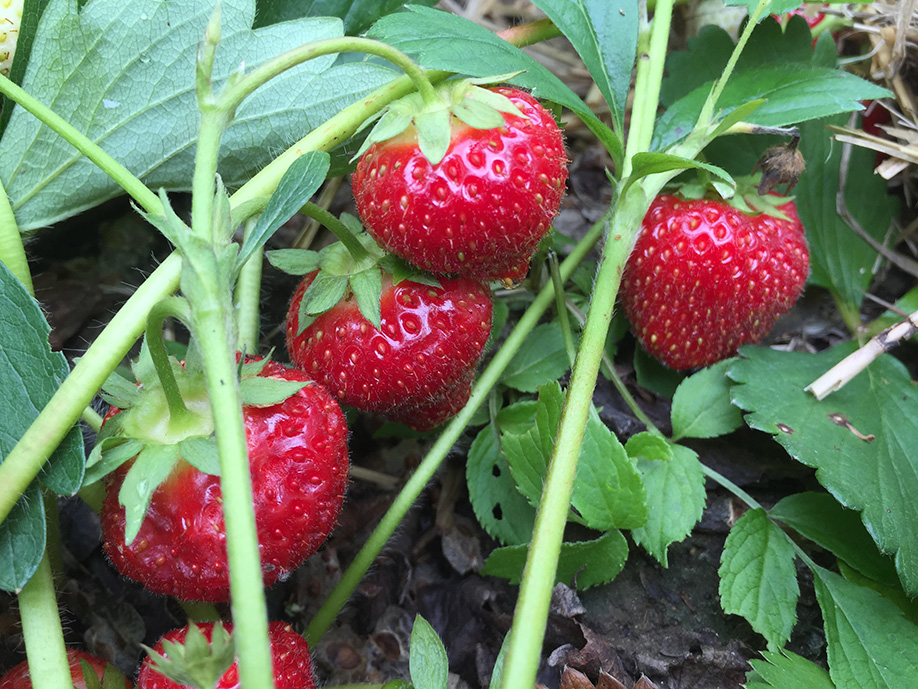
photo by Vern Grubinger
Nationally, about 1.4 million tons of strawberries are produced each year. The vast majority come from specialized farms in California, with Florida a distant second in production. These berries get shipped to stores and processors.
Most of the strawberries grown in Vermont are called June-bearers, for obvious reasons. There are also some strawberry varieties called ever-bearing, which bloom and fruit all summer long. These are trickier to grow because they require ongoing attention and are more vulnerable to insect attack later in the summer.
Wild strawberries have been eaten since ancient times, but the development of modern varieties was a fairly recent process, involving a lot of plant breeding including the hybridization of different strawberry species.
“Hovey” was the name of the first American strawberry variety resulting from plant breeding. It was developed by Charles Hovey, a nurseryman in Cambridge, Mass., in 1834.
“Wilson” was bred in 1851 by James Wilson of Albany, N.Y., who crossed “Hovey” with other varieties. Wilson was productive, firm and hardy and could be grown in many types of soil. It also had perfect flowers, containing both male and female reproductive structures, so could be grown by itself without another variety for pollination.
Wilson changed the strawberry into a major crop that would be grown across the continent. The ease with which it could be grown, and the availability of railroads for transporting the crop, led to strawberry fever that dramatically increased production in the 1860s.
Arthur Howard learned to love strawberries as a young man while living with the Perfectionist community in Putney. He later developed “Howard 17” at his farm in Belchertown, Mass. That variety dominated strawberry production in the early 1900s. It had tolerance to leaf spot, leaf scorch and virus diseases, and it formed many crowns with early flower bud initiation. For decades it was important for commercial use and breeding.
Before 1920, strawberry breeding was done by growers, but since then most new varieties have been developed by scientists at federal and state experiment stations. One renowned strawberry breeder was Dr. George M. Darrow, a Vermonter who was chief horticulturist at the USDA. He improved the disease resistance of strawberries and developed dozens of varieties that helped create the fruits that we eat today.
To find a farm where you can pick your own fresh, delicious local strawberries, visit vermontpickyourown.org.

Dr. Vern Grubinger is the University of Vermont Extension vegetable and berry specialist.
