



WATERBURY – State health and environmental officials are offering tips on how to check the water in lakes and ponds for cyanobacteria blooms that can harm health.
Cyanobacteria, sometimes called blue-green algae, are microorganisms that live in natural waters. Under certain conditions, these bacteria can collect into a bloom that can lead to skin rashes, diarrhea, sore throat, stomach problems and more serious issues.
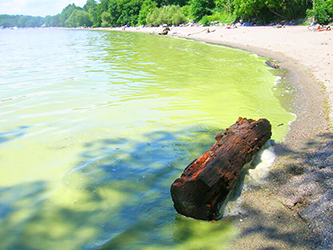
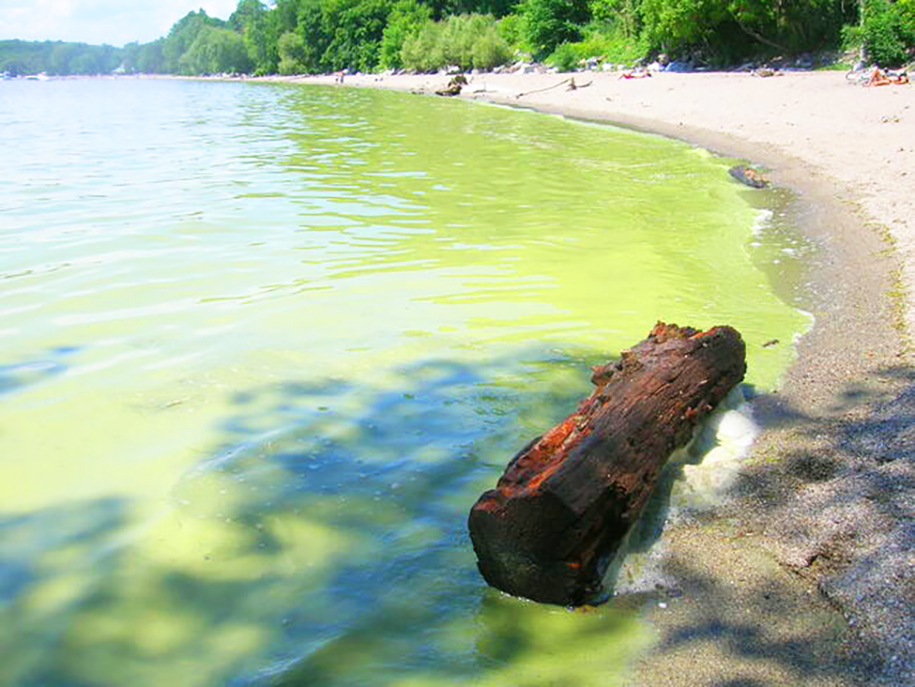
Cyanobacteria blooms become visible as a layer on top of the water or shoreline. The blooms are usually green or blue-green and can make the water look like pea soup or spilled paint, but they can be other colors and consistencies too. The blooms do not have leaves.
If a cyanobacteria bloom is spotted, avoid contact with the water. If contacting the bloom, rinse off thoroughly as soon as possible. Also talk with a health care provider if experiencing symptoms or are concerned about possible exposure. Do not let pets or livestock swim in or drink the water as they are at higher risk for serious illness.
“Cyanobacteria blooms can produce harmful toxins, so if you see a bloom, it’s best to stay out of the water,” said Bridget O’Brien, an environmental health scientist at the Health Department. “Exposure to water during a bloom is especially dangerous for kids, pets and other animals that might accidentally swallow it.”
People can report possible blooms to a beach manager, local Town Health Officer and on the state’s cyanobacteria tracker. Because not all locations can be monitored and the tracker’s online map does not show real-time conditions at a favorite swimming area, it’s important to know how to spot a bloom in the water.
“Reports about bloom conditions submitted by volunteers and the public have been invaluable for understanding where blooms occur in the region, which can allow us to target monitoring efforts and remediation measures,” said Peter Isles, an aquatic biologist with the Department of Environmental Conservation.
The Health Department and the Department of Environmental Conservation work closely with the Lake Champlain Committee, which trains volunteers around the state to monitor Lake Champlain and other bodies of water for cyanobacteria blooms. Email [email protected] to get involved.
Learn more about cyanobacteria and see a video and photos of what is and isn’t a cyanobacteria bloom see HealthVermont.gov/Cyanobacteria, and find translated information including “Cyanobacteria Alert” and “Beach Closed” signs in 12 languages.

