
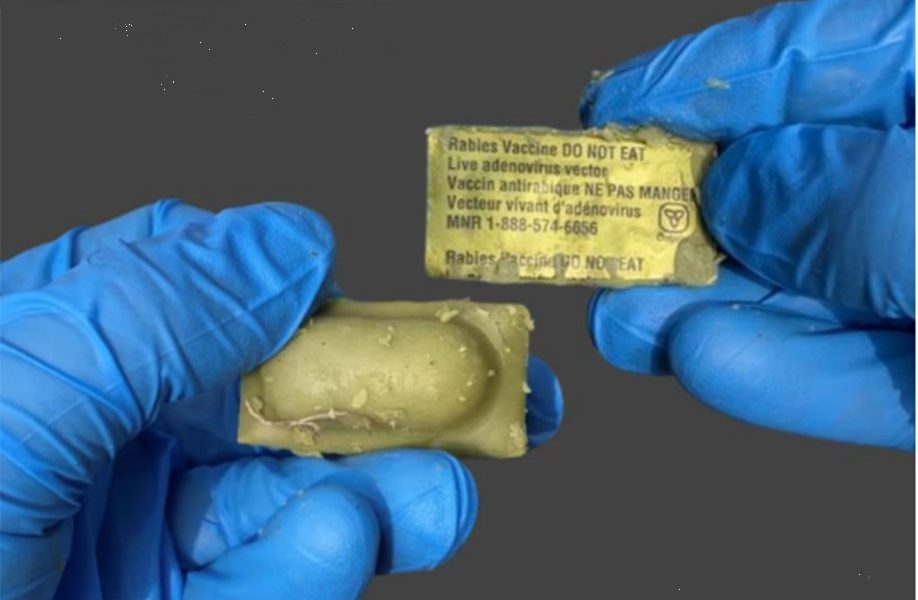

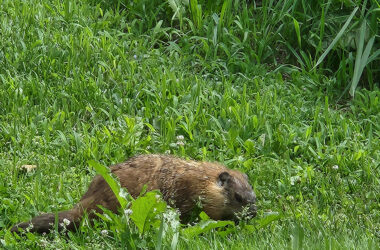
NORTHEAST KINGDOM – During August, about 300,000 quarter-sized blister packs of rabies vaccine wrapped in sweet-scented bait attractive to raccoons and skunks will be dropped from low-flying aircraft in Vermont or placed out of sight by hand in densely populated areas.
This rabies bait blister pack contains a rabies vaccine for wildlife to eat, distributed in cooperation with state and federal agencies.
The rabies vaccine bait drop is an initiative of the United States Department of Agriculture to help prevent rabies and to keep it from spreading north across the Canadian border.
Rabies is a deadly viral disease of the brain that infects mammals.
The timing and duration of the bait drop will depend on weather conditions and other factors. The air drop will take several days and hand placement can take up to two weeks.
Rabies vaccine bait will be dropped from low-flying aircraft or hand-placed in all towns in the Gazette’s coverage area.
The bait is a blister pack covered with a sweet-smelling dark green waxy coating; the dark green coating has a label printed in black. “It is not harmful to children, pets or other wildlife,” said the Vermont Department of Health. “Millions of baits have been dropped in the U.S. and Canada with no ill effects reported in people or pets. You cannot get rabies from the vaccine or bait.”
If you find a bait, do not disturb it and keep children away. If your pet eats it, or your pet or child brings one home, call the Vermont Rabies Hotline 1-800-472-2437 to report it. If your dog picks up a bait, do not risk getting bitten by trying to remove it.
If the bait must be moved, use gloves or a plastic bag. Gloves are worn when handling the bait because they are sticky and human scents might be left on them if touched without gloves.
The Department of Health says, “the bait will not attract raccoons or other animals to your property. However, it would be good for any raccoons that are already using the property to come across the baits.”
Even if an animal eats a bait, every animal bite or scratch must be considered a potential rabies exposure.
Baits are not available for personal use. This project must be conducted in a controlled and scientific manner. The bait is an experimental use product approved by the U.S. Department of Agriculture and made available for this purpose to federal and state agencies.
The project is an interstate and international cooperative effort. The research is directed by the U.S. Department of Agriculture’s Wildlife Services in partnership with the Vermont Departments of Health and Fish & Wildlife and the Vermont Agency of Agriculture, Food & Markets.
The project is designed to help reduce the likelihood of wildlife getting the disease. It is important for people to take precautions against rabies: vaccinate pets, keep your distance from wild animals, and call your doctor right away if you are bitten or if you get animal saliva in an open wound, eyes, nose or mouth.
For information see HealthVermont.gov

