

WATERBURY – The U.S. Department of Agriculture Wildlife Services, in coordination with the Vermont Department of Health, will conduct a special spring rabies vaccine bait drop beginning May 5 to help combat rising rabies rates in wildlife.
The early distribution will deliver approximately 350,000 units of oral rabies vaccine bait in areas of Addison, Caledonia, Chittenden, Essex, Franklin, Grand Isle, Lamoille, Orange, Orleans and Washington Counties. Officials say that the increased frequency of bait drops will help slow the spread of the rabies virus among wildlife, but that it takes time for enough animals to become immune.

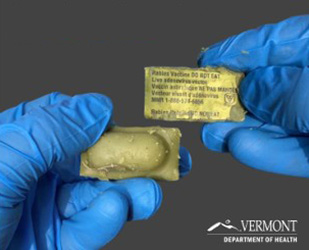
The spring bait drop, now in its third consecutive year, comes in addition to an annual bait drop that occurs in August. During the bait drops, rabies vaccine – in the form of a sweet-smelling oral bait that is attractive to raccoons and skunks – will be dropped from low-flying airplanes in rural areas, by helicopter in suburban areas, and placed by hand from slow-moving vehicles in residential areas.
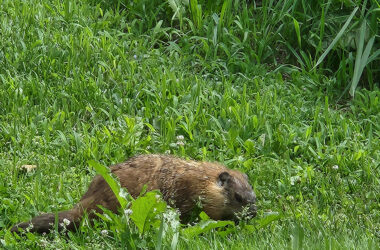
Without treatment, rabies is fatal to both humans and animals. The virus is spread primarily through the bite of an infected animal. In Vermont, rabies is most often detected in raccoons, skunks, foxes, bats and woodchucks. Pets and livestock can also get the disease if they have not been vaccinated for rabies.
Since March of 2022, rabies has expanded into Chittenden, Franklin, and Caledonia Counties, where 95 animals have tested positive for rabies— 58 raccoons, 21 skunks, eight bats, three foxes, three woodchucks, a bobcat, and a rabbit. Prior to this outbreak, no rabid land mammals were detected from these counties since 2017.
The vaccine bait packs are not poisonous and are not harmful to people, pets, or wildlife. If you find a bait pack, please don’t touch it unless necessary. Leave the bait undisturbed so it can be eaten by wildlife. If the bait must be moved, use gloves or a plastic bag. If your pet eats a bait pack, or if a child brings one home, let officials know by calling the Vermont Rabies Hotline at 1-800-4-RABIES (800-472-2437) or call the toll-free number printed on the bait.

