
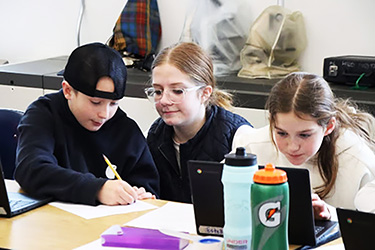

HARDWICK – Only blocks apart, two local schools are even closer this year as they collaborate on science education. High school students enrolled in Hazen Union’s Science Enrichment class are learning to see science through the eyes of kindergarteners and sixth graders by planning and teaching lessons to students at Hardwick Elementary School.
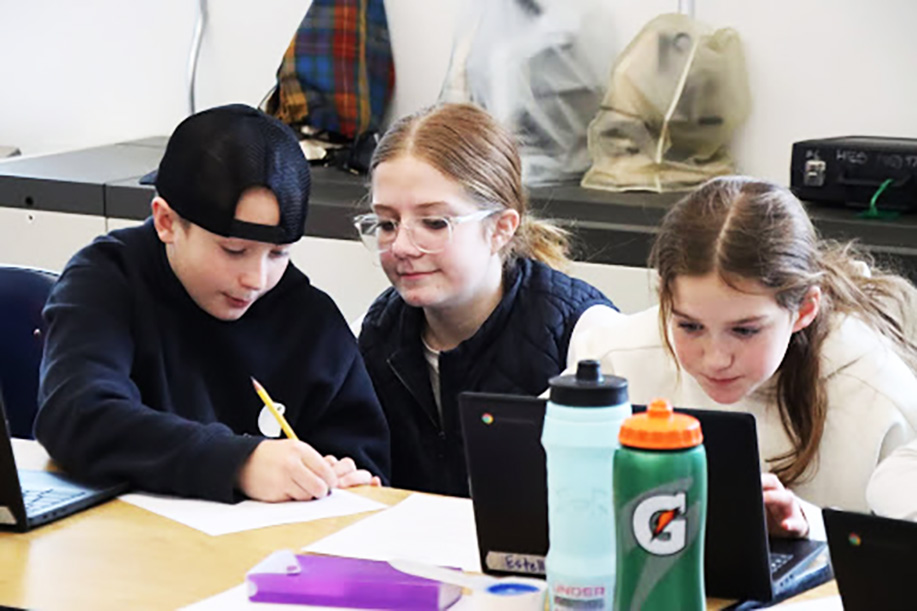
photo by Lisa Stinson
Over the past few months, lessons on chemical reactions, air pressure, buoyancy, sound and vibration, and states of matter have engaged younger learners while challenging older students to think more deeply.
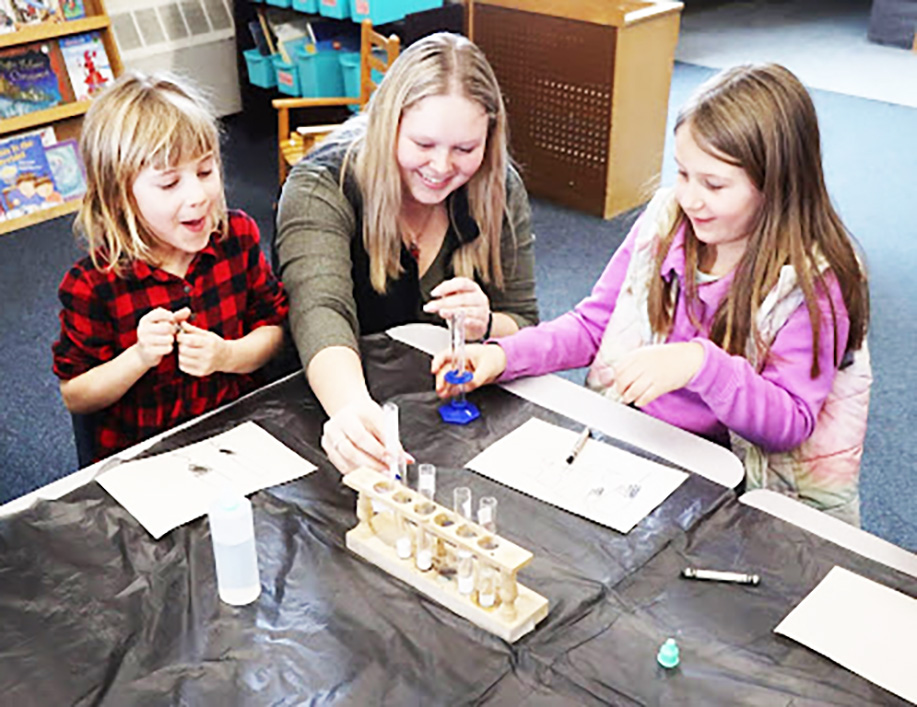
photo by Lisa Stinson
Drawing from Next Generation Science Standards, Vermont’s adopted science education framework, students like 11th-grader Cloey Camley research core ideas that will appeal to the targeted grade level. “When I decide what to teach, it generally depends on what I am interested in teaching. Because if I am not interested in teaching the topic, then the students won’t be interested. Mr. Considine helps us figure out what the standard for our topic is and how we can explain it at a sixth-grade level,” Camley said.

10th-grade student Willow Dyer (l) work together in a chemical reaction lab as part of a collaborative science unit between the two schools, December 11, 2025.
photo by Lisa Stinson
As lessons progress, moments when teaching leads to understanding have been the most exciting. Tenth grader Kayla Raitanen has been impressed with the kindergarteners’ curiosity and critical thinking. “With the chemical reaction lesson, students were engaged in what I was doing and whether something would explode or not. At one point, during the experiment, I heard a little girl say, ‘This one is cloudy; maybe that’s the reaction.’”
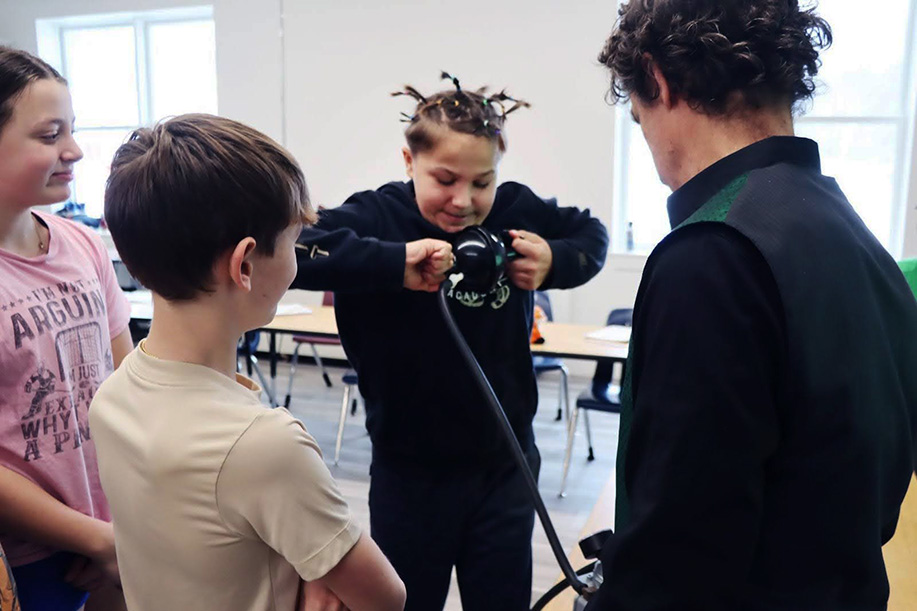
photo by Lisa Stinson
Camley takes her cues from the classroom atmosphere. “Generally, after we explain something, we will ask a question to check for their understanding, and that’s generally when you can see their mood change. Usually, if they are happy/excited, they understand it or at least think they understand it, and if they seem to be questioning their answer, they probably aren’t confident in their answer.”
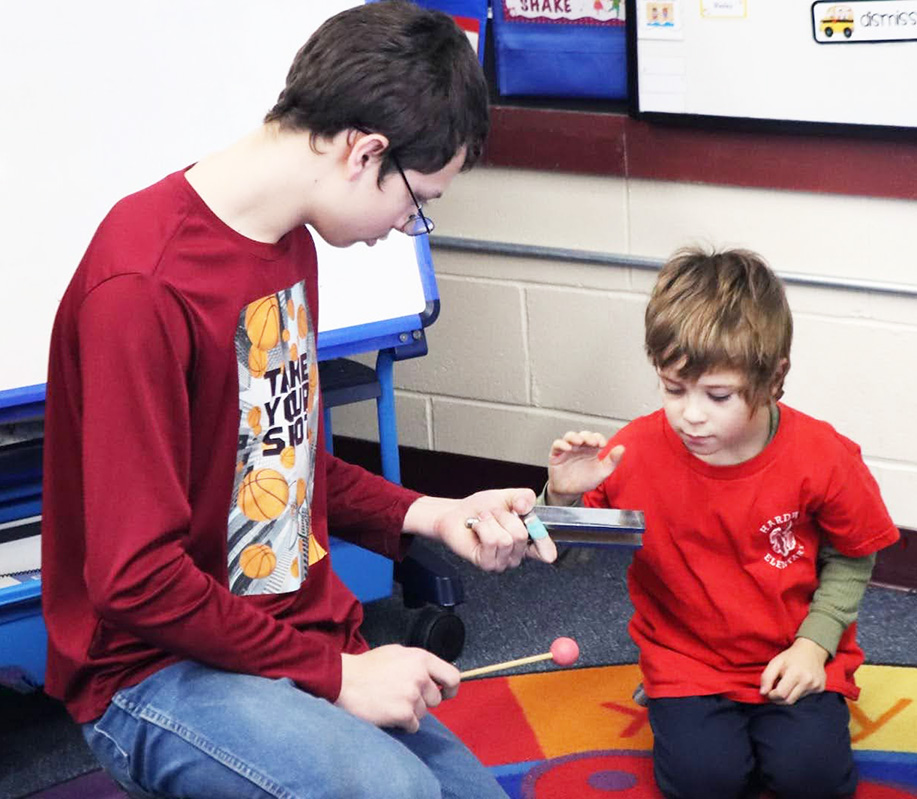
photo by Lisa Stinson
Of course, as any teacher would attest, not everything goes as planned in the classroom. Sometimes lessons run too long or too short, and Hazen’s student teachers must adjust on the fly. “When we don’t have enough to do, we improvise, ask more questions, or explain more to gauge an understanding from the students,” Camley commented.
While the excitement of a bubbling test tube or molecules in motion can kindle enthusiasm, the most powerful moments come from students learning together.
By stepping into the role of teacher, Hazen students are reinforcing their own understanding of science while helping younger learners gain confidence in asking questions and making observations.
For some, the experience has revealed an unexpected interest in teaching. “This experience taught me that the same topic can be taught in so many different ways for different ages and made me realize that I like teaching on a smaller scale,” said Camley.
Both schools hope to continue the program, underscoring the value of peer-led learning in science education.

