
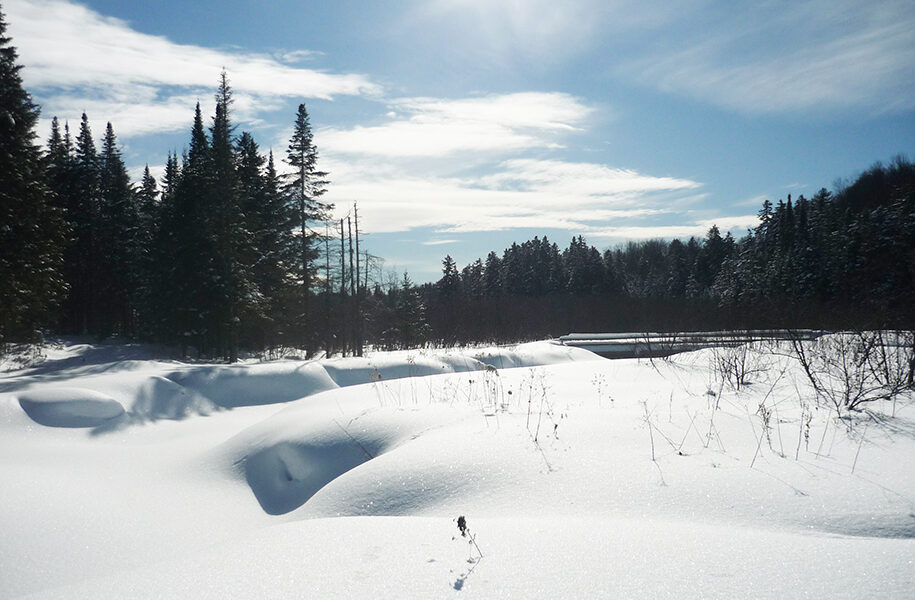


CRAFTSBURY – Imagine being dropped off in the midst of the Green River Reservoir state park for four days and three nights, at a time of deep snowpack.
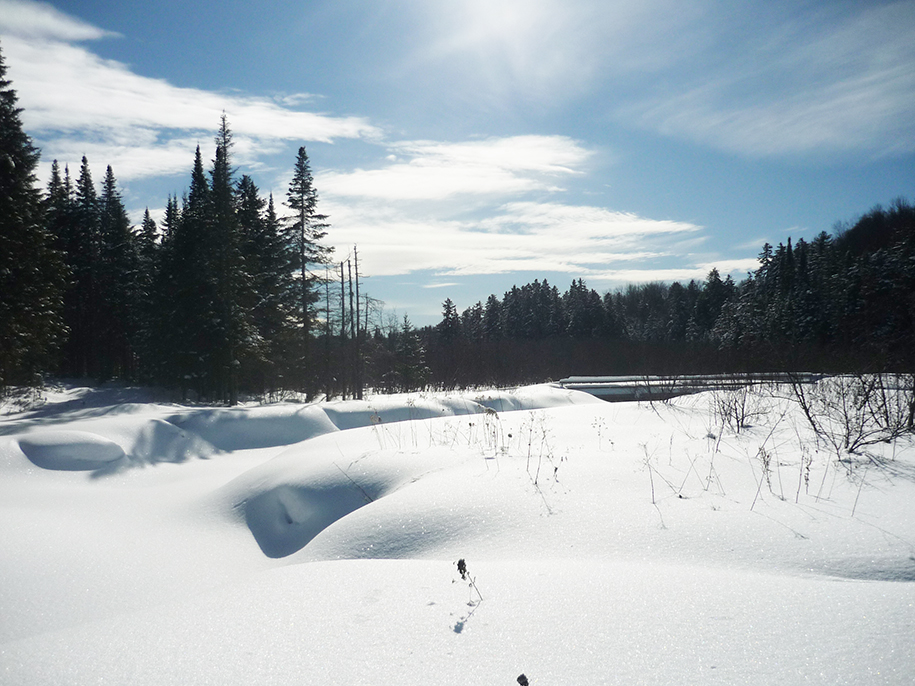
photo by Lew Collet
For some Sterling College students, that scenario was the reality they woke up to this past weekend. Most said it was fun, cold and unlike a typical camping trip. All agreed the experience was one they will take to other areas of their lives.
The expedition consists of three days and four nights of outdoor camping, using simple tarps for shelter and open fires. Students must gather their firewood to stay warm and boil water to drink or cook.
Dean of Academics, Dr. Laura A. Spence, explained the winter expedition has been an important part of the Sterling experience for decades, continuing from the boys’ school era through into the modern day. There’s been some changes along the way, and it’s not quite the same, she says, but the message and the transformational power of this single educational experience has very much remained.
“Part of the point about winter expeditions is, it’s perhaps more mental than it is physical. It’s extremely physical, because you’re carrying all of your stuff in the woods for four days. Everything you need, and you’re traipsing through thigh deep snow, you’ve got snowshoes, you’re pulling sleds. But the ability to do that is very strongly mental.
nd also, you can’t do it alone. So it’s a lot of team building, and you realize you need other people, and other people realize they need you. It’s just such a powerful experience.”
Spence says Sterling tries to instill the idea that everybody matters, and everyone is part of building the community, “Everybody has a responsibility to do that. Everybody brings their own skills to the table. Winter expedition is almost that in a nutshell, but throwing in extreme conditions.”
She explained it’s partly a matter of getting over that mental barrier; once a student can do that, what can’t they do?
“If you work hard, if you’re part of the team, if you’re able to grin and bear it, you can get to the end. . . We think of it as an experience which translates into any difficult period in your life, which can be very different. Because that mental fortitude necessary to survive four days at, zero degrees or minus 20 degrees, is potentially the same mental fortitude that gets you through many challenging times.”
Another important thing about winter expedition is that it connects alums across generations, she says, “Whether it’s a pretty rubbishy tarp setup, and you get covered in snow, or you burn your source in the fire, or you forgot to defrost your sandwich on your belly, and so you’re eating a frozen sandwich for lunch. All of those experiences, like, they happen in 1985, they happen in 2025.”
All in all, it’s a uniting experience while a lot of things around us change, Spence says. She also commended instructor Adrien Owens, faculty in environmental studies, outdoor education, as well as serving as director of athletics. This year was Owens’ estimated thirty-fifth expedition. The added skill of responsibility, sometimes teaching students survival skills from scratch, is surely a notable feat. Spence complimented Owen’s fortitude, taking students out into the risky environment to test their skills.
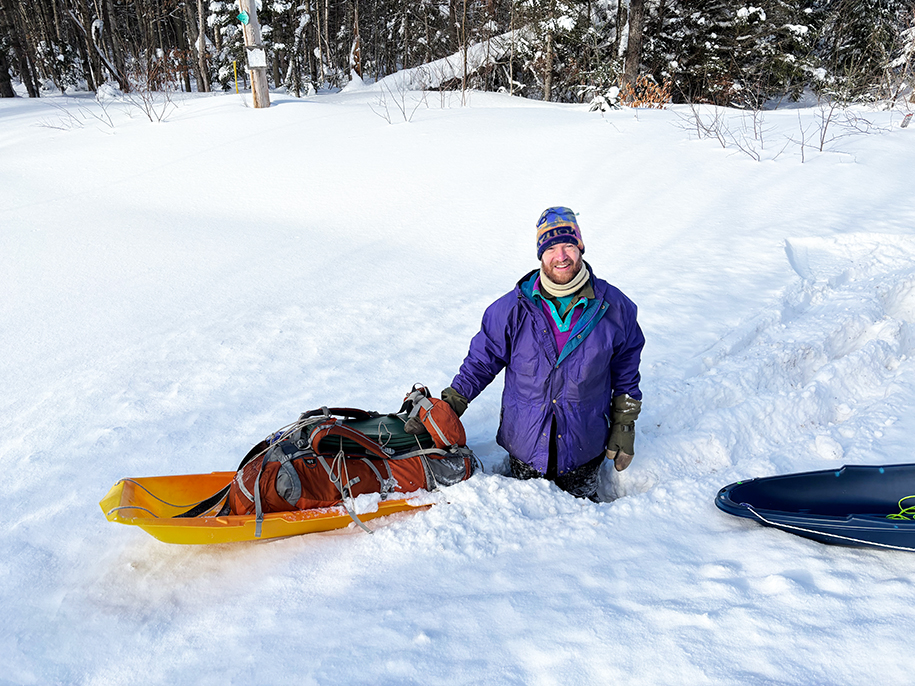
photo by Lew Collet
Owens offered some perspective, “Part of the exercise is to see how little they can make themselves comfortable with? It’s not the comfort they’re used to, but then they can make a new level of comfort within that . . . that’s kind of one of the big ideas, because it kind of resets what kind of standard of living do you need, in a material sense, even though the group part can be unlimited to how much fun you can have.”
Owens said he’s seen the value of the experience for different kinds of students over the years.
“They’ll get more out of one particular part, depending on the level of skills . . . say they’re in really great shape for snowshoeing, snowshoeing part is not gonna be a heavy duty challenge. But they’re gonna find something that’s challenging. Like, just getting water was slippery, and they fell on the stream while they were getting water. So they have to go through the challenges of drying off their clothes, or getting water for their groups.”
Owens doesn’t expect his students to live together forever, but they have to learn how for a few days.
“I think that’s one of the biggest skills, that’s very applicable outside life. Anytime you’re living with somebody, you have to work through, like, who’s washing the dishes, who’s getting the water, who’s, you know, taking up space, you’re elbowing me, move over,” Owens said.
Owens was sure to thank the twenty-odd private landowners who gave Sterling students permission to hike and camp for the duration of the expedition.
Concluding, Owens revealed the expedition was once required of all students. For the past ten years, it’s been an elective course.
“I think that’s been really gratifying, to see that they’ll choose that on purpose. This is going to be uncomfortable but they know they’re going to grow from it, or believe they’re going to grow over it.”
This year’s expedition was a first for students Lew Collet, Lael Burgess and Vivian Holmberg.
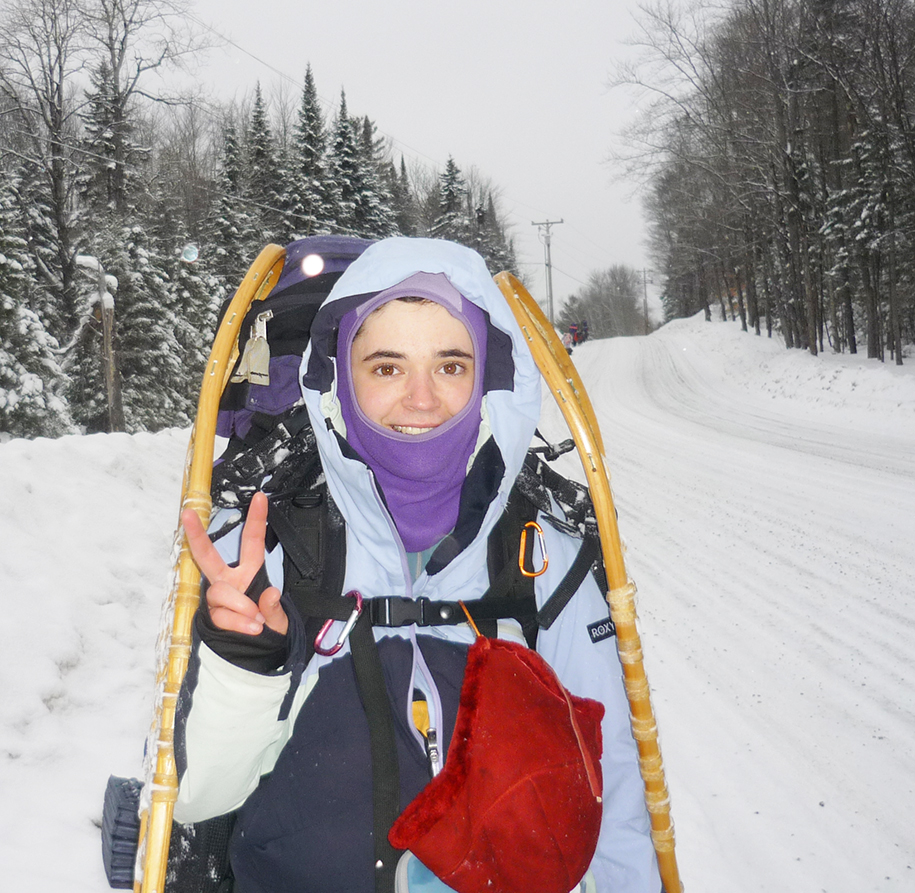
photo by Lew Collet
Collet said “I’ve been camping in the winter before, but it was very different because we didn’t bring tents or camp stoves, which is usually my jam.
nd I’ve never been camping with such a big group, yeah, which was a lot of fun.”
He continued, “The most important knowledge is knowing what to bring and what not to bring. And I think that comes from taking practice trips. Beyond that, the most important skill is cooperating with other people, because other people can do things you can’t do.”
Collet said the experience revealed he is more capable than he thought, “There’s a point of exhaustion and frustration with the amount of work you have to do. In my normal life, I’d be ‘this sucks, and I’m gonna go do something else,’ but you have to keep doing it. I realized that point of exhaustion isn’t my limit.”
Lael Burgess too commended Owens, “Our teacher prepared us really well. What comes with it being a primitive style is that it’s really simple. I would say we built those skills a little bit in class, then took them out in the field.”
Burgess reflected on take-aways from the experience, “Being willing to be uncomfortable. Obviously, it’s not going to be comfortable. Once you’re with that, everything becomes way more comfortable, because you’re like, this is how it is, I’m going to enjoy it, anyway.”
There were many highlights too, Burgess said, “My favorite part was snowshoeing every day.
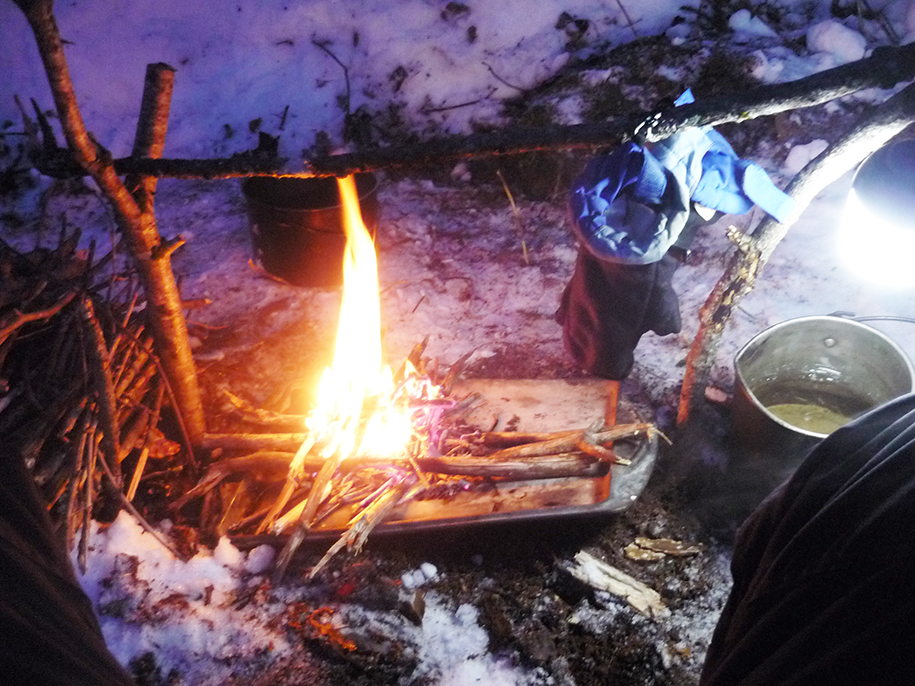
photo by Lew Collet
t was so fun, and it was so beautiful to see everybody walking in line. You could not do it if you didn’t work as a team. Basically, as you worked your way to the line, it got harder and then you broke trail, but then you got to go to the back of the line. Everybody would fist bump you once you stepped out of the way to wait to go to the back of the line. It was just so fun, and it was just incredibly familial.”
Vivan Holmberg said waking up to her boots frozen solid was a surprise, “After the first night I learned to stick water bottles and extra socks in them to hold them open, so they wouldn’t shrink and then freeze… you have to basically smash your boots until you think you can get in them in the morning.”
In preparing for the expedition, Holmberg said, “Knowing a few essential knots is pretty good, because that not only helps with making our shelter, but also when we would have snowshoe mishaps, or you need to secure an odd shaped object to your pack.”
She recalled an incident on a practice “uber light” trip, when she accidently overturned a nearly burning kettle, putting out the fire she and her companions had started. New firewood had to be collected, as well as restarting the fire.
“I think previously I probably would have just collapsed and started crying out of frustration. But there was a moment where I was kind of on the edge, and just started laughing hysterically.”
Holmberg says she found the strength to bargain with herself; she couldn’t collapse until eating dinner.
“Sometimes you realize, you feel like s***, and then you get a snack and the world is suddenly so much brighter.”

Raymonda Parchment is a Hardwick Gazette reporter. She recently graduated from Vermont State University - Castleton with a Bachelor’s Degree in English. She is a strong supporter of freedom of speech, and the right to publish information, opinions, and ideas without censorship or restraint. She is a lifelong lover of the written word, and is excited to join the team as a staff member.
