
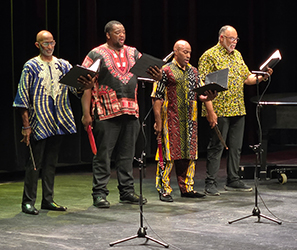


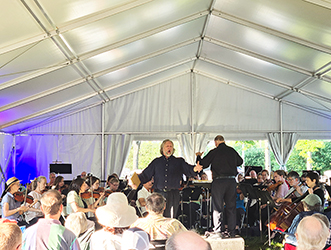
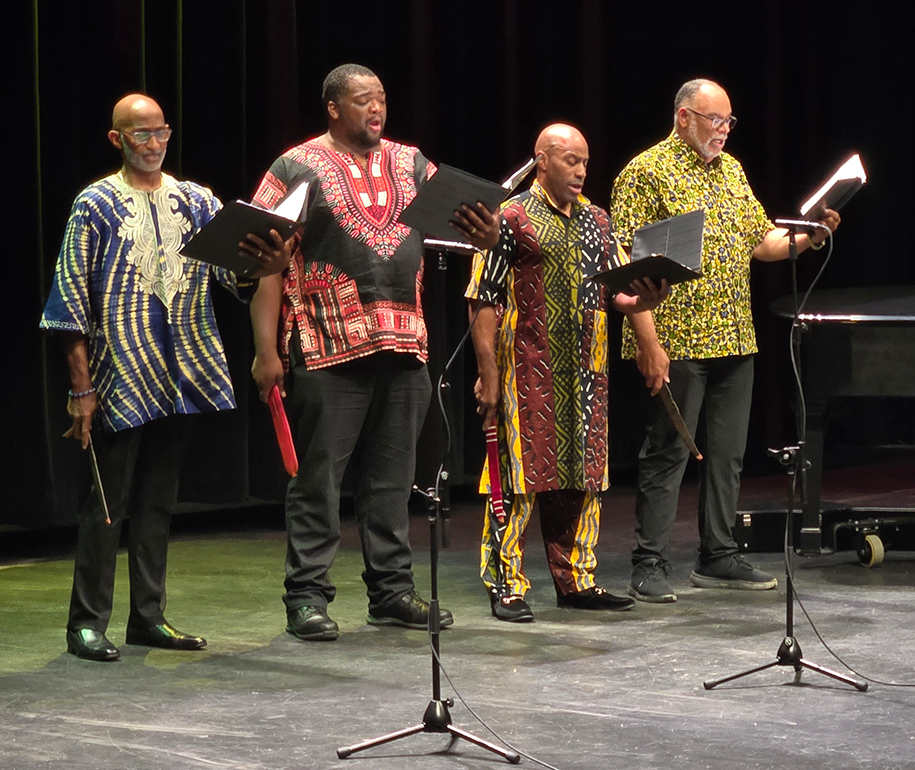
GREENSBORO – Last Friday afternoon and evening the Jubalo Singers from Berea College in Berea, Ky., came to the Highland Center for the Arts and gave a beautiful and inspiring concert entitled “A Journey of Freedom: Songs of Slavery and Emancipation.”
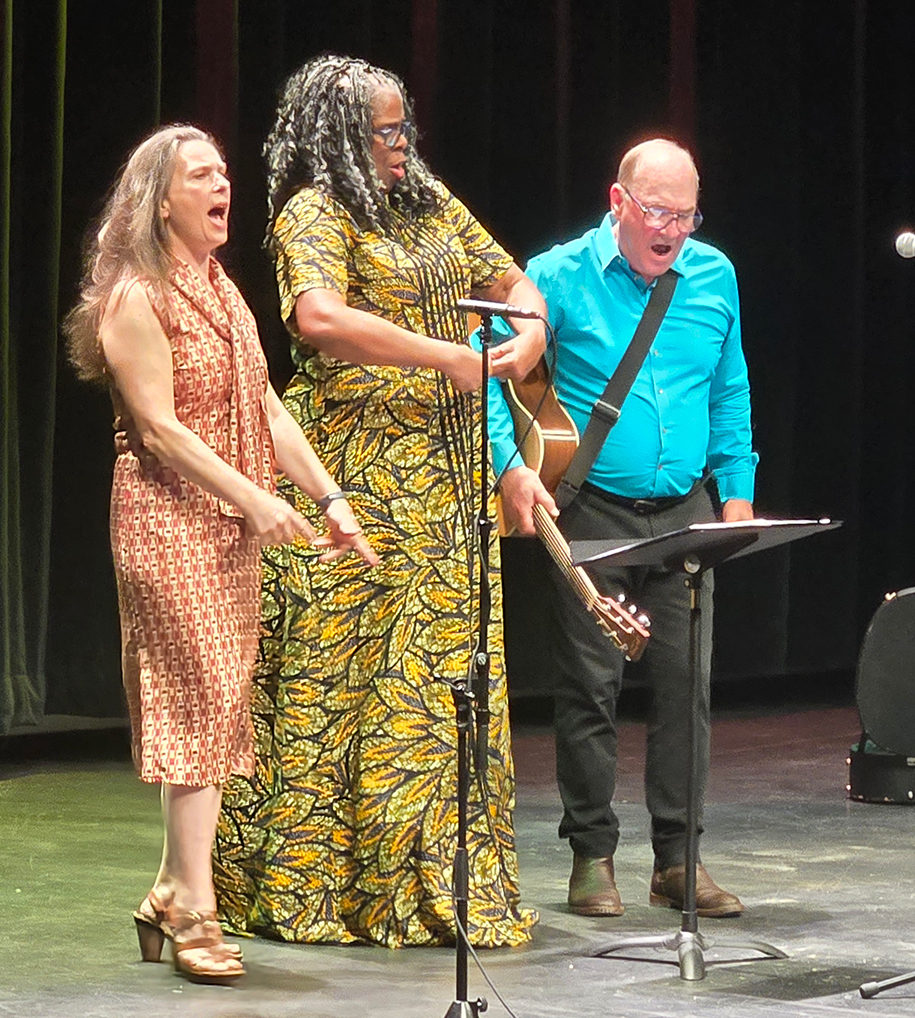
The selections were based on the original research of Mat Callahan into a whole genre of music written to protest slavery in this country by slaves themselves and abolitionists preceding the Civil War, many of which works have been ignored in favor of less controversial spiritual and gospel songs. His detailed history was published in 2022 and a songbook and two CD recordings were released recently in collaboration with Dr. Kathy Bullock. She was chair of the music department at Berea College for a long time and is now director and conductor of the Jubalo Singers, who have been on a national tour for almost two weeks this month.
Prior to the concert, from 4 to 5 p.m., Dr. Bullock gave a delightful workshop that outlined some of the background history of this significant movement to end slavery and also made possible for those participating to study and sing two songs from the period, “Nat Turner” and “March On,” She is a dynamic teacher with personal magnetism that communicates her love of music and how important it has been to bring about fundamental changes for freedom and justice not only to end slavery and in the struggle to achieve basic civil rights a hundred years later under Dr. Martin Luther King, but that music remains relevant today.
By coincidence this concert was held on Juneteenth, the anniversary of the final liberation of slaves in Texas on June 19, 1865. A further fascinating fact revealed by a member of the audience in the workshop was that Ray Francis Brown, the father of Andrew Brown, whose great generosity made possible this state of the art theater in Greensboro, brought the Fisk University Choir to Carnegie Hall in New York City in 1933 in an age when segregation and discrimination against African Americans was dominant.
The concert began with a representative of the Glover Equity group referring to the Underground Railway in Vermont that helped escaped slaves get to Canada, and he emphasized the responsibility to insure the freedom of others now. Then Mat Callahan gave a brief overview of his publications and some of his discoveries. The first song was “Agonizing, Cruel Slavery Days,” which had quite moving lyrics. Next was “The Negroes Complaint,” which put new words to the famous old hymn of “One Hundred,” a powerful message that evoked all the horrors of slavery.
“We’ll Soon Be Free/My Father How Long” was a plea to God to end the suffering of enslavement and be set free, with the phrase at the end, “We’ll fight for Liberty/When the Lord will call us home.” The Lord being a coded word for the Union Army. “The Hymn of Freedom” utilized the melody of “Hail Columbia,” at the time (1813) of the American national anthem, but the words were changed to open rebellion so that “Truth and justice will prevail/And every scheme of bondage fail.”
Then Mat Callahan was alone on stage with his guitar and he sang “The Year of Jubalo,” a very humorous song in a lively dance tempo celebrating the master of a plantation running away as Union forces advanced through the South during the Civil War. “Uncle Gabriel, the Negro General” was about the sad fate of a slave who was head of a revolt, was captured and hung, but refused to ever reveal the names of others involved in the insurrection. Callahan’s wife Yvonne Moore joined him for “Band of Thieves,” a very strongly worded song by Joshua McCarter Simpson, an African American Abolitionist, implicating the hypocrisy of those who pretended to be Christian but supported slavery.
“The True Spirit,” also by Simpson, was a deep appeal for Americans to join the abolitionist movement and save the country from the curse of slavery. “The Flight of the Bondman” described the escape of slaves to freedom in the Northern states, following the North Star at night. “The Voice of Six Hundred Thousand Nominally Free,” again composed by Simpson, to the tune of “The Marseillaise,” urges the free African Americans to arm and fight for freedom, declaring at the end, “liberty or death.” The Jubalo Singers group returned to the stage for “The Enlisted Men (The Negro Battle Hymn),” another call for former slaves to volunteer in the Union Army during the Civil War.
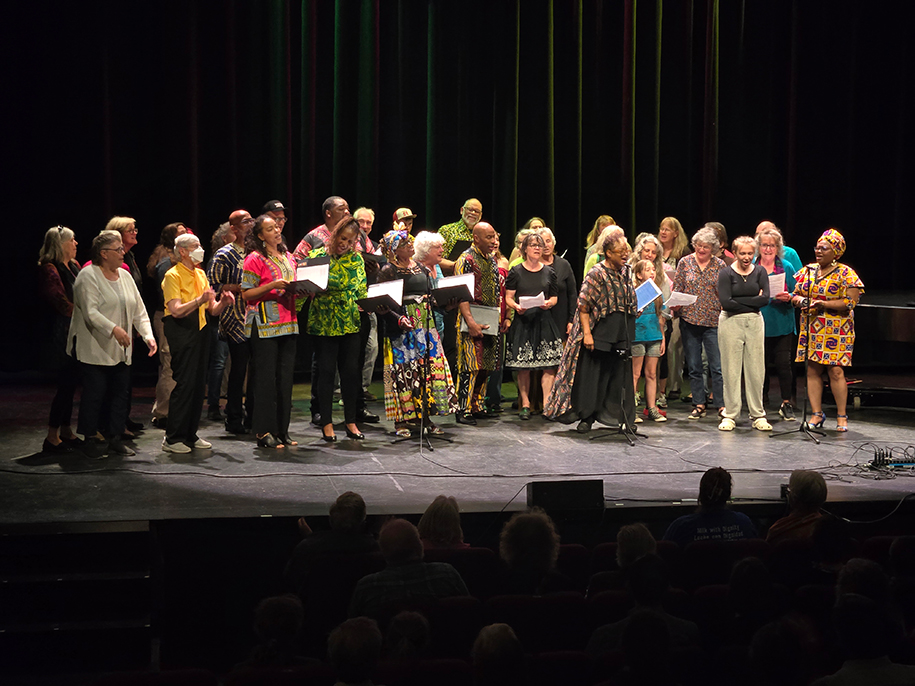
The last three songs of the program brought those in the audience who had come to the singing workshop earlier onto the stage with the Jubalo Singers for the two pieces they had practiced, “Nat Turner” and “March On.” The first was about a man who started a slave revolt in 1831, a hero in the black community, with the refrain, “But you can’t keep the world from moverin’ ‘round/Nor Nat Turner from gainin’ ground.” Next was “Children, We Shall Be Free,” from around 1800, with the hope that “the Lord will appear and end slavery” to which the audience joined in the singing. Everyone stood up for the final number, “March On,” written about 1820, its lyrics using Gospel references to “March on, and you shall gain the victory,” of freedom, with all on stage marching around in a circle.
The members of the Jubalo Singers were Dr. Kathy Bullock, conductor, her husband, Keith Bullock, Whit Whitaker, Terrence Witherspoon, Keith Nevels, Adwoa Nyamekye Blackburn, Arnaé Batson, Joyce Hudgies, Mary Jackson and Dr. Lisa Clark. Avery Craig was the photographer for the group.
The high-energy concert really demonstrated the power of music and gave everyone who attended a wealth of positive energy and hope much needed in these difficult times we are living through.

David K. Rodgers
David K. Rodgers is a writer, mason and card carrying dilettante, who dabbles and babbles in art. He has lived in East Craftsbury for the past 40 years.
