


NEWPORT – Greensboro residents have been paying close attention to a proposed rule revision for wakeboats that raises the minimum required area from 50 to 100 acres, reducing the number of lakes on which wakeboating is permitted from 30 to 18. Under the proposed rule revision, wakeboats would no longer be permitted on nearby Joe’s Pond in West Danville and Shadow Lake in Glover, but would continue to be permitted on Caspian Lake in Greensboro.
courtesy Lakes at Stake Wisconsin
Greensboro residents Stew Arnold and David Kelley, who have been closely following the process attended anAgency of Natural Resources (ANR) Department of Environmental Conservation (DEC) pre-rulemaking meeting, July 31, in Newport where an ANR presentation of the proposed changes was followed by topical conversation about the various provisions of the changes being proposed with time for public comment. Arnold had attended a similar meeting the previous evening in Barre as well.
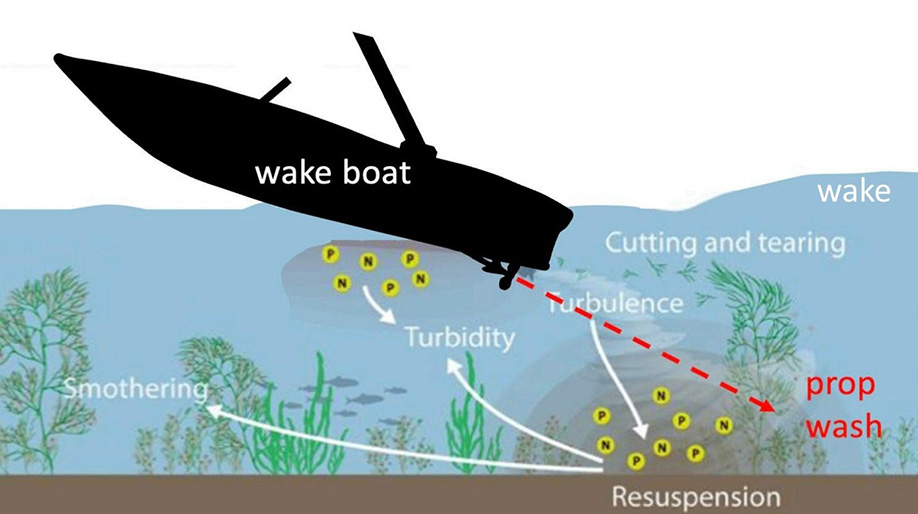
In an email message to area residents early in July 30, Leanne Harple wrote, “Last night, the same meeting was held in Barre and was attended by many wake boat owners and supporters, both in person and online. They voiced strong opposition to the proposed changes. It is essential that the ANR also have the opportunity to hear from those who support the proposed new regulations and who understand the real impact that wake boats have on small lakes-including shoreline erosion, damage to fish habitats, the spread of invasive species, and their overall incompatibility with shallow, narrow bodies of water.”
Arnold said he proposed a special rule that would allow wakeboats to be banned on any lake that had not yet seen a wakeboat and heard comments in support of the proposal from those with similar concerns about others of the 18 lakes the new rule would permit wakeboats on.
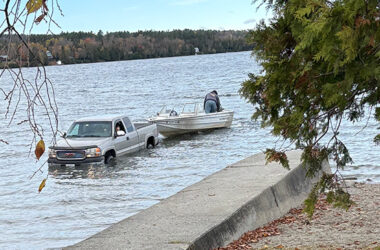
Caspian Lake has not yet seen a wakeboat, despite their being unregulated until the initial rules went into effect before this year’s boating season. That’s been helped in part through a Hardwick Electric Department prohibition on the launching of wakeboats using the boat ramp owned by them at the Caspian Lake Beach and the limited access to launch a sizeable boat elsewhere on the lake shore.
A provision of the current rules requires cleaning of a boat’s built-in tanks used to store water as ballast when a wakeboat is moved to another lake, to reduce the possibility of transporting invasive species of plants and animals to uncontaminated bodies of water.
Caspian Lake has a long-standing program of greeters at the boat launch who help to educate boaters on cleaning their boats, and a wash station to facilitate that cleaning, which has helped Caspian Lake to remain uncontaminated by invasive plants and animals. Kelley said he had concerns about the transport of invasive species between lakes and made several comments, including the suggestion that the rules don’t adequately “incorporate a definition of decontamination” for wakeboats, which “are almost impossible to clean.”
He also said, “by weakening an already weak rule, the new proposal potentially creates more pressure on the 18“ remaining lakes. “Clearly the change is an acknowledgment of the problem,” Kelly said.
During the initial wakeboat rule-making DEC had received petitions from ten lakes requesting restrictions on wakeboats. Those petitions were dismissed “out-of-hand” according to Kelley, “creating cynicism about the whole process.” He said the state has a history of setting high standards surrounding recreational use of state resources based on his experience working with ski areas, but this process is different, he said.
Greensboro chose not to appeal dismissal of its petition in environmental court, instead following this new round of rule-making, said Kelley. He is “Hopeful that comments will be heard and the proposed rule will be revised in keeping with this round of public comments.
“If you look at data on the spread of invasives in Vermont over the last 30 or 40 years, they continue to spread,” said Kelley. “If we’re not careful it will be a disaster.”
He suggests the best course for the state to follow would be to give authority to municipalities as they did with Greensboro for shoreline protection. The town has developed standards that serve the area well, maintaining the lake’s Class A1 water quality, Kelley said he thinks the town could come up with a rule that would work.
The Vermont Agency of Natural Resources is accepting written feedback on proposed use of public waters rule changes until 4:30 p.m., Tuesday, Aug. 19 at [email protected].

Paul Fixx is editor of The Hardwick Gazette and lives in Hardwick.
