



NORTH ADAMS, Mass. – Most gardeners are familiar with the benefits of mulch. Its application helps suppress weeds, conserves soil moisture and helps regulate soil temperature. It can also help with erosion control by keeping topsoil in place.
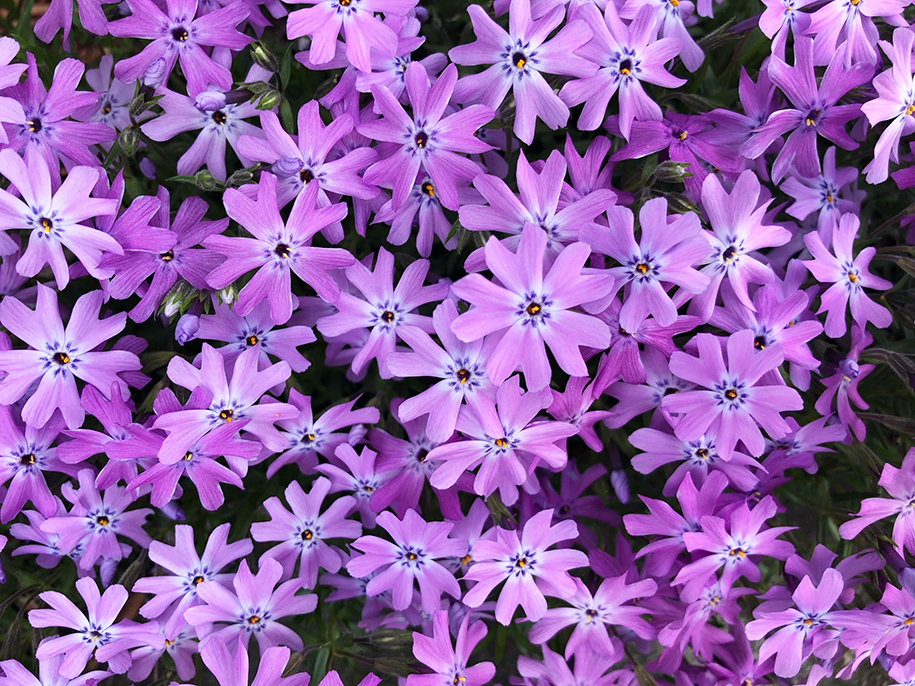
photo by Debra Heleba
Plants can also act as a living mulch A groundcover plant is typically a hardy perennial that’s low maintenance, low growing and will spread to form a dense carpet over bare ground. A groundcover’s roots help keep soil in place, particularly on hillsides where bark or other types of mulch might wash away in a heavy rain. The shade provided by a groundcover’s foliage can help regulate soil temperature and retain moisture.
In addition to providing the benefits of a traditional mulch, groundcovers can help keep weed seeds from reaching the soil, preventing germination. Flowering groundcovers provide nectar for bees and other pollinators. Their foliage may provide a home and food for beneficial insects. Those that fruit may attract birds to the garden.
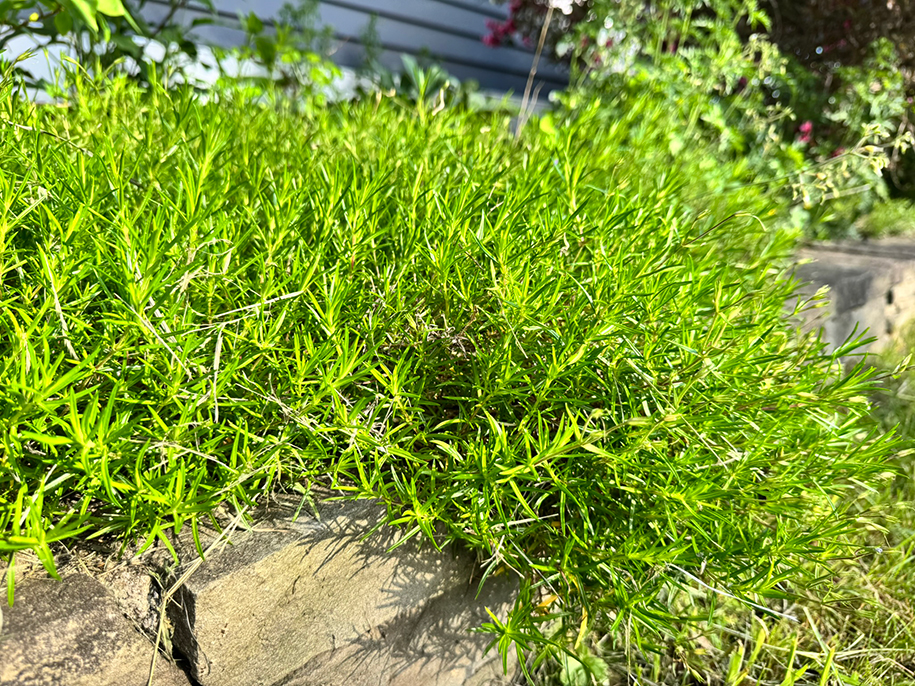
photo by Debra Heleba
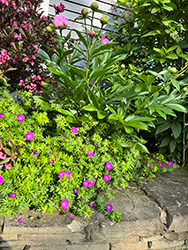
For those who like the look of neatly cropped grass but have trouble with the logistics of mowing on a hillside, consider Moss phlox (Phlox subulata). While not meant for heavy foot traffic, at only two to four inches in height, it offers a carpet of green year-round. In spring, moss phlox produces a dramatic display of white, pink or blue flowers. Hardy in United States Department of Agriculture Hardiness Zones 3 to 9, a single plant will spread about 24 inches and can be propagated by division or by rooting stem cuttings. It’s at home in borders, on hillsides, and in rock gardens. It grows best in full sun.
The American cranberry (Vaccinium macrocarpon) has a low-growth habit of only four to six inches in height. It is hardy in Zones 3 to 7, its evergreen foliage can serve as a groundcover in sunny areas, and its fruit is edible.
Coral bells (Heuchera) add color to areas of part sun to full shade. Hardy in Zones 4 to 9, the scalloped foliage of these evergreen, mounding plants is the star. Varieties are available in shades ranging from deep purple to red, burgundy, peach and even vibrant lime green. In late spring or early summer, it produces small flowers that attract hummingbirds.
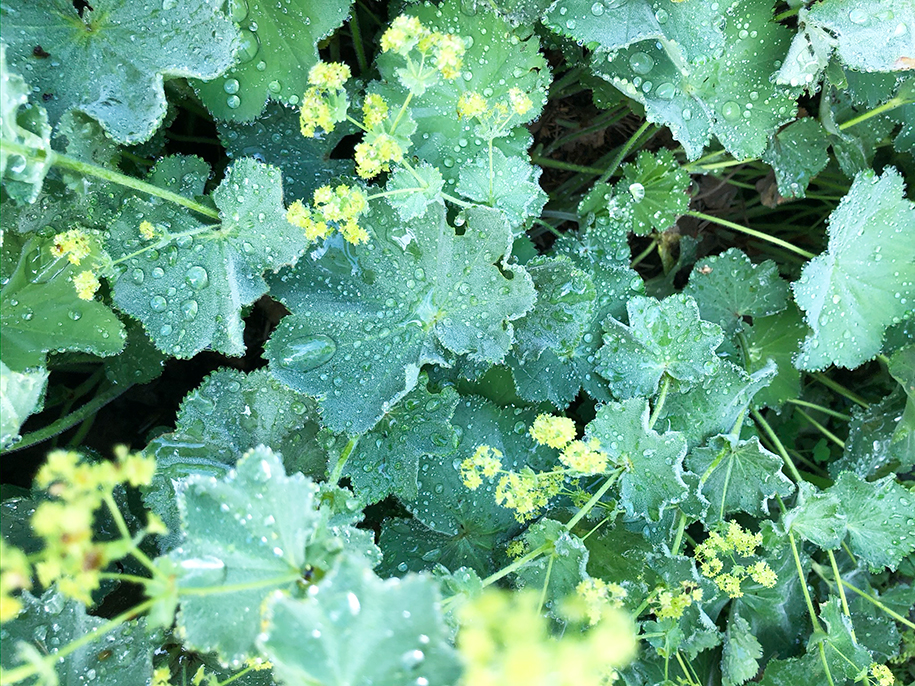
photo by Debra Heleba
Lady’s mantle (Alchemilla mollis) is hardy in Zones 3 to 8, depending on the variety. It forms 12-inch-high mounds of scalloped leaves that will turn brown as temperatures drop in the fall. New growth appears in early spring. In summer, lady’s mantle is covered in waves of yellow flowers.
Japanese painted fern (Athyrium niponicum) and other ferns are deer resistant and at home in full shade. Ferns are generally hardy in Zones 3 to 8. Mature size and whether foliage remains evergreen or dies back in fall depends on the variety.
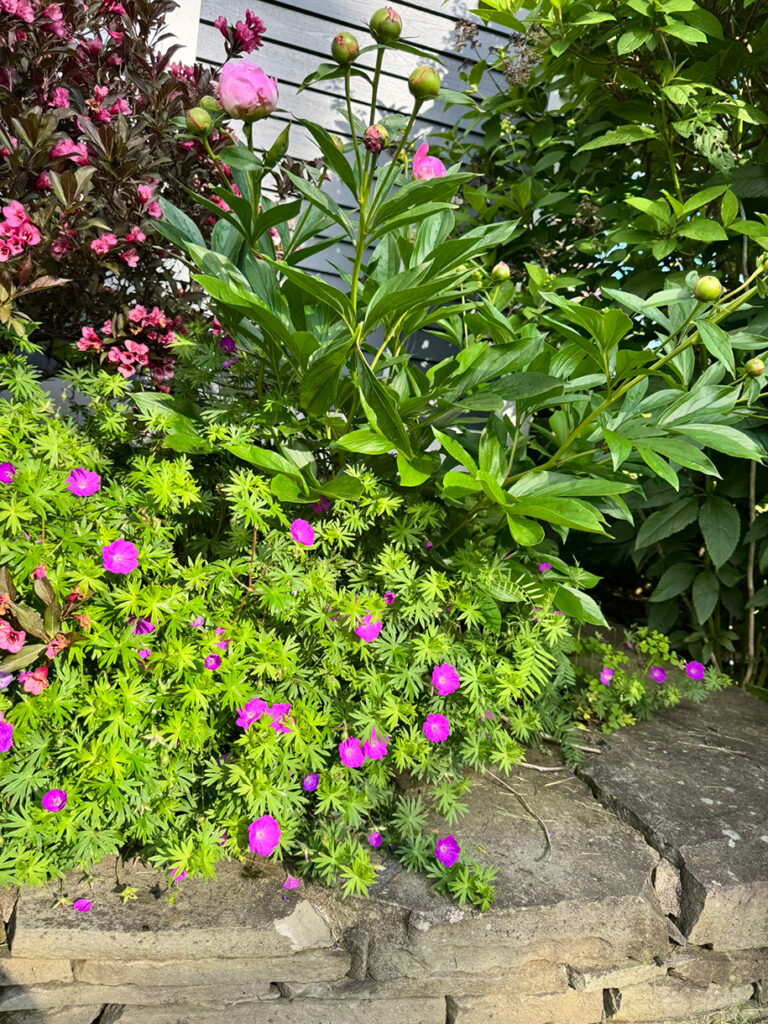
photo by Debra Heleba
Groundcovers are often a mass planting of a single type of plant. However, it can be more visually interesting, for example, to use a variety of ferns or a combination of hosta, coral bells, and lady’s mantle on a shady slope.
When selecting a groundcover plant, be sure to take into consideration its mature size. Space plants accordingly, using a traditional mulch between plants until they mature and fill in the area between them.
Deborah Benoit is a UVM Extension Master Gardener from North Adams, Mass., who volunteers as a garden columnist and participates in Bennington County Extension Master Gardener Chapter activities.

Deborah J. Benoit
Deborah Benoit is a UVM Extension Master Gardener who volunteers as a garden columnist and for Bennington County Extension Master Gardener Chapter activities.
