




photo by Ann Hazelrigg
Bright orange orbs with gelatinous tendrils spotted on native eastern red cedar and ornamental cedars are the galls of the cedar apple rust fungus.
by Ann Hazelrigg, Extension Plant Pathologist
BURLINGTON – With our recent rainy weather, you may have noticed bright orange orbs with gelatinous tendrils on our native eastern red cedar and ornamental cedars (Juniperus spp.). These are the galls of the cedar apple rust disease pathogen, Gymnosporangium juniperi-virginianae Schwein.
This unique fungus disease requires two hosts within a couple of miles of each other to complete its lifecycle, a juniper species and an apple, crabapple, serviceberry, hawthorn or quince host. The pathogen overwinters on the evergreen host as a one- to two-inch knotty brown gall or swelling.
When the weather warms in May and conditions are rainy, orange gelatinous “spore horns” are produced. The gall functions as a fruiting body, releasing spores that are carried on wind currents to the alternate host. These fruiting bodies can dry down between rains and then become active again five to seven times following rainy weather through May and June.
When the fungus infects the alternate host, it causes a leaf spot that initially appears on the foliage as small yellow spots. These gradually enlarge and turn bright yellow-orange, often with a dark orange border.
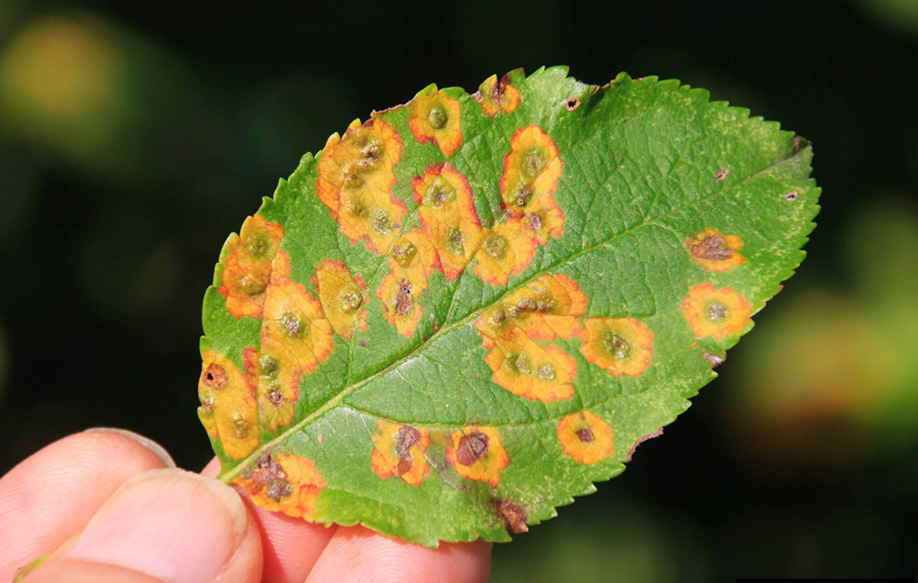
photo by James Chatfield, Ohio State University
The foliage of apple trees and other alternate hosts for the cedar apple rust fungus will have leaf spots that initially appear as small yellow spots that gradually get bigger and turn bright yellow-orange, often with a dark orange border.
The leaf spot stage on apples and crabapples can impact the health and vigor of the apple host and has probably contributed to some of the early defoliation we have noted in the past few years. On the leaf undersides another kind of fruiting body is apparent, releasing spores in summer that are carried back to the juniper host completing the lifecycle.
Although this disease rarely kills either host, you should try to avoid growing susceptible junipers near crabapples and apples. When planting new apples or crabapples, select rust-resistant cultivars.
Even if the fruits on your apple trees show symptoms of the disease, the apples are safe to eat. However, you may want to remove the blemished area first.
Pruning apples and crabapples yearly to open them up to air and light can reduce leaf wetness and reduce infection. Removing dormant galls from junipers before the orange-colored spore tendrils are formed in the spring can also help to reduce the amount of disease. Fungicide control for the disease is not practical or necessary.
[Dr. Ann Hazelrigg is the University of Vermont Extension plant pathologist and director of the UVM Plant Diagnostic Clinic.]


