

HARDWICK – The food hub, established by the nonprofit Center For an Agricultural Economy (CAE), is celebrating its first year of operations this spring.
Located at the Yellow Barn complex, the new building allows Farm Connex, a local food logistics and transportation partner, to operate out of a space more appropriate for their size. In addition to the energy-efficient refrigeration and heating systems, the space expands CAE’s storage capacity and has a designated gathering space for public use.
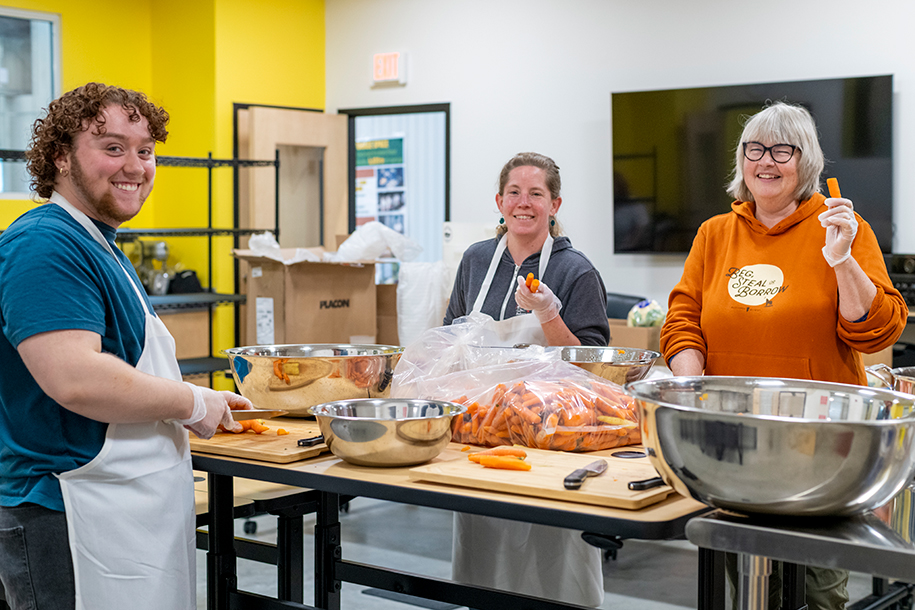
photo by Kelly Bogel Stokes
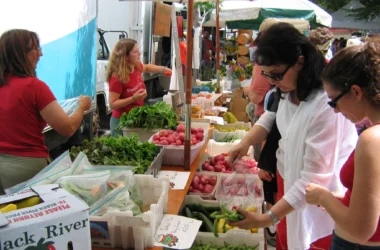
Products from local farms and food businesses pass through the Food Hub weekly, on their way from farms to markets across the state and beyond. According to the Northern Vermont Development Association, the Food Hub has become a critical piece of community infrastructure in Hardwick and has served multiple uses in its first year of operation as a shared-use business incubator.
Since Farm Connex and Community Connection moved into the facility, $13 million in local food has been distributed.
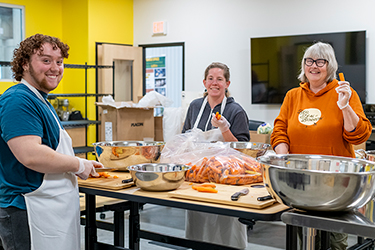
Executive Director Jon Ramsay shared a highlight from the past year. “One thing that stuck out to me was the gap in SNAP benefits back in the fall, and we were immediately able to work with community partners and make soup in the food hub that was distributed to folks in the area, and we worked with the Hardwick Area Food Pantry on that. To have the infrastructure to respond immediately like that, really helps solidify why this local food system infrastructure is so important for communities.”
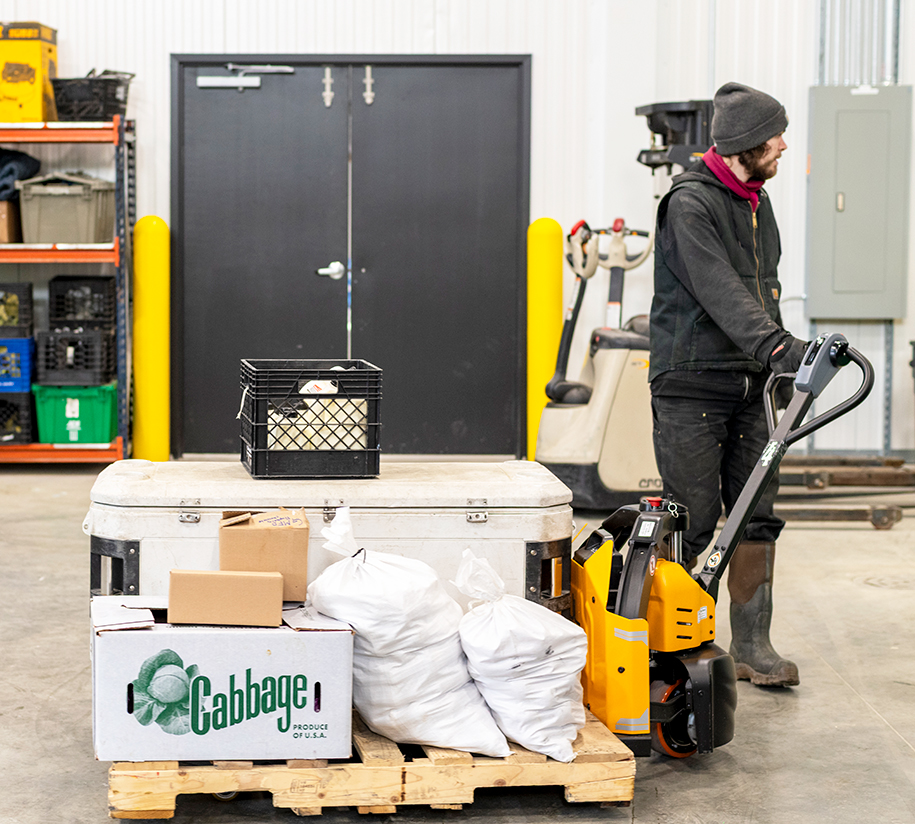
photo by Kelly Bogel Stokes
Local businesses and nonprofits stepped up with donations in November for the soup, made in the food hub multipurpose community room.
Almost everything for the project was donated: Front Seat Coffee owner Tobin Porter provided food, supplies and equipment; Snug Valley Farm and Saw Mill Brook Farm shared local meat; Pete’s Greens, carrots and vegetables; Salvation Farms came up with gleaned vegetables and extras from their freezer. Hill Farmstead Brewery also jumped in with a contribution.
Ramsay provided another example. “We’ve just come through a really cold, snowy winter and to see all of the fresh food coming off of farms, going through the Food Hub, and seeing those products come through there and knowing that is supporting our local farms through a time of the year where it’s challenging and difficult, that also, again, really validates why this local food system infrastructure is so critical and important.”
According to hardwickagriculture.org, the Food Hub was designed to generate zero greenhouse gas emissions by utilizing an innovative CO2-based refrigeration system, capturing and recirculating the heat generated from the refrigeration system to serve as the primary heat source for the space; facilitating the annual transportation of over $15 million in local food within the first two years of occupancy; improve farm efficiency and business viability with access to aggregation, fulfillment and distribution services; provide four different types of storage space (dry, refrigerated, root and frozen) for farms and community partners to increase the shelf life of perishable products and decrease duplicative infrastructure and be a model for large-scale, energy-efficient agricultural infrastructure.
Improvements to the space, outside and in, continue; in late October a 400 panel solar installation was completed on the roof of the food hub in Hardwick. The solar panels, installed by Green Mountain Solar, are the final piece of a four-part efficient heating, cooling and power system for the facility.
“The solar array will provide long-term environmental benefits and play a crucial role in the sustainability of this critical new piece of local food system infrastructure. It will also help keep costs down for the farms using the facility, which is a direct benefit to their operations. It marks an important milestone in CAE’s commitment to being a good steward of the land,” Ramsay said in a December newsletter.
With the help of Hazen Union students from the Dare To Be Me Class, led by Anja Pjeffer and Sol Lew-Smith, a restoration of disturbed wetland next to the food hub has also begun. In the first of a three-phase tree planting project on the Wright Farm Road site, owned by the town, 75 trees and woody species were planted to begin repairing the ecosystem health of an area that was heavily impacted by the recent development.

Raymonda Parchment is a Hardwick Gazette reporter. She recently graduated from Vermont State University - Castleton with a Bachelor’s Degree in English. She is a strong supporter of freedom of speech, and the right to publish information, opinions, and ideas without censorship or restraint. She is a lifelong lover of the written word, and is excited to join the team as a staff member.
