


WHITE RIVER JUNCTION – The changing colors of fall leaves is undeniably one of the great spectacles of the northern hardwood forests. But consider for a moment the other end of the growing season from early April through late May, the color palette of our local forests changes at breathtaking speed. The daily commute, whether on a highway or trundling down a back road next to a rushing stream, becomes a crash course in forest diversity and structure, with each day revealing a new shade of white or green corresponding to a unique tree or shrub species.
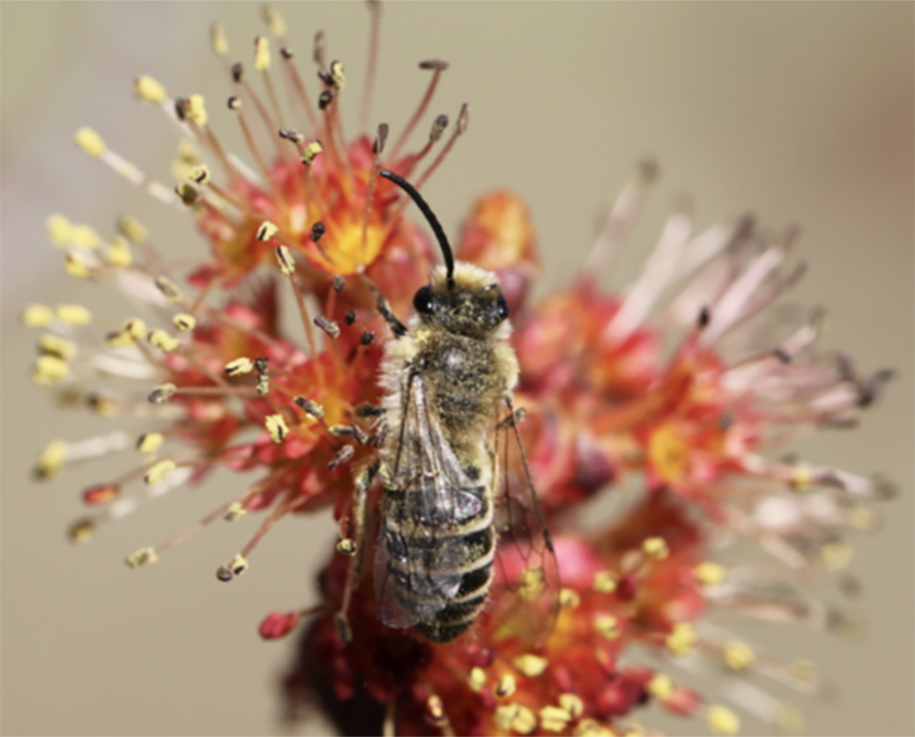
photo by Spencer Hardy
The first color arrives with the swelling maple buds, often prior to snow melt, but the party really gets started when the Red Maples open their flowers and the bottom lands tinge red. Shortly thereafter, the early willow species of wet meadows turn yellow with their catkins full of pollen. After the willows, there is a rapid fire collection of flowering shrubs, each like ephemeral fireworks with their own signature shade of white and preferred niche on the landscape. In rough phenological order, Downy Serviceberry, Smooth Serviceberry, American Plum, Pin Cherry, Chokecherry, Black Cherry and hawthorns bring us to the end of May and are then eventually supplanted by another cast of late spring and early summer species.
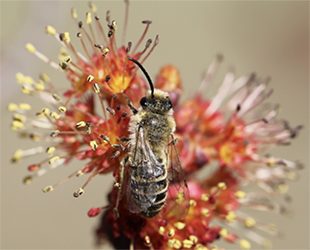
While these explosions of color can be witnessed at highway speeds, there is another whole layer of associated color and natural history that requires closer observation. With decent weather, all of these shrubs and trees are likely to be literally buzzing with potentially hundreds of insects, many of them wild bees. We know of nearly 60 species of mining bees that are likely to be active in May in Vermont. Twenty-four of them are specialists, the picky eaters of the bee world, only gathering pollen from a small subset of the available flowers.
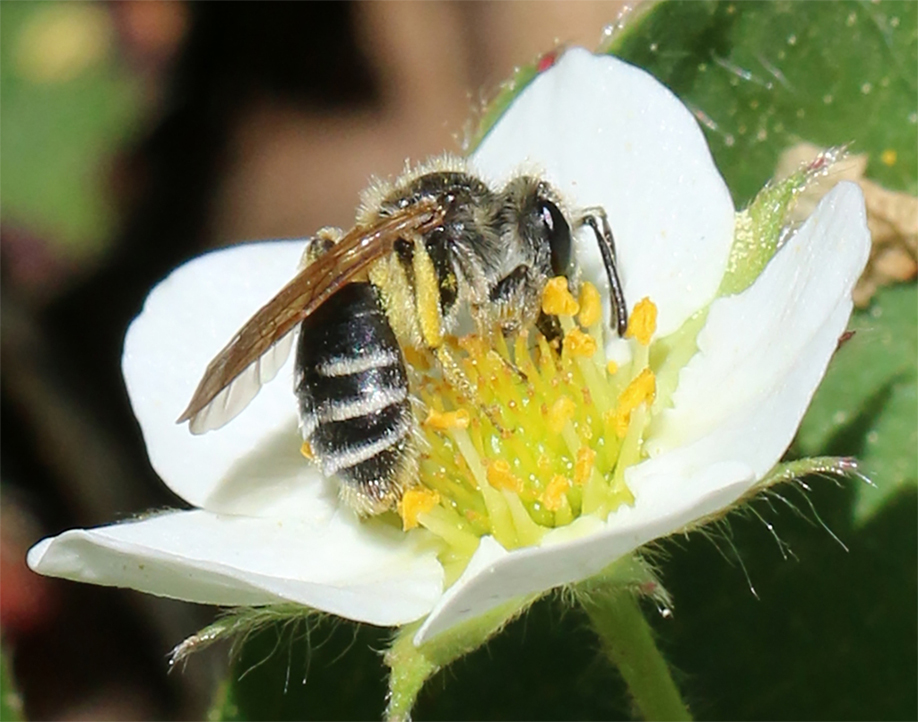
photo by Gabriele Monshausen
Within the shrub-associated mining bees, there are seven species that are dependent on willows, four that need dogwoods, and two associated with blueberries, plus a number of others that have a strong preference for flowering shrubs in general. And of course this explosion of flowers in the woods doesn’t go unnoticed by the less picky bees. Watching bumble bee queens cruising a patch of willows has become a spring ritual for me.
Perhaps because I perceive them as overlooked, and I like to root for the underdog, I’ve increasingly found myself drawn to our woody species and will promote their virtues whenever I’m given a chance. There are also, of course, bees that like the more quintessential spring flowers. Many of our rich hardwood forests are awesome places to look for bees, but often only for a few sunny days in early May before the canopy closes and shades out the spring ephemerals. Spring Beauty, Trout Lily, and bellworts are true spring ephemerals that have associated specialist bees.
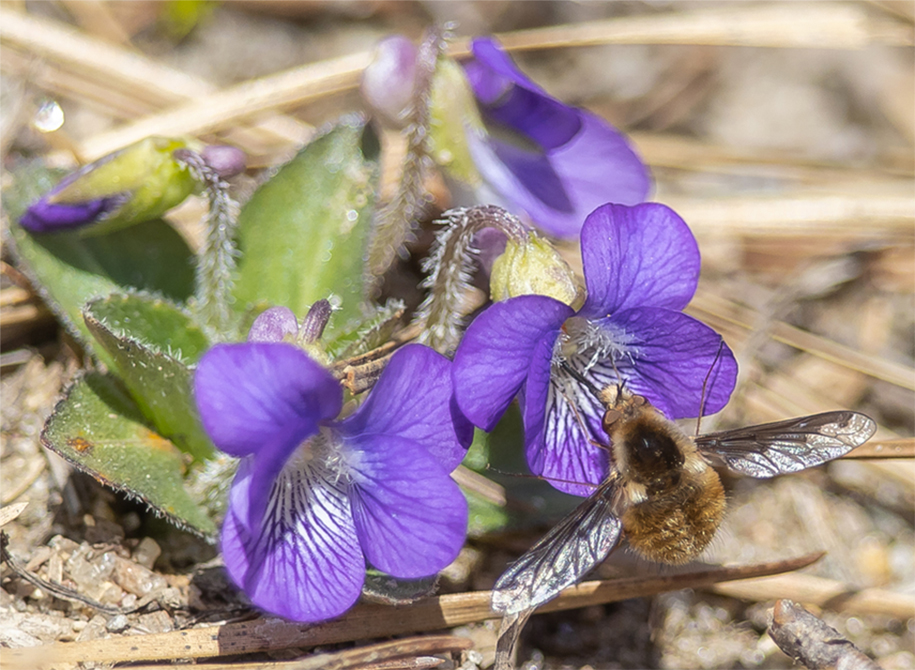
photos by Jeremy Colemen
Other spring plants that host specialist bees include Wild Geranium, Golden Alexander, Wild Strawberry, Violet spp., and Virginia Waterleaf.
With so many picky bees, each with their own diet, phenology, and nesting habitat, it’s hard to know what to prioritize in efforts to help protect them, especially for backyard naturalists. Here are a few tangible ideas to ponder this spring while cruising back roads and admiring the return of color to the landscape.
Mow less. Even just raising your mower blade gives wild strawberries, violets, and many others a chance to bloom. Also, unfertilized lawns and meadows tend to have a higher portion of flowering forbs, and thus more bees.
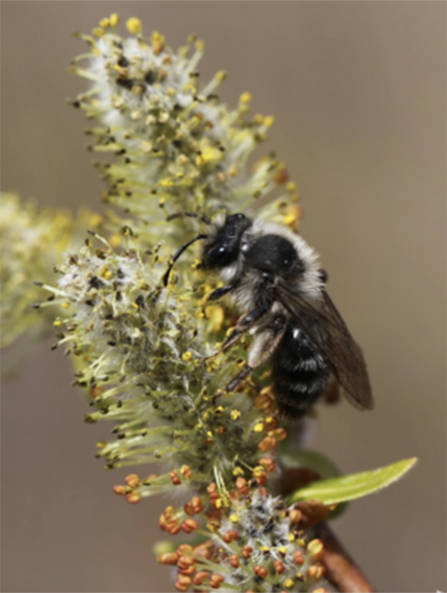
photo by Spencer Hardy
Buy bird-friendly maple syrup. It’s good for the bees too.
Eat more venison. In many areas, deer are the number one killer of many of the plants mentioned above, especially our woodland ephemerals.
Plant some fruit trees. Though the cultivated varieties might not be as good as the native species, they are still popular with a lot of bees, and certainly better than turf grass. Think plums, cherries, apples, blueberries, currants, and gooseberries.
Avoid pesticides. Bees are insects (shocker, I know) and can be heavily impacted by many of the insecticides used on farms and backyards (think mosquito and tick control, and Raid). Choosing organic fruits at the store is a good way to limit bees exposure, since some fruits are often sprayed while the crops are blooming.

