
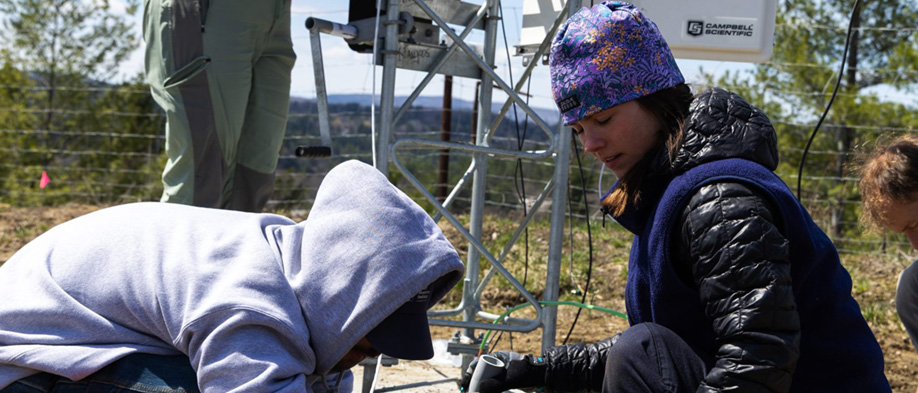


LYNDONVILLE – A new University of Vermont extreme weather monitoring station opened in Lyndonville recently, the first in a planned network of monitoring stations to help fill gaps in extreme weather predictions and response.
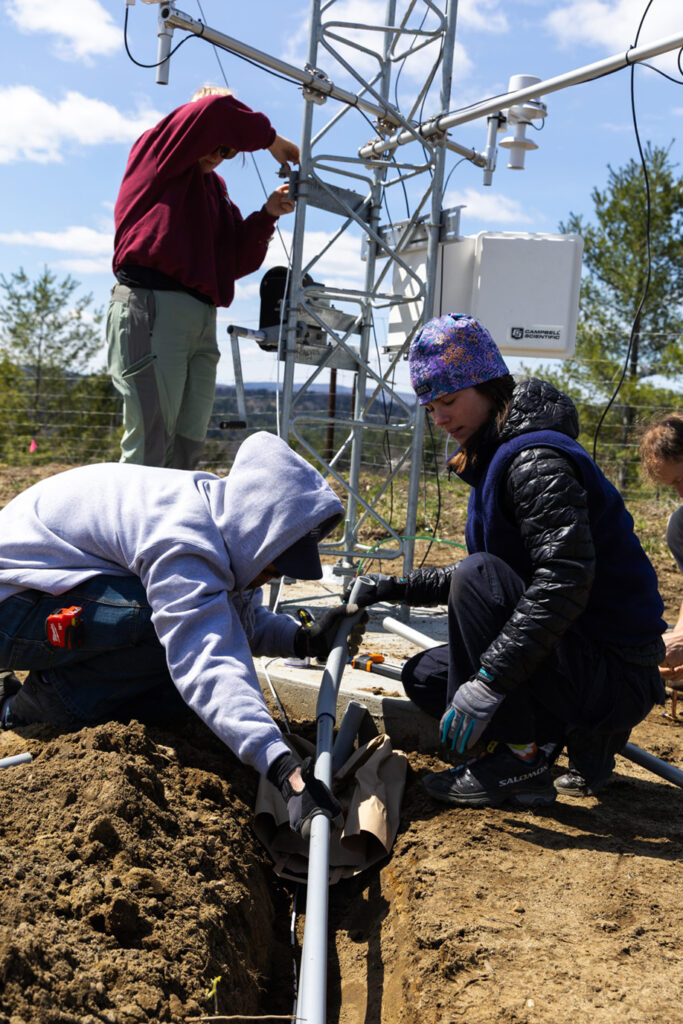
courtesy photo
The station will be able to monitor the lead-up to major weather events like flooding or blizzards, giving the National Weather Service (NWS) and state level emergency response officials localized data to inform evacuations and reducing the severity of property damage, according to Joshua Beneš, associate director of research facilities and networks at the UVM Water Resources Institute.
Beneš said that even a few hours more of lead time before a flooding event escalates can have a huge impact for a local community.
Vermont’s geography makes it susceptible to smaller isolated extreme weather, according to Gabriel Langbauer, the meteorologist-in-charge at the NWS regional office in Burlington, necessitating the expanded coverage.
The 10-meter-tall tower that opened is a prototype and the first of roughly 20 stations planned to be installed across the state. The first station was funded with support from UVM’s Leahy Institute for Rural Partnerships. The university is still in the process of procuring spots for the stations, but the hope is to have enough density of data collection points to study weather phenomena that are small enough to appear in gaps in current radar coverage.
The Northeast Kingdom was hit last year with flooding from isolated flash flood events with damage to property in towns like Sutton and Burke.
Vermont’s weather radar and monitoring infrastructure is based mostly in Chittenden County, and the Green Mountains can obstruct the view of more rural parts of the state, according to Langbauer. The monitoring station that opened is in the region of the state most obstructed, with Mount Mansfield blocking the view of the main radar located in Burlington, according to Beneš.
Langbauer said that a storm that hit St. Johnsbury in 2024 was only partially captured by radar.
“If it had been just a little bit further off and missed that observation, it would have been easy to miss
Currently, weather events like thunderstorms, flash flooding and localized snow squalls can appear in pockets out of view of the National Weather Service, at times making it more difficult for the state to send out evacuation announcements and begin mobilizing resources.
“East of the Greens we really have a hard time seeing,” said Langbauer. “So getting more stations like this new Lyndon one that are east of the Greens in that little radar hole is very valuable.”
Beyond measuring more standard metrics like rainfall, the new stations will also measure soil moisture levels, data that Beneš says will greatly improve flood prediction. Beyond the immediate application, more detailed data can improve longer-term flood mitigation efforts, informing where floodplain restoration projects will be most effective.
“This is one of those pieces that helps get us closer to being able to answer some of those bigger questions around how we reduce long-term future risk,” said Stephanie Smith, deputy director at Vermont Emergency Management.
The state’s Dam Safety Program and Vermont Agency of Transportation will also be able to use data to inform decisions around water management and road conditions, according to a statement from UVM announcing the opening of the weather station.
The data has additional utility beyond emergency response, such as in informing agricultural decisions about when to plant or harvest crops.
Beneš said that the stations can also be used for long-term research looking into the effects of climate change and as an educational resource for meteorology students at the Vermont State University campus in Lyndonville. Some of the research stations are potentially going to be built on local school grounds, so Beneš hopes that they can introduce younger students to meteorology.

