


BURLINGTON – Cucumber and squash production is in full swing in the garden, but there is a key pest that can affect the yield and quality of the fruit.
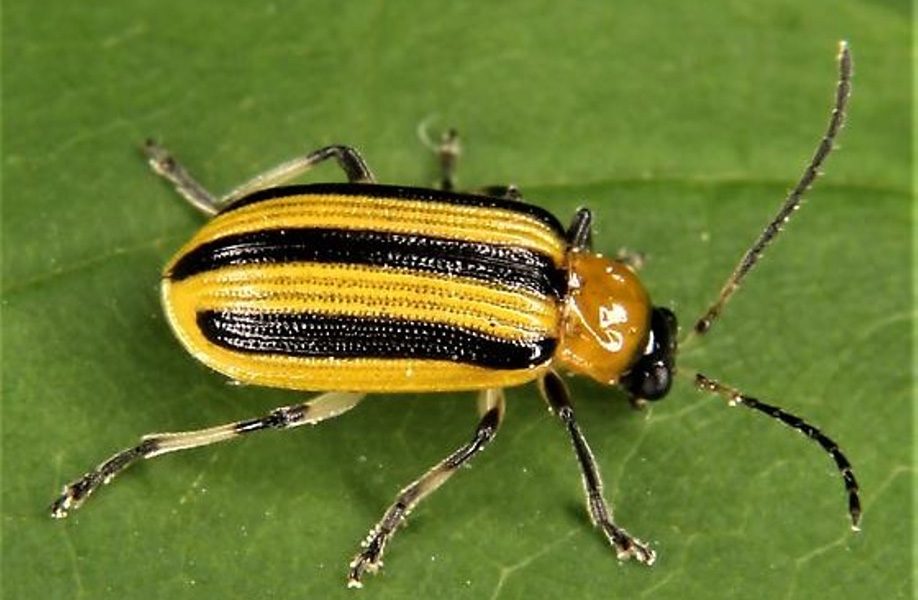
The striped cucumber beetle (Acalymma vittatumare) can be a destructive pest on all cucurbits (cucumbers, summer and winter squash, melons and pumpkins) from the moment of setting plants out in June through harvest. While feeding, the beetle can introduce a disease called bacterial wilt that can cause rapid collapse, wilt and death in young rapidly growing cucurbits, especially before the five-leaf stage. This disease can be more damaging than direct-feeding injury.
Cucumbers and muskmelons are highly susceptible to wilt whereas watermelons, squash and pumpkins are very tolerant or resistant to bacterial wilt. These infected plants should be removed from the garden as there is no rescue treatment once infected.
The adult striped cucumber beetle is about a quarter-inch long with a black head and yellow body with three black longitudinal stripes. The adult beetles overwinter in plant debris and move to new plants to feed, mate and lay eggs, usually in mid-June.
The small orange-yellow eggs are typically laid in groups near the base of cucurbit plants. These can be squished if found.
When the eggs hatch, the small, whitish larvae with black heads develop for a few weeks while feeding on the roots, causing minimal damage, then pupate in the soil. The next generation of adults emerge in early- to mid-August, and populations are abundant through late September.
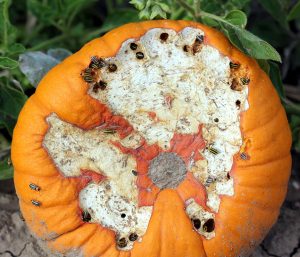
Early beetle feeding can defoliate plants, girdle stems and scar young fruit. The beetles often congregate in flowers where they can interrupt pollination and fruit set. Later in the season, the adults also can attack mature fruit.
Controlling the pest starts early in the season. Setting out larger transplants later will give the seedlings a better chance to withstand beetle attack. Using floating row covers as soon as transplants are in the ground or after direct seeding will help exclude the striped cucumber beetles, but these must be removed when the plants begin to flower.
Dr. Ann Hazelrigg is the University of Vermont Extension plant pathologist and director of the UVM Plant Diagnostic Clinic.

Dr. Ann Hazelrigg
Dr. Ann Hazelrigg is the University of Vermont Extension plant pathologist and director of the UVM Plant Diagnostic Clinic.


