


WHITE RIVER JUNCTION – As a conservation scientist focused on birds and their habitats, I’ve worked and sometimes lived on Hispaniola, the island that the Dominican Republic (DR) and Haiti share, since the mid-1990s.
Accompanied by local colleagues who have taught me much, I’ve crisscrossed the island, hiking and birding all kinds of forests: dry scrub, wet, cloud, pine, mangrove and everything in between.
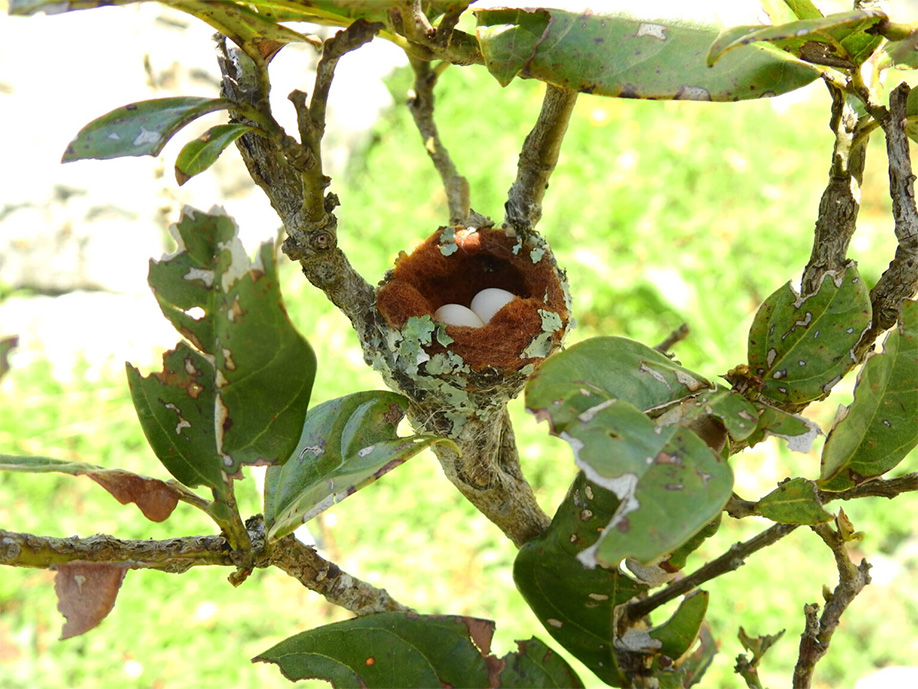
photo by Jim Goetz
Every step of the way I find reasons to skip the rum drinks and tourist beaches, and explore the rest of the island.
What makes Hispaniola so enticing? The surprising interaction of diverse geology and diverse ecology, for one. Diversity begets diversity. I’ll save the island’s equally fascinating history and culture for another day.
Working from the ground up, plate tectonics are the first-order force, driving diversity through the slow-motion smashup of three smaller islands that today form Hispaniola.
Layer upon layer of wrinkled, folded bedrock creates a landscape resembling a crumpled piece of paper, with endless peaks and valleys. Sprinkle in sea-level changes repeatedly separating and reconnecting the islands over eons, and we have the main ingredients of the evolutionary recipe for a biodiversity hot spot.
The DR’s biodiversity features hundreds of endemic species — ones you’ll find nowhere else on the planet, among them orchids, iguanas, frogs, ferns, and (happily for us) 33 extraordinary bird species.
To take in all this diversity, I like to start by birding from the ground up. Are we standing on granite or limestone bedrock? The former has cool rushing rivers and waterthrushes; the latter has caves and White-collared Swifts.
In the cool pines we find crossbills, elaenias and siskins; in the cloud forest, parrots, parakeets and quail-doves.
In coffee and cacao, look for migrant warblers and Red-legged Thrushes (but not Bicknell’s).
In coastal wetlands, it’s ducks, egrets and sandpipers.
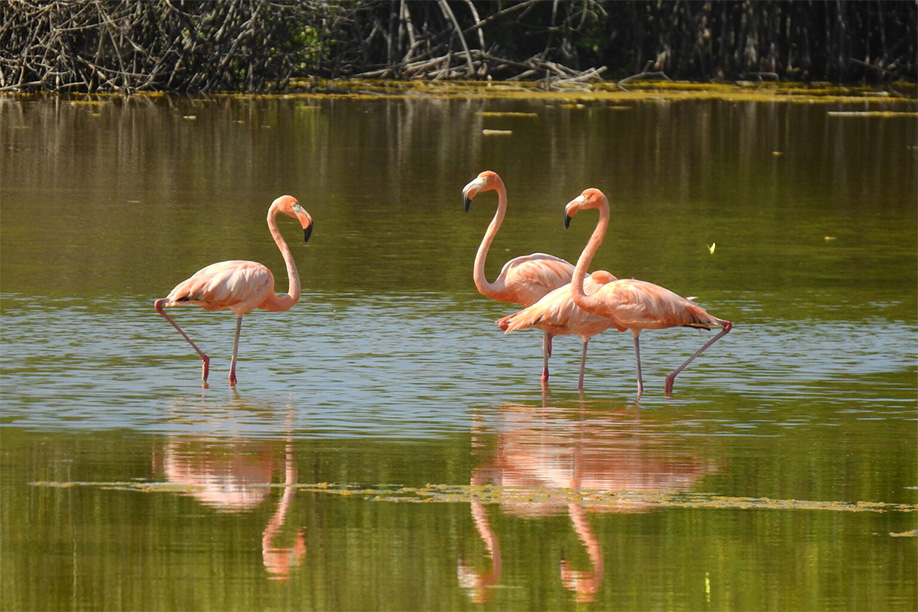
photo by Jim Goetz
To bird from the ground up, quite literally, we can start at the island’s lowest point, Lago Enriquillo, a hypersaline lake 150 feet below sea level.
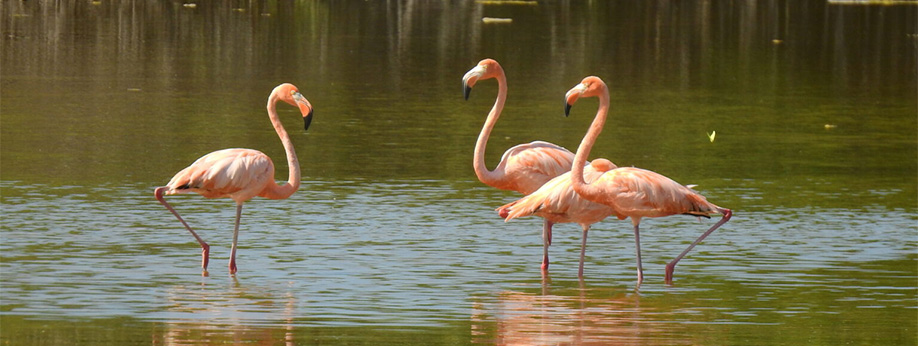
Arriving at dawn, the heat is already intense. A tiny lowland bird sings incessantly atop the tallest tree. Grab your binoculars to see the world’s second-smallest bird with a body smaller than the tip of your little finger, the endemic Vervain Hummingbird. Only Cuba’s Bee Hummingbird is smaller. As the sun rises, sharp images of cactus, crocodiles, flamingos and endemic Palm Crows melt and merge in the shimmering heat.
As we head to the cool mountaintop cloud forests of Sierra de Bahoruco to escape the heat, we stop to watch a Hispaniolan Lizard-Cuckoo methodically search a tree branch-by-branch and masterfully snatch up a lizard with its long thin bill.
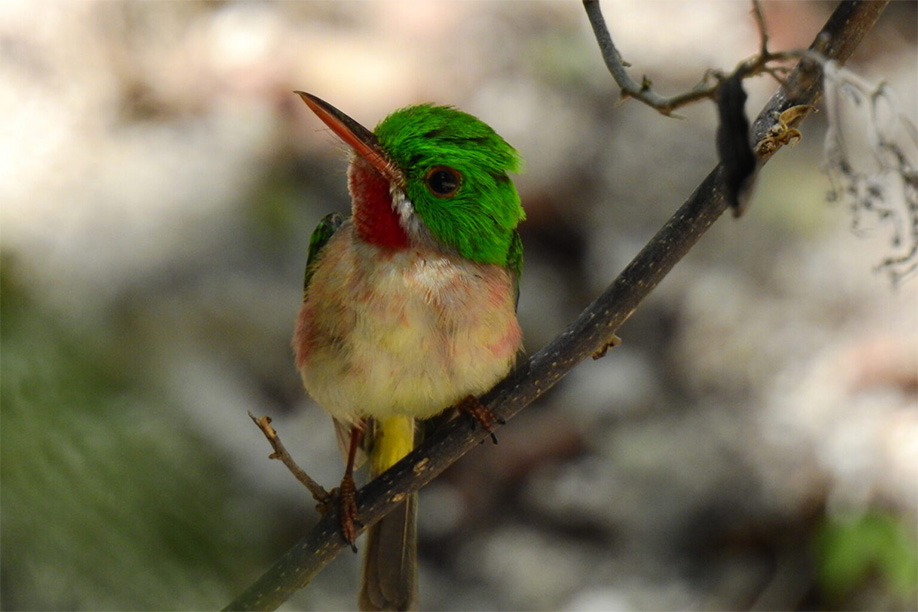
photo by Jim Geotz
In the dry scrub forest of the foothills, we hear the rhythmic calls of what look like neon-green ping-pong balls with bright orange bills. They’re lowland Broad-billed Todies, a distant relative of kingfishers. Instead of fishing, they deftly catch insects on the wing. When we hear a nearly identical bird call chi-qui…chi-qui, we have found its highland cousin, the Narrow-billed Tody, and are already above 2,000 feet.
When we reach Zapotén in late afternoon, at 5,000 feet, clouds bathe the evergreen forest. In this and nearby montane broadleaf forests, the Vermont Center for Ecostudies (VCE) has conducted extensive Bicknell’s Thrush research and conservation work.
Alongside Bicknell’s, we find endemic warblers, chat-tanagers and trogons. As night falls, the haunting song of the La Selle Thrush rises to fill the air. Only in this habitat, only on this island.
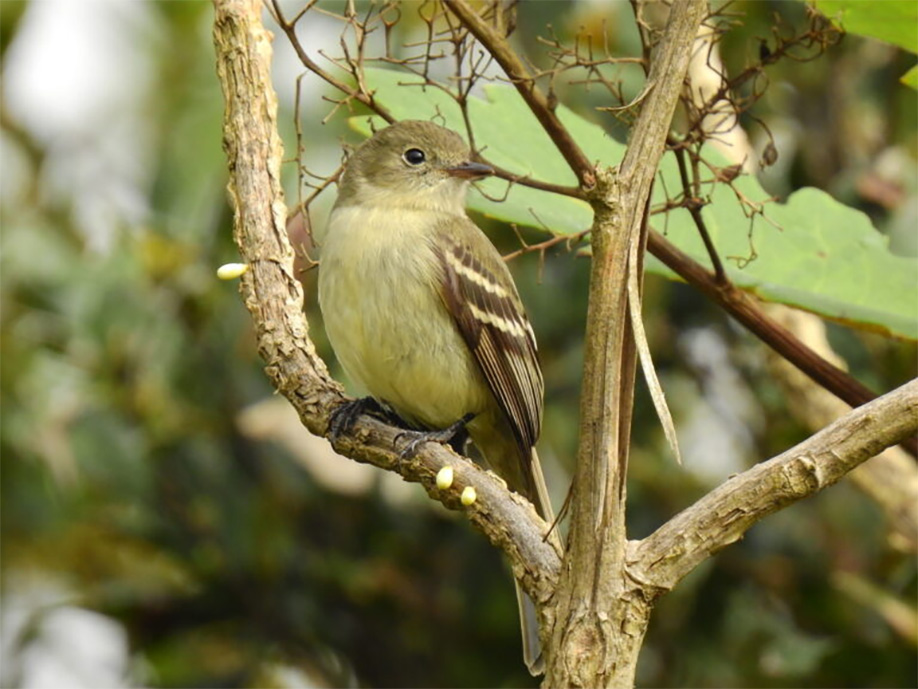
photo by Jim Geotz
This winter I’ll return to the island to work with Grupo Jaragua, VCE’s longtime local partner, to install Motus stations: radio receivers for tracking Bicknell’s Thrush and other migrant birds that we and others have tagged. I’ll also visit our research site at Reserva Privada el Zorzal, a 1,019-acre private forest reserve in the North.
Twenty years of close collaboration between the reserve’s caretakers and local landholders have transformed degraded pastures and eroded hillsides into a productive cacao plantation, a lush forest, and a refuge for dozens of bird species, including Bicknell’s Thrush.
Now Reserva Privada el Zorzal produces a remarkable trifecta: exquisite chocolate, great bird habitat and a model for linking productive livelihoods and forest restoration that really works.

Jim Goetz
Jim Goetz is a staff member at the Vermont Center for Ecostudies.

