


CORNISH FLAT, N.H. – June is, traditionally, the month for weddings and roses. A coincidence? Perhaps. But here, in mid-summer, I still have plenty of roses blooming. Many modern hybrids keep on blooming, just like the energizer bunny keeps running.
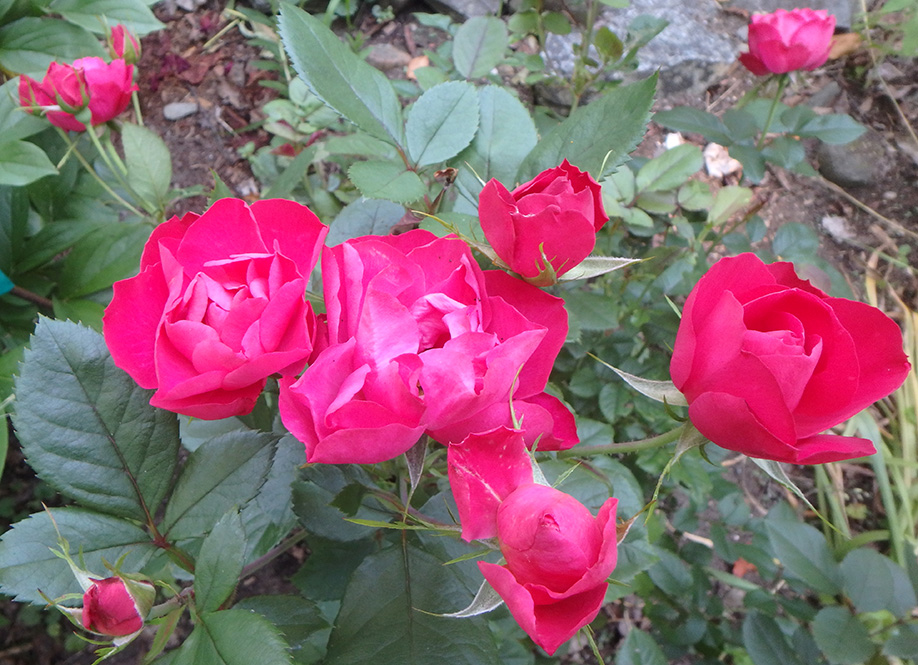
“Knockout” roses are reliable bloomers.
My mom was an organic gardener who loved her roses. And although she is no longer with us to deny it, I think she may have cheated when it came to her roses. Back in the fifties and sixties roses were much fussier than they are now. They suffered from all kinds of fungal diseases and were eaten by ferocious Japanese beetles that made mincemeat of leaves and blooms. I think she used chemicals to kill the beetles and subdue the fungi.
Now we no longer have to resort to chemicals to have nice roses. Breeders have worked hard to develop roses that stay healthy and avoid predation from hungry beetles. The beetles were easy: they bred roses without scent to attract them. I don’t know how they developed roses resistant to diseases, but they have. I never see rose diseases, and I never spray.
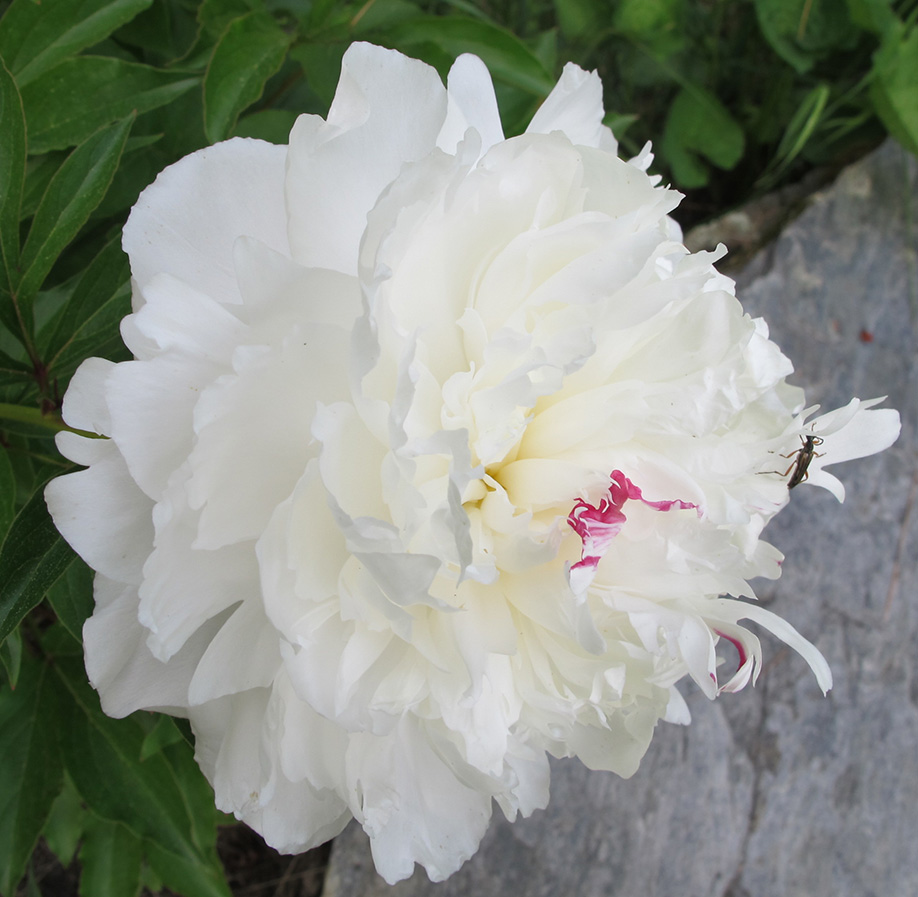
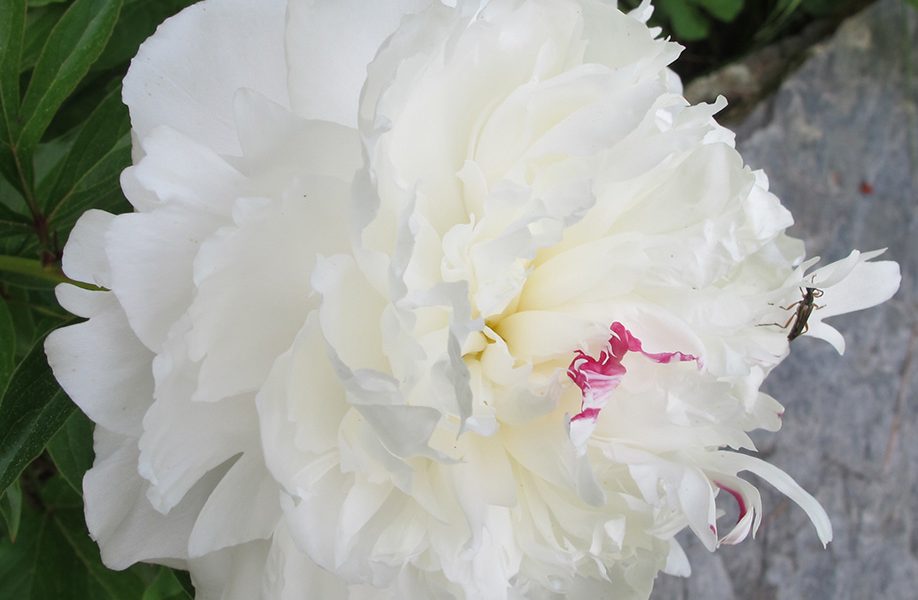
Peony “Festiva maxima” was what my grandmother grew.
My favorite roses are part of the “Knockout” series of roses, though I know others who really like the “Easy Elegance” series. They do not grow blossoms on long stems, but have multiple blossoms per stem. My “Knockouts” start blooming in June, bloom all summer, and up until hard frost or even later.
Roses love full sun, but will grow in part shade. But the more sun they get, the better they do. Six hours of sunshine is considered full sun by most authorities. Afternoon sun is more potent than morning sun, so the west side of the house is better than the east.
Roses need good, rich soil. If you have sandy soil or a heavy clay, you will need to improve it in order to succeed. What does that mean? Mix in lots of compost when you plant, and add some organic fertilizer. Dig a hole that is at least three times as wide as the pot it was in when you purchased it. Mix the soil for the hole 50-50 with good compost- either your own, or a good bagged compost. I like Moo Doo or Coast of Maine brands.
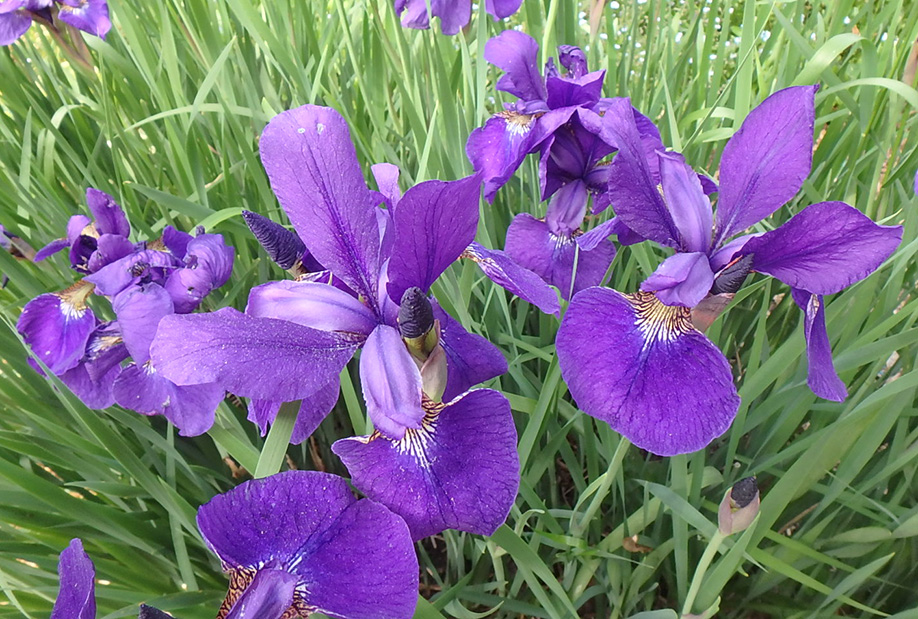
Siberian iris are tall and elegant.
Roses need more water than most other things, but do not want to sit in soggy soil. They should get an inch of water per week from rain, or a good dousing from your watering can applied slowly so it can soak in. A deep watering once a week is better than a little sprinkle every day.
Soil pH is important, too. The pH is a measure of the acidity or alkalinity of your soil. You can buy an inexpensive kit to test it, or send a sample out to be tested for pH and soil quality at your state Extension Service. Roses do best in slightly acidic soil – in the range of 6.0 to 6.8. If you soil has a lower number, you should add limestone and mix it in. But don’t add too much. A test should tell you how much to add.
Many roses are grafted onto rootstock. The bud union, a scar, should be buried in the soil. The scar is obvious on bare root roses, but is probably buried if you buy a rose in a pot. The colder the climate, the deeper that graft line or bud union should be. For Zone 4, it should be about 4 inches below the final soil line. Zone 5? 3 inches. Zone 6? 2 inches.
Want more blossoms? Roses do better if they get some fertilizer a few times during the course of the summer. An organic, slow-release bagged fertilizer called Rose Tone is designed just for roses, but I use Pro-Gro, my go-to organic fertilizer and sometimes use liquid fish and seaweed fertilizers made by Neptune’s Harvest. I add half a cup of Pro-Gro to the hole when I plant.
Other June flowers suitable for a wedding are peonies and iris, though they are both done by now. Peonies live forever if planted right – deep rich soil amended with plenty of organic matter. I have one from my grandmother, and she died in 1953. If you planted one that never blooms, you have probably planted it too deep. The nibs or growing points under the soil surface for next year’s growth should be no deeper than three quarters of an inch. You can feel them by poking around in the soil with your fingers. Pull away some soil if they are too deep, and it should bloom next year.
Siberian iris only bloom for a few days, but are magnificent. They come in a variety of blues and purples. Old patches tend to develop a dead spot in the middle because the plants have used up all the soil nutrients. Divide in the fall and re-plant, or add some organic fertilizer now.
There are too many gorgeous flowers to mention them all. But if you are planning a wedding, be advised that flowers do not bloom on an absolute calendar. Your favorite peony may bloom on June 15 this year – and June 21 or June 3 next year. You best bet is to have a good florist as a backup.
Homeyer is enjoying more time in his garden, now that he only writes a column once a month. Feel free to send questions to him at [email protected] or PO Box 364, Cornish Flat, NH 03736. Please include a SASE if you wish an answer by regular mail.

Henry Homeyer is a life-long organic gardener who has lived in Cornish Flat, NH since 1970 (except for his time in Africa as a Peace Corps volunteer and country director).
Homeyer’s website is Gardening-Guy.com and has many of articles from previous years. He receives e-mail at [email protected] or P.O. Box 364, Cornish Flat, NH 03746.


