


HARDWICK — The impact of federal funding cuts can already be seen across the country, including Vermont, in many different sectors. With the most recent round of cuts, we are beginning to see firsthand the impacts on the agricultural sector. In addition to gutting specific programs, federal cuts also affect Vermont farmers’ ability to make water quality investments and create challenges for their markets.
Two federal USDA-funded programs that were just terminated directly affect the Center for an Agricultural Economy’s (CAE) work, and we feel it’s our responsibility to help people understand what that means at the local level.
The Local Food for Schools and Child Care (LFSCC) program was slated to provide $600 million in funding nationwide. The Vermont Agency of Agriculture, Food, and Markets (VAAFM) had an agreement to receive $1,222,076 in LFSCC funding. This included funding designated for local produce for Vermont schools and early childcare programs distributed through local food hubs.
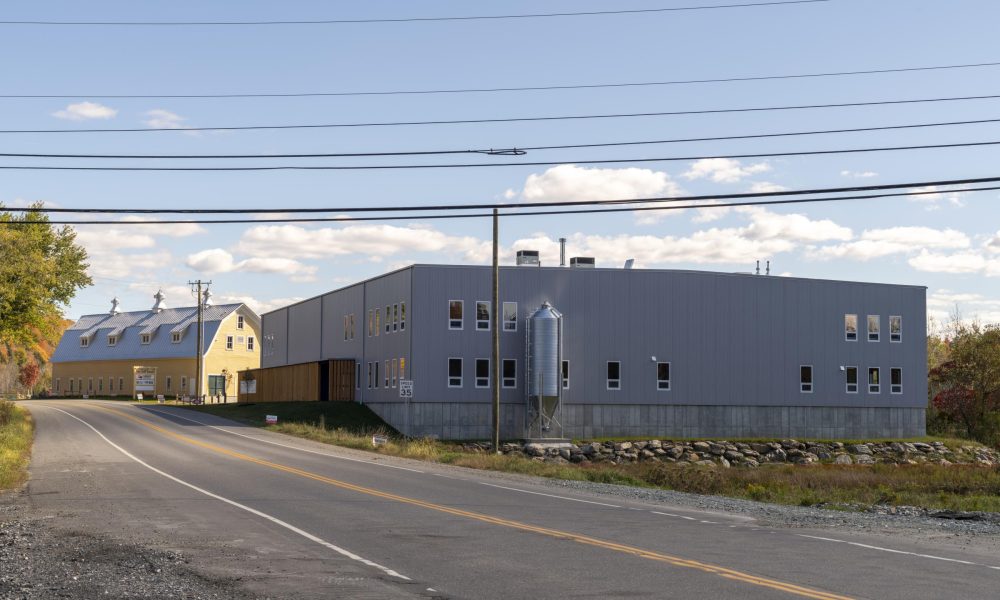
While CAE did not receive any of these funds directly, this funding allowed participating food hubs to purchase more of CAE’s Just Cut product, which was then distributed to schools. Just Cut purchases locally grown vegetables and prepares a line of ready-to-use products for K-12 schools, hospitals and colleges throughout Vermont and just over the border in New Hampshire. The termination of this funding means schools will have less access to locally grown food. This has significant implications for our students, our farmers, programs like Just Cut, and the community that is connected through the local food system.
The second program, Local Food Purchase Assistance (LFPA) had an agreement with the Vermont Agency of Agriculture, Food, and Markets VAAFM to receive $498,027 in funding for purchasing local food.
The Vermont Agency of Agriculture’s Sarah Mcllvennie, articulates the impact well: “Over the past three years we have seen how these critical funds directly benefit many aspects of our vibrant local food system. Since 2022 they have supported direct purchasing connections between 150 participant organizations, including close to 100 distinct food producers across the state. These funds have supported farms and organizations’ capacity to buoy their communities through post-Covid-19 difficulties and multiple natural disasters. These funds have increased resilience across many of Vermont’s diverse communities, not just in supply chains, but in connecting communities to each other and to nourishing food.”
LFPA was the anchor funder for CAE’s Produce to Pantries program for the last 3 years.
Produce to Pantries (P2P) is a CAE program that buys high-quality, locally-grown produce from small, beginning or historically marginalized farms, and makes that produce available at area pantries (in 2024, this included the Hardwick, Craftsbury, Albany, Holland and Barton pantries). The program is truly a win-win because it pays farmers for their produce, supports small-scale farms with an additional market for their vegetables, and increases access to local food for all.
In year one, the project was entirely funded by private donations and foundations. Working with nine small and emerging farms, our team was able to arrange for storage crops to be grown and sold to CAE at a fair, wholesale price. These crops were then distributed at community pantries throughout the winter months, ensuring consistent, year-round availability of fresh produce for pantry clients. In that first year, 1,140 pounds of high-quality, local produce was distributed weekly to the Hardwick, Craftsbury and Albany pantries, and collectively, participating farms were paid $45,000 for their produce.
Produce to Pantries participants and farmers had praise for the program after its first year. A Hardwick Area Food Pantry participant said, “This is awesome! All of the local food is what makes this food pantry the best. Thank you!”
“As a local certified organic farmer, I value the P2P program, in Hardwick, managed by CAE. One of my goals as a farmer has always been getting fresh organic veggies to folks who haven’t been able to have access to or be able to afford the cost. The P2P program does that for the community as well as giving me a consistent source of revenue at a fair wholesale price. The program is a win-win for all of us,” commented Bill Half with Harvest Hill Farm, Walden, grower for Produce to Pantries
The program was incredibly well received by farmers, pantries, and community members, yet was a huge funding lift for our small staff. We were urged by the pantries to find a way to continue the program, so in 2022, the second year of the program, we applied for federal LFPA funding through the state to make it possible. Over the next three years, with continued LFPA funding, we purchased between $40,000 and $50,000 worth of vegetables annually, and expanded the program to include additional pantries and community meal sites.
Each year, we’ve increased the amount of funding from LFPA for the program; this year, 83% of the Produce to Pantry funding is federal. Each year the program sources from over a dozen local farms, and feeds people in over 50 local towns. Over the life of Produce to Pantries, more than 129,600 pounds of locally grown produce has been purchased from local farmers, and fed to local Vermonters. We currently have a contract and funding through April 2025, but will lose the option for federal funding moving forward.
In situations like this, our voices make a difference. Here are a few ways you can take action: Call your legislators and share your concerns. The platform 5calls.org/ makes it easy to contact them.
Buy local food, as you are able. Support farmers and food producers: buy all your favorite local products from local stores. Buy from farm stands and farm markets and join a CSA.
Give your dollars. Invest in agriculture by donating to your favorite local food organization to your local food pantry or to organizations that support farmers and community organizing.
Give your time. Talk to your local community center or food pantry to see how you can plug in.
Challenges are nothing new to farmers or our rural communities, but the impacts of these changes in federal policy create ripple effects through our communities that often go unseen until they are felt. Despite setbacks and uncertainties since the start of the Covid-19 pandemic, we have seen time and time again how a robust local food system supports communities in challenging times. CAE will continue to invest and innovate to champion our farms and communities despite these new challenges.


