
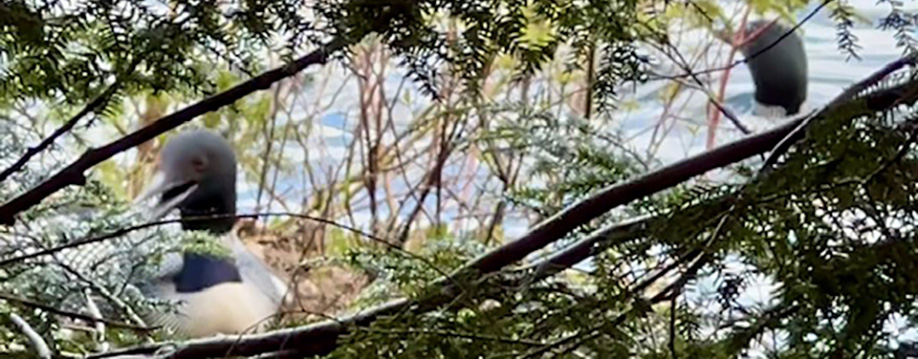



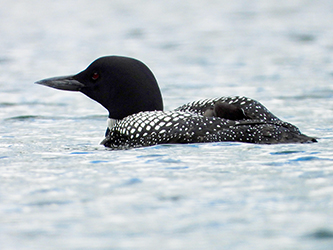
GREENSBORO – On April 20, with the ice departing, the call of the loon returned to Caspian Lake. The next day a pair of loons were seen swimming among the remaining few ice floes.
Caspian Lake now has a steady number of loons each summer; between 12 and 18 seen during the annual count. The loons have made a good recovery, state wide, from very endangered low numbers of years past. In 2017, a pair attempted to build a nest on shore and was challenged by a raccoon. Eric Hanson, Vermont Eco-studies biologist, brought a raft with native foliage to assist with a safer nesting spot. The pair liked this option and quickly made it a home for two eggs. Just under a month later, Caspian Lake had its first pair of chicks in many decades.
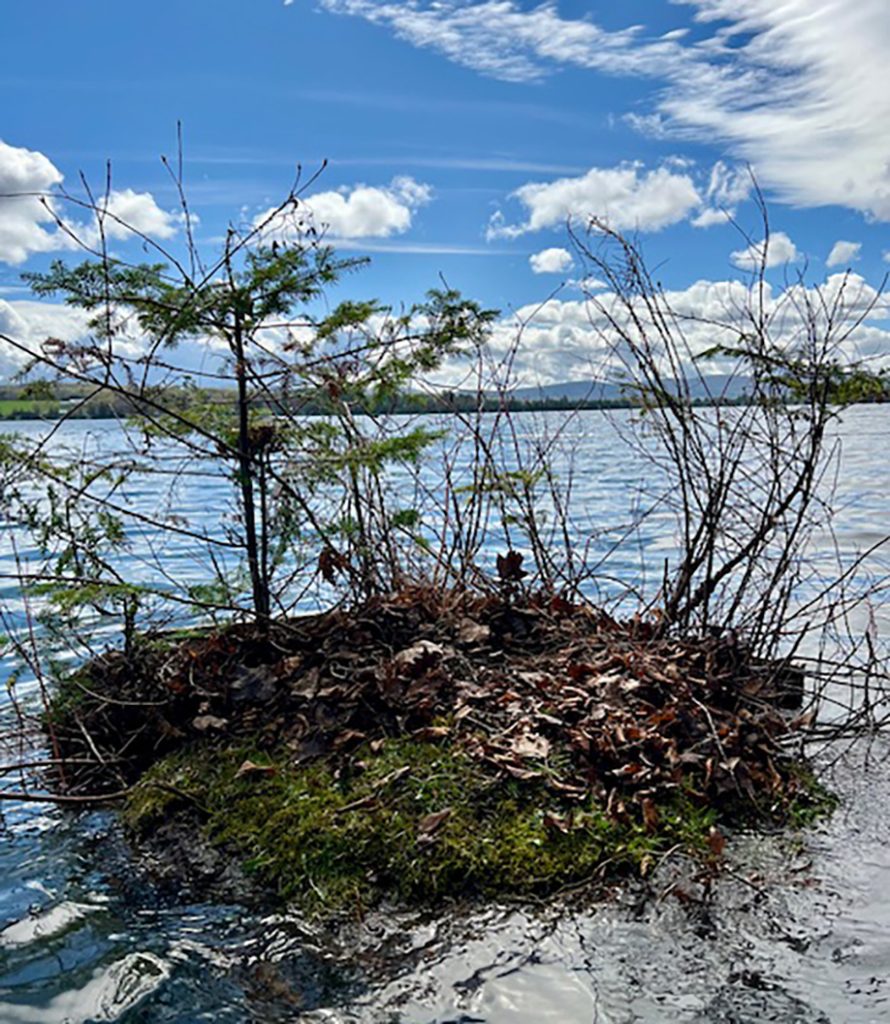
photo by Stew Arnold
This April 28, the raft was readied in position for the ninth year, under the watchful eye of the mating pair. While the pair gave the raft some interest by floating nearby, they typically wait until mid-May to climb aboard.
There may have been two different intruder loon battles in the past few years with one most likely changing the partnership. Thus far, the eight prior years has produced a pair of eggs each, totaling 16 eggs. One of the intruder battles occurred when eggs were on nest leaving them unattended for incubation for half a day, thus those two eggs never hatched.
The last eight years has produced 14 chicks.
The other intruder battle happened when the chicks were about one-month old. That battle resulted in one parent and one chick escaping to the other side of the lake. A chick did not survive and the other parent’s fate was unknown.
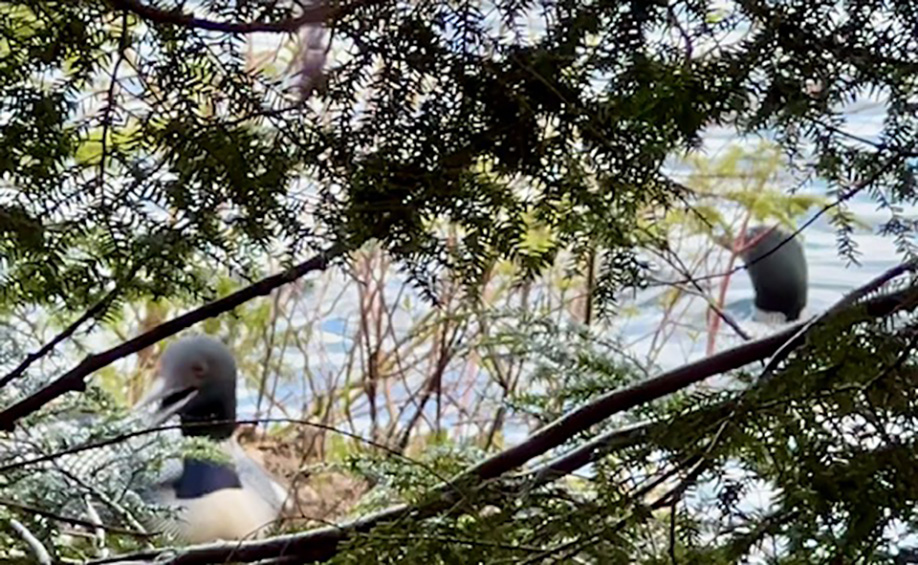
photo by Stew Arnold
Caspian Lake has thus seen 13 chicks raised to be juveniles. One year a juvenile went missing towards the end of summer, its fate unknown.
In the past eight years, 12 juveniles have left the lake before ice-out and traveled to ocean shores near Rhode Island and Connecticut. There they grow to adults on the ocean for three to five years before returning back in Vermont in the spring to spend summers, likely to waters within 25 miles of their birthplace.
A raft check on May 8 found no loon on the nest, so fresh moss was added to the approach side. Again the pair came by to watch this activity.
On May 14, the raft visit showed a single egg in the nest bowl. A parent returned in about five minutes, hopped it’s way onto the raft. After a quick egg turn, the parent settled it’s self down on the egg where they are known to sit for hours.
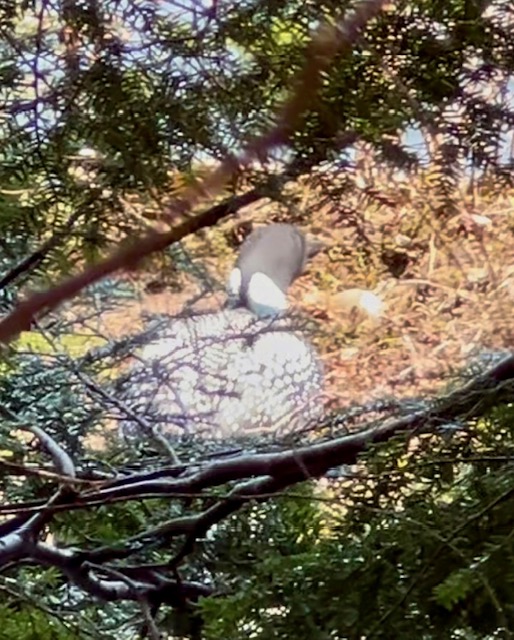
Loons are likely to lay an egg and follow with laying a second egg the next day. Loons are “biparental” meaning both male and female incubate and care for chicks equally.
To give the new parents safe space, four warning signs were set afloat around the small cove to protect the raft. The signs let boaters and kayakers know to keep clear of the area.
Two days later a parent was seen laying in the nest bowl. It was joined later by a partner. After an hour and a half, the nesting parent sat up with a clear view of two beautiful eggs.
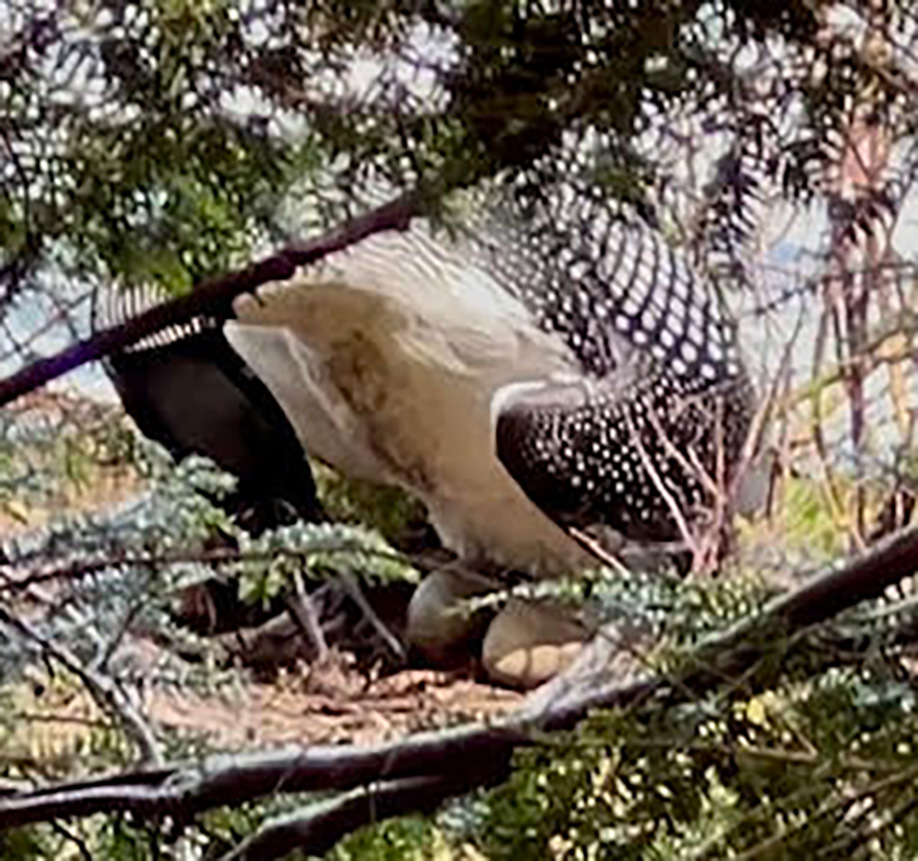
photo by Stew Arnold
Incubation time for loon eggs is 26 to 29 days before they hatch. These should hatch about June 9, or a bit later.
On June 10, the Greensboro Free Library will host a loon talk at the Greensboro UCC Fellowship Hall, 5:30 p.m., with Eric Hanson from the Vermont Loon Conservation Project and Eloise Girard who works with the Vermont Center for Ecostudies as a seasonal biologist.


thank you for this article!