


NORTHFIELD – If looking to boost the health of a vegetable garden, consider adding annual flowering plants that will attract beneficial insects to help support and protect plants from pests.
Insects that are beneficial behave either as predators or parasites. They will prey on other insects like aphids or lay their eggs on a host species.
There are many beneficial insects that can be attracted to a garden, including different kinds of wasps, ground beetles, lady beetles, flies and some bees. Annual flowering plants that attract beneficial insects might have a particular flower shape, size, structure, color or scent.
Dill (Anethum graveolens) is one of the most fascinating plants to observe when in bloom as insects flock to the delicate, parasol-shaped flower clusters (umbels). Dill grows 18 to 48 inches tall and eight to 10 inches wide with wispy leaves that resemble tiny ferns. Preferring full sun, dill can be planted as soon as the soil has thawed and can take more than 45 days to develop flowers.
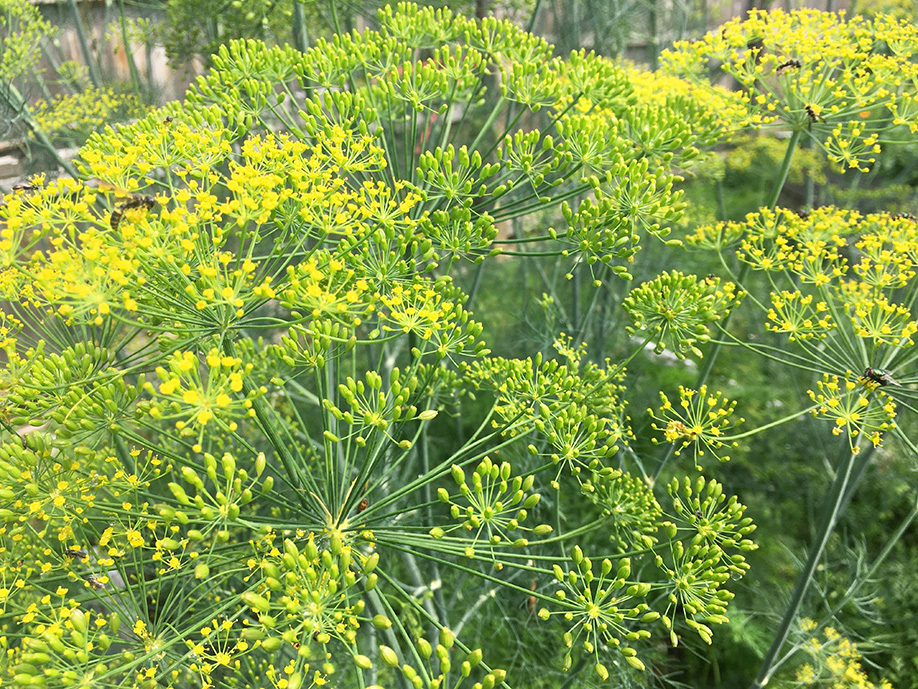
Photo by Bonnie Kirn Donahue
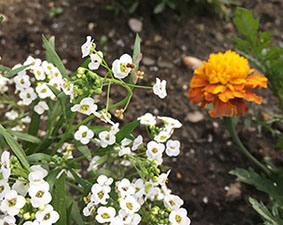
French marigolds (Tagetes patula) are lovely flower balls of red, orange and yellow that add a lot of interest to a vegetable garden. Growing eight to 12 inches tall and 12 to 18 inches wide, French marigolds prefer full sun and take about 50 days to bloom from seed. Seedlings can be planted after the threat of frost is gone.
Sweet alyssum (Lobularia maritima) is a delicate plant with copious terminal heads of white flowers. These grow eight to 16 inches tall and 10 to 12 inches wide and prefer full sun to part shade. They take up to 50 days to produce flowers when planted by seed. Seeds can be planted once the ground has thawed.
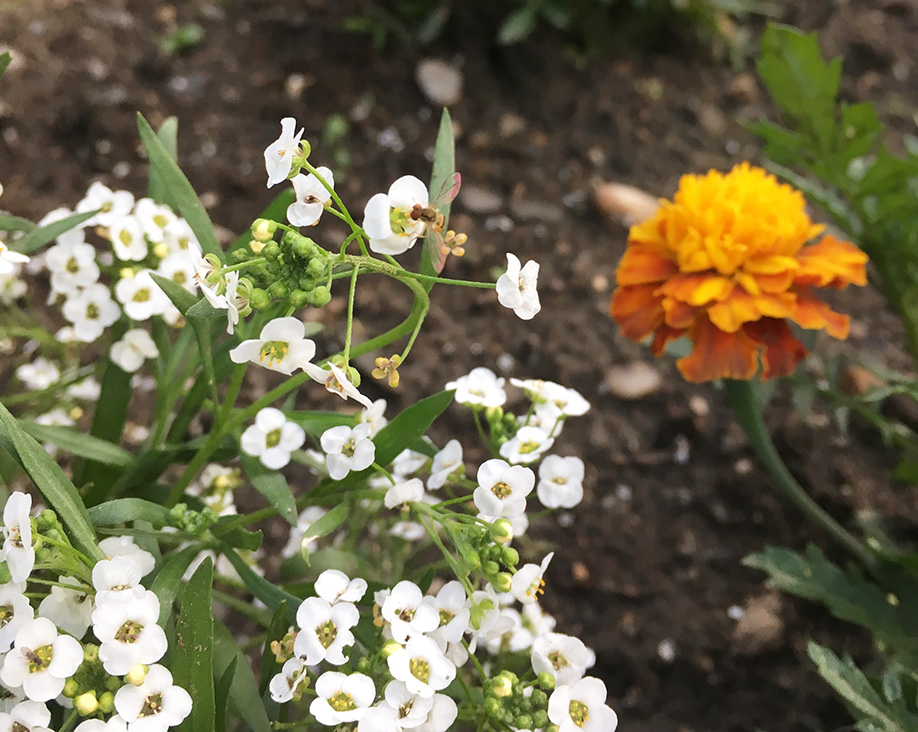
Photo by Bonnie Kirn Donahue
Ideally, plant clumps of three or more of each flower species throughout the garden to maximize their impact by providing a critical mass of pollen, nectar or habitat. Do not to plant the species too close together as marigolds planted closed to sweet alyssum grow over the top of the alyssum, causing them to die too early in the season.
It’s important to remember that most insects found in the garden are not problems. They might be helping with pollination or having a neutral impact on your garden. It is best to assume that the insects you see are beneficial, unless proven otherwise.

Bonnie Kirn Donahue
Bonnie Kirn Donahue is a UVM Extension Master Gardener and landscape architect from Northfield.


