
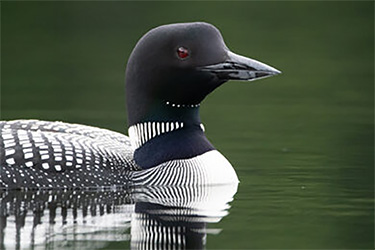



VERMONT – The nature community is becoming concerned about how bird flu impacts Common Loons.
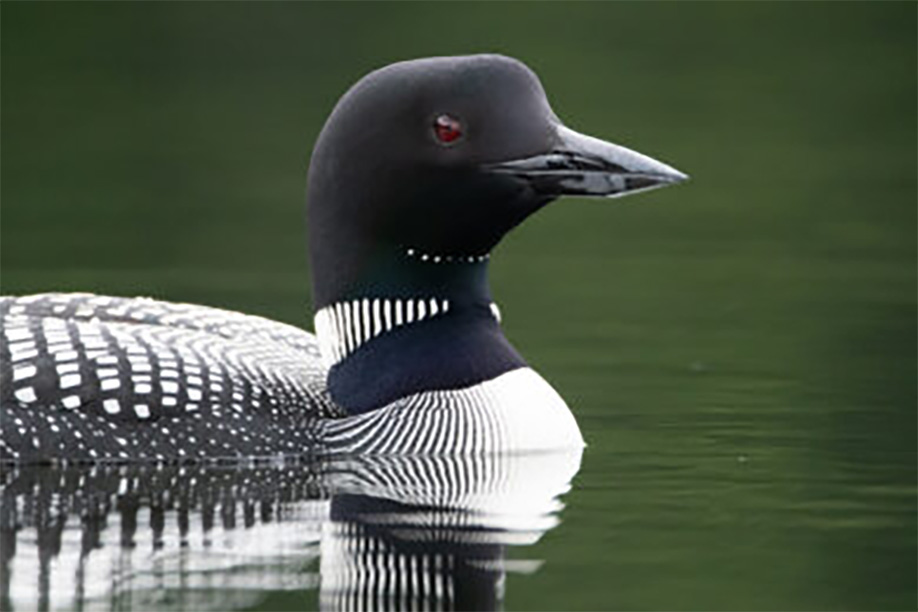
photo by Chris Roberts
Wendy Puryear with the Cummings School of Veterinary Medicine at Tufts University, presented the latest updates at the Northeast Loon Study Working Group’s 2025 meeting, and this update draws on that, with some additional information from us at the Vermont Loon Project.
The H5N1 avian flu virus has circulated for decades, originating in East Asia and primarily affecting poultry and rarely, humans. Historically, outbreaks in wild birds were short-lived because infected birds would die before migrating.
But about five years ago, the virus evolved. Highly Pathogenic Avian Influenza (HPAI), caused by influenza type A viruses, includes multiple strains, such as H5N1. The ongoing outbreak likely began in Europe in 2020 and was first detected in the U.S. in November 2021. This strain doesn’t kill wild birds as quickly, allowing infected birds to migrate and spread the virus globally. It has since reached all 50 states.
Dairy farms have been badly impacted, especially in the Midwest. The virus is believed to spread through contact between infected poultry, wild birds and dairy cows. Transmission routes have broadened beyond traditional fecal-oral and respiratory pathways. Scavenging birds are now spreading the virus by feeding on infected carcasses. Predators may also contribute to its spread and free-roaming barn cats and other domestic animals may contribute to transmission, mainly if they consume contaminated raw milk or meat.
From 2022 to the present, HPAI has affected over 13,000 wild birds across 49 species, 1,300 terrestrial mammals and 1,600 marine mammals in New England. Infections are increasing rapidly in ducks, particularly sea ducks, and HPAI has now been detected in songbirds. In Vermont, according to the Vermont Fish and Wildlife Department, HPAI has been detected statewide in bald eagles, red-tailed hawks, Canada geese, wood ducks, mallards, black ducks and turkey vultures.
Loons might be less prone than waterfowl to becoming infected due to their solitary nature, as congregations of birds make transmission more likely.
Two loons in New York State have been infected with HPAI. One died of it, while the other died of different causes. Several loons found dead along the Massachusetts coast during the spring migration in 2024 were also infected. But so far, HPAI has not been detected in loons in Vermont.
While human-to-human transmission remains rare, the virus continues to evolve in ways that are worrying to public health officials. The Adirondack Center for Loon Conservation puts it well: “Researchers and public health workers look for ways to contain and slow down the spread of diseases, but it is not always possible to predict how a virus will mutate, or when. We can do our part by limiting our chances for exposure, supporting researchers by reporting cases and staying informed.”
If a sick or dead loon is found, contact the Vermont Center for Ecostudies loon biologists at [email protected] or (802) 586-8065 with details and the location. Include photos and/or a video if possible.


