
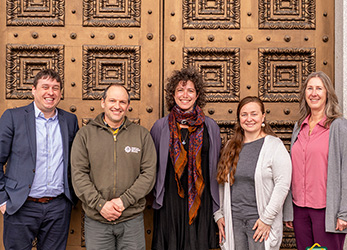



MONTPELIER – Six member organizations of the Vermont Food Hub Collaborative that operate food hubs in Vermont, provided testimony to the Vermont Legislature’s House Committee on Agriculture, Food Resiliency, and Forestry, April 15. Appearing jointly with three farmers, the organizations testified on the importance of local food and how their efforts are sustaining the working landscape and strengthening Vermont communities. In their testimony, the organization’s leaders highlighted how goals from the strategic plan are being accomplished by the work they are undertaking every day.
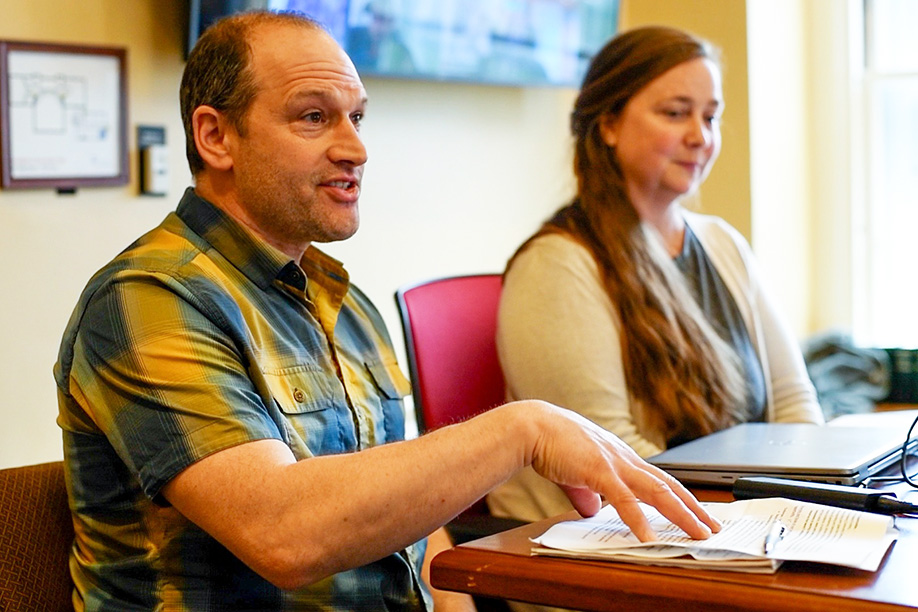
photo by Kelly Bogle Stokes
For over a decade, organizations that operate food hubs have been working to strengthen Vermont’s local food systems. They take different approaches to the work but share common goals of increasing the accessibility of local food, distributing local products to strengthen market access and farm vitality for farmers, and strengthening local communities. Since the pandemic these organizations have also responded to emergent crises. That included multiple pandemic response efforts and support to communities and farms after the 2023 and 2024 floods.
Located across Vermont, these organizations have formed a network to further this work in a collaborative manner. The network is known as the Vermont Food Hub Collaborative. It includes the Center for an Agricultural Economy (CAE), Green Mountain Farm to School (GMFTS), Intervale Center (IC), Food Connects (FC), Vermont Farmers Food Center (VFFC) and Addison County Relocalization Network (ACORN).
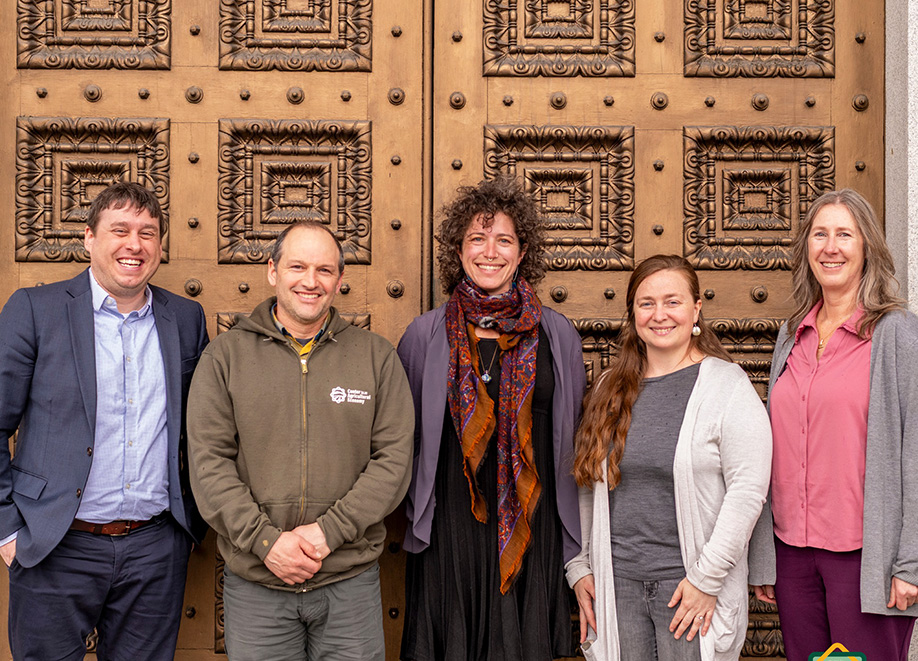
photo by Kelly Bogle Stokes
The collaborative utilizes infrastructure across the food hubs; many farmers work with multiple food hubs, and food is moved between the hubs.
In 2019, the Vermont Sustainable Jobs Fund (VSJF) was reauthorized by the Vermont state legislature to create the Vermont Agriculture and Food System Strategic Plan 2021-2030. The legislature tasked the VSJF with creating an implementation plan with stated goals for the future of agriculture. This spring, representatives from VSJF and the collaborative embarked on two efforts to increase awareness of the work happening to grow local food systems in Vermont.
Additionally, with support from the UVM Leahy Center for Rural Partnerships, the Vermont Sustainable Jobs Fund has secured funding to work with the UVM Spatial Analysis Lab to create a mapping tool that analyzes the locations of the hubs, the producers working with all of the hubs, and the movement of food within the network. This project will take nearly a year to complete, but it will provide valuable information and help streamline the movement of food from farms to hubs to markets.
“This spring, I reached out to the other five organizations and visited three of them to strengthen the relationships CAE holds with them,“ said the CAE’s Ramsay. “It was inspiring to see the hard work happening across Vermont that our farms and communities will benefit from as each of the hubs are investing in the future of agriculture. . . It is clear Vermont would be a very different place without the work CAE and all the food hubs are doing by taking action and working collaboratively every day.”
The Center for an Agricultural Economy supports rural communities and working landscapes by building a more interconnected local food system.


