



NORTH ADAMS, Mass. – It won’t be long before gardening season draws to a close, but fall is a great time to do the prep work.
Select the location now, while trees are still fully leafed out, to judge how much sun the area receives. Be sure to consider the condition of the soil (sandy, loam, clay, drains easily, retains moisture,), as well as convenient access to water for those times when supplemental watering is needed.
One of the best ways to get a garden ready for spring is to do a soil test this fall. It’s simple to do, inexpensive, and will provide invaluable information. Obtain a soil test through the University of Vermont Agricultural and Environmental Testing Lab. A soil test can tell about available phosphorus (P), potassium (K), calcium (Ca), magnesium (Mg), micronutrients and more, along with the soil’s pH and recommendations for amendments for specific crops. For further information, including detailed instructions on how to take a soil sample and what information to receive concerning the garden’s soil, see go.uvm.edu/soiltest.
Once soil test results are received, there is plenty of time to decide how, when, and what amendments and fertilizer to add to a new garden bed. If the planting area is clear, amendments like compost can be applied now. Otherwise wait until spring to apply amendments and fertilizers.
Save time in the spring by removing weeds and grass now from a new garden bed. There are several options for doing so, though both weeds and grass can be difficult to keep from returning. To clear the area, you can take the direct approach by hand pulling or digging out weeds and grass, or till the area, breaking up weeds or sod. Unfortunately, these methods may leave root fragments and seeds in the soil that in time can provide a fresh crop of unwanted growth.
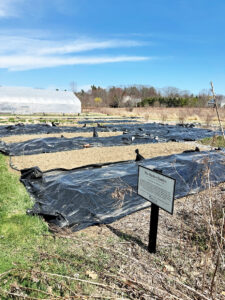
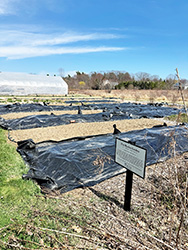
Perhaps the biggest advantage of preparing a new garden bed in the fall is that there is time to use less labor-intensive methods that will make use of the months between now and when the soil is workable again in the spring. Consider using occultation: placing an opaque tarp over the area for an extended period of time to eliminate grass and weeds.
Begin by trimming growth close to the soil surface. Water well. Cover the area with a black plastic sheet. Weigh down the edges using heavy objects such as boards or bricks to keep light out. Blocking out sunlight will prevent photosynthesis and smother what’s growing there. Occultation can also force germination of seeds and kill the roots of perennial weeds. Leave the plastic sheet in place until you’re ready to work the soil in spring.
If appearance is a consideration, an alternative is to cover the area with wet newspaper or cardboard, adding a layer of mulch on top. This option is more attractive while still smothering weeds or grass over the coming months. In the spring, brush the mulch aside and cut through the paper layer to plant in the soil below.
By preparing a new garden bed now, when spring arrives, planting a garden will be a breeze.

Deborah J. Benoit
Deborah Benoit is a UVM Extension Master Gardener who volunteers as a garden columnist and for Bennington County Extension Master Gardener Chapter activities.


