
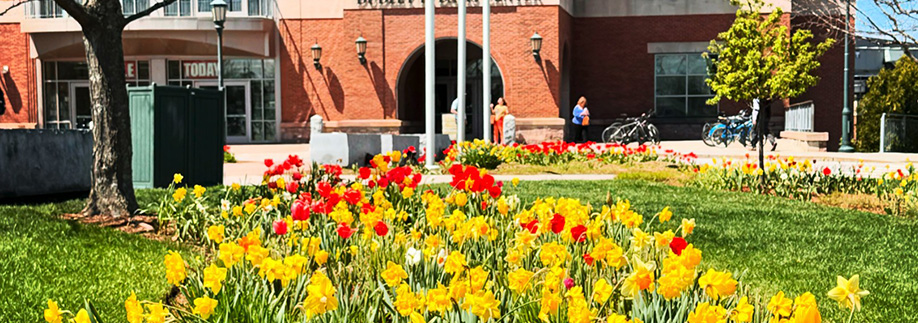



NORTH ADAMS, Mass. – Autumn is in full force. Green leaves have turned to brilliant shades of red and gold that flutter to the ground in their yearly dance. The garden is winding down in preparation for its long winter nap: the perfect time to think about spring.
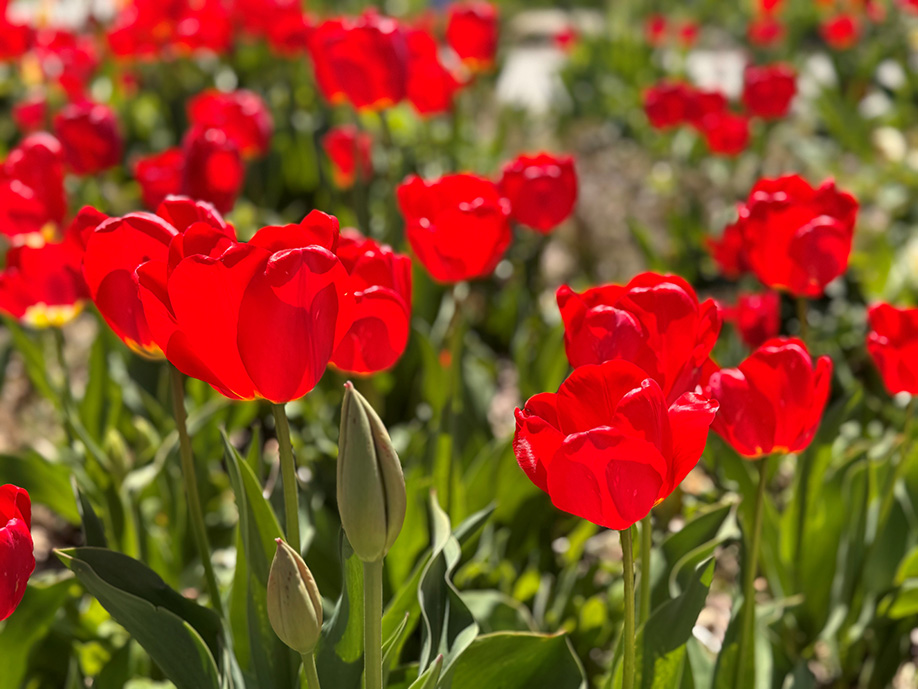
photo by Debra Heleba
Don’t let another year pass by without planting spring blooming bulbs,. In March and April (and beyond), they’ll add color to garden beds that will be, for the most part, still fast asleep.
Planted in clumps or waves, spring bulbs can add bold pops of color. Scattered throughout a garden bed, they’ll add a sprinkling of unexpected color here and there.
A row of daffodils can be striking. A border of crocus can draw the eye to an awakening flower bed. Consider planting early blooming bulbs under deciduous trees and shrubs where they’ll get plenty of sunlight under those bare branches before the larger plants leaf out.
Most people are familiar with spring standards such as tulips (Tulipa), daffodils (Narcissus), and crocus (Crocus).For something a little different, there are many alternatives.
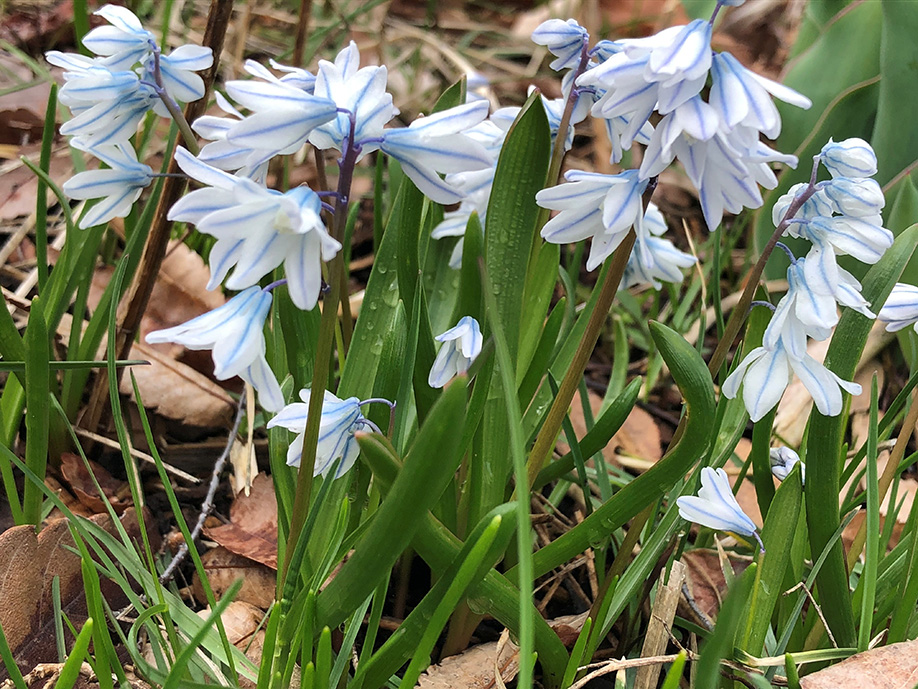
While crocus grow only four to six inches tall, they’re not the only diminutive spring flowering bulb. Consider snowdrops (Galanthus woronowii), early stardrift (Puschkinia scilloides) or star of Holland (Scilla siberica). They can all add color in borders and under taller shrubs and trees.
Mainstays of the garden, tulips and daffodils, are available in a wide variety of colors, heights, and petal types. Alternatives include allium (Allium) with its pompom flowerhead, the checkered lily (Fritillaria meleagris) with its checkerboard patterned petals, and the fragrant hyacinth with its colorful, upright flower clusters.
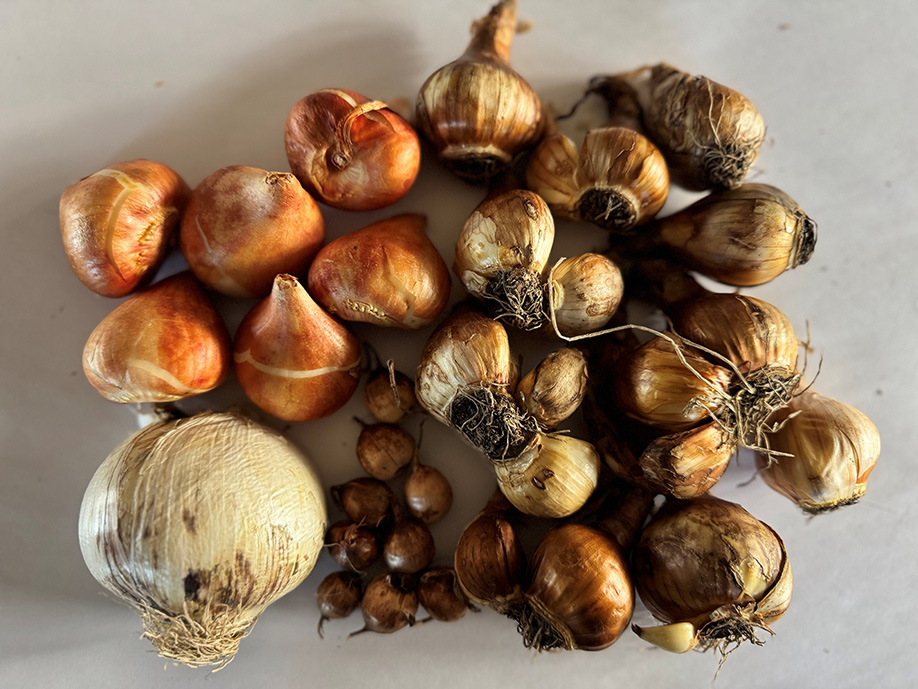
photo by Debra Heleba
Spring flowering bulbs such as the crown imperial (Fritillaria imperialis) can add height and drama at three to four feet tall.
For extra interest, include a mixture of bulbs. For example, try a cluster of red tulips surrounded by white snowdrops.
Planting bulbs is easy, though it can be time consuming when the task includes hundreds of bulbs.
Single bulbs can be planted using a trowel or a bulb planter. Check package recommendations for specifics but, in general, plant bulbs at a depth of two to three times their height. For borders, a trench can be dug. For clumps of bulbs, dig a hole wide enough to accommodate the desired number of bulbs.
Larger bulbs should be spaced about three to five inches apart. Plant smaller bulbs one to two inches apart. Insert the bulb pointed end up with root side down and cover with soil. Water in. Finish with a layer of mulch.
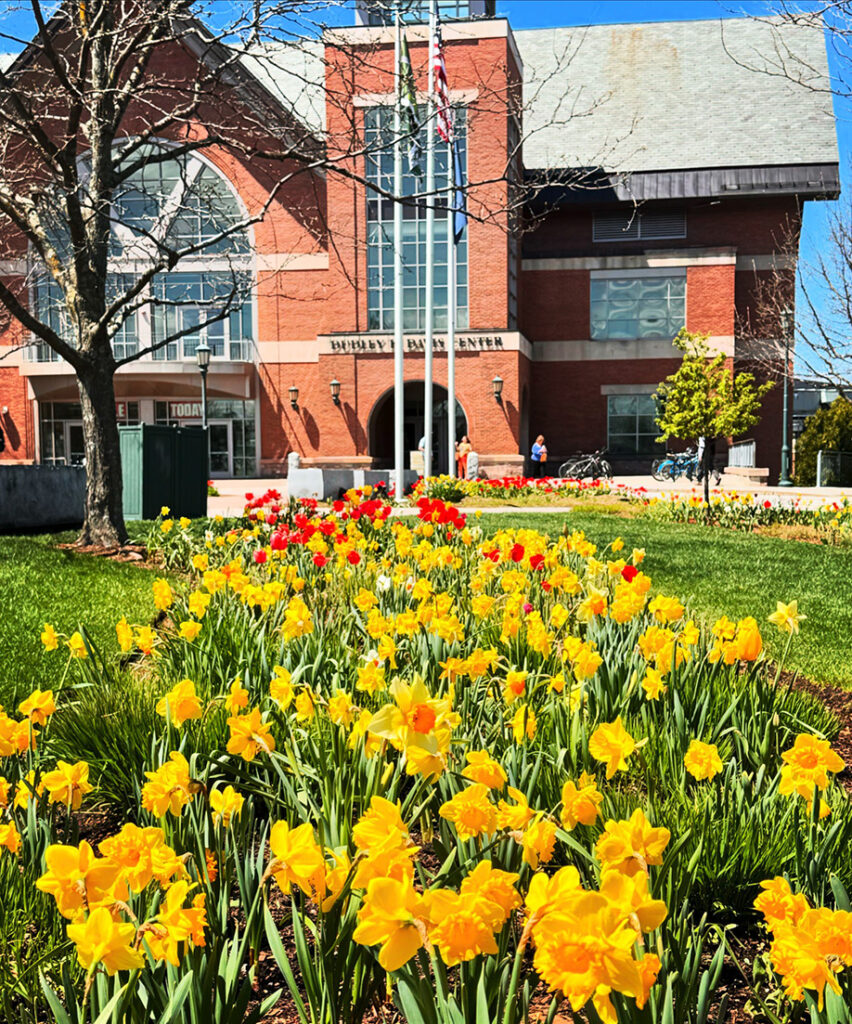
photo by Debra Heleba
If combining different sized bulbs in one planting, layer the bulbs. Plant the largest at the deepest point. Add a layer of soil to the proper depth, then add the next sized bulb. Repeat, if needed, with the smallest bulb at its suggested planting depth beneath a final layer of soil. Water and mulch to finish.
If combining like-sized flowers in a clump, place the bulbs at the bottom of the planting hole. Turn them pointed side up, cover with soil, then water and mulch.
To extend bloom time, consider mixing early-, mid-, and late-season bloomers in a border or garden bed.
Whether you plant traditional favorites like daffodils and crocus or try something a bit different like alliums or snowdrops, when spring arrives and the first flowers emerge, your efforts this fall will be well rewarded.
Deborah Benoit is a UVM Extension Master Gardener who volunteers as a garden columnist and participates in Bennington County Extension Master Gardener Chapter activities.

Deborah J. Benoit
Deborah Benoit is a UVM Extension Master Gardener who volunteers as a garden columnist and for Bennington County Extension Master Gardener Chapter activities.


