


HARDWICK – John Laggis has been dairy farming for over 45 years, most of that time with his brother Chris, who retired from their East Hardwick business three years ago and moved to Burke to pursue other interests.
courtesy photo
Now the independent, family farm is owned and actively managed by four family members who share in all of the decision-making: John, his wife Johanna, their son Dan and Dan’s wife Marissa.
Ten other full- and part-time employees help staff the farm, which employs more than a dozen people when the family is counted. That increases to as many as 15 or 20 people when planting and harvesting crops, said John.
“We could not begin to do all of the work that has to be done on a daily basis without our incredibly talented, dedicated and loyal employees.”
Small dairy farms have been struggling to make ends meet for years. As milk prices have risen little and the costs of dairy farming have increased, farmers have had to become creative to continue in business, said John.
Some farms have turned to value-added products like the ice-cream producing Michaud farm in East Hardwick or Jasper Hill Farm in Greensboro.
“Change sometimes isn’t easy,” said John.
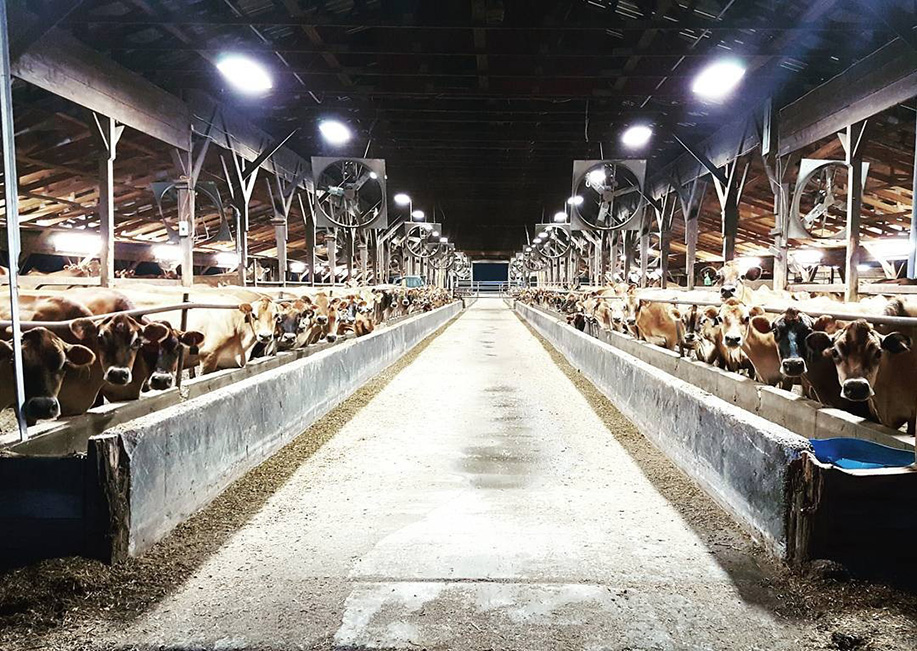
The Laggises have stuck with producing Jersey milk. Its value-add is its high protein and fat content that brings in more income per hundredweight; the measure by which wholesale milk is bought and sold.
courtesy photo
The farm produces maple syrup too, which brings in income when there’s little work to do in the fields, as has been the case with Vermont dairy farms as long as there have been dairy farms in Vermont.
They began with 28 cows, said John. There are roughly 1,000 cows on the farm now, when 30 years ago there were just 400 or so. The farm now milks about 500 of the cows and has another 500 or so that aren’t milking, or are calves, too young to milk.
Farmers have no control over the price of milk, notes a video created by Monument Farms and shared on its web site at monumentfarms.com.
John Laggis, pointed to the video, which indicated the only way for dairy farmers to generate more income to keep up with the increasing cost of equipment, supplies and other things needed to run a dairy farm, on top of the increases in the overall cost of living that everyone faces, is to become larger and milk more cows.
John says the dairy business must continually innovate to do that, becoming more efficient as costs increase and milk prices remain flat.
The cows are now milked three times each day instead of two as they were when the brothers started farming.
Laggis Farm is a Dairy Farmers of America member. Three days a week their milk goes to Cabot, the rest goes to a Hood milk plant, where it’s quickly processed, coming back to stores in just a few days.
Tractors are larger than they were decades ago. They get more work done, but they cost as much as $400,000. That’s 20 or more times as much as they did when the Laggis brothers started farming over 45 years ago, said John.
In 1983, the first tractor they bought cost $12,000, he said. “A harvester can cost $1 million.”
Decades ago small farms had a large impact on the community. Then, locally-owned stores sold farm equipment, feed, fertilizer, parts for equipment and there were skilled mechanics nearby.
Now the farm turns to companies farther away; in Franklin, Addison and Orleans counties, or sometimes out of state. Often they are part of larger organizations.
The farm still has a local impact: children from area schools visit the farm on field trips, they have an adopt-a-cow program, teaching respect for animals and the circle of life and death that feeds us, said Johanna.
Neighbors look forward to the sign late each summer indicating sweet corm is available for sale. VAST trails run through farm properties and over the years neighbors have turned to the Laggises for help when equipment is needed for a household chore or to get pulled out of a ditch.
As environmental regulations have become stricter, the farm has adopted them and recognizes the importance of being a good neighbor, said both John and Johanna.
John and Chris Laggis were the children of a cobbler. In the 1970s they became interested in farming.
In 1980 they started helping dairy farmer Ralph Stewart, on Ward Hill in East Hardwick.
Stewart had a heart attack and his doctor told him to sell his cows, said Johanna. “He didn’t want to, so he owner-financed John and Chris,” when John was a sophomore in high school. The boys leased the farm, said John. “At the end of two years they owned 50 cows,” said Johanna.
While dairy farming is a business, all of the Laggises know that taking care of employees is critical to the success of it, said John. That goes for the cows as much as for the human employees.
“Animal health is critical. Now vaccines have virtually eliminated the use of antibiotics,” John said.
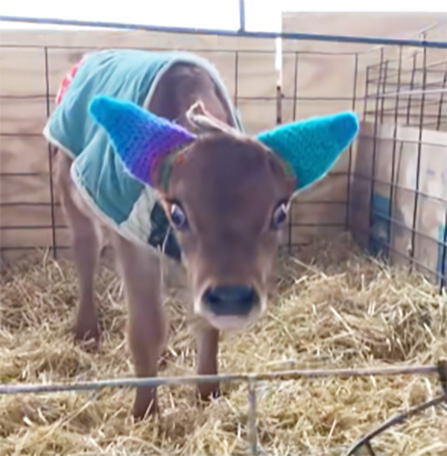
Johanna has been taking care of the farm’s calves for decades. “Living in Vermont’s Northeast Kingdom, our calf barn is already well-prepared for the cold,” she said.
“When I heard about the extreme cold front coming through, I found a crochet pattern for calf ear warmers and got to work.”
“John and Johanna have served on ag boards, they donated milk to food banks during COVID. . . In addition, Johanna hosted a virtual tour of their farm for 2024’s Breakfast on the Farm (https://www.youtube.com/watch?v=NFic24rYfTw&authuser=1) to invite the public to learn more about dairy farming,” said Sam Lavelle with New England Dairy that works to be a catalyst for a vibrant New England dairy community, championing New England dairy farm families and the nutritious foods they produce, indicates the organization’s website at newenglanddairy.com.
With the next generation of Dan and Marissa involved with the farm, it’s likely to remain in the family for a while, said John and Johanna.

Paul Fixx is editor of The Hardwick Gazette and lives in Hardwick.

we enjoyed Laggis Farm corn very much for the last two summers. So sweet.