
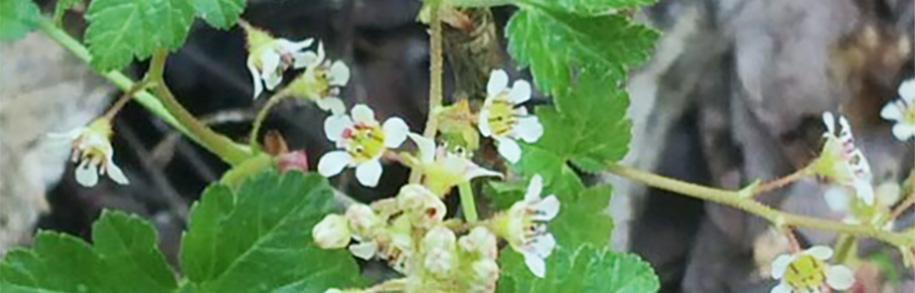


WHITE RIVER JUNCTION – Despite the name, Skunk Currant (Ribes glandulosum) produces a tasty berry if you can get past the pungent smell that develops as the fruit ripens.
This low-lying shrub of the subalpine zone grows in moist soils and in May produces a small, white, five-petaled flower with purple stamens. The Skunk Currant’s epithet (glandulosum) arises from the stiff glandular hairs that cover the ripening fruit in July and August. The leaves often take on a stunning assortment of red coloring in the fall.
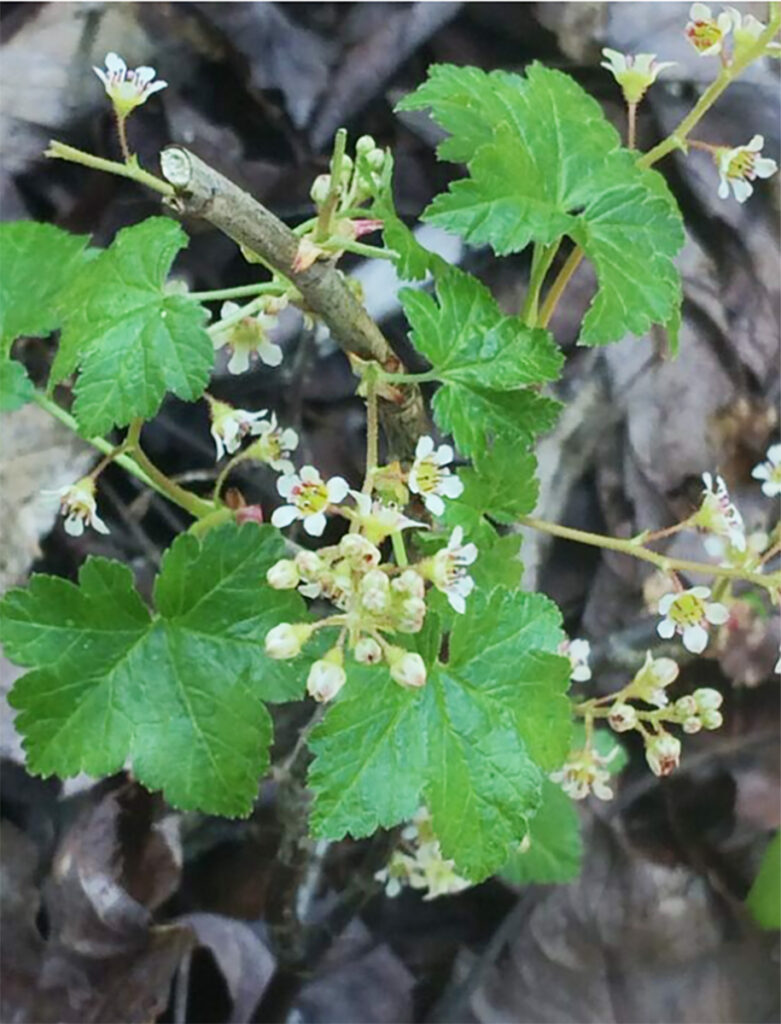
photo by Naturalist Charlie via iNaturalist, licensed under CC-BY-NC
New Englanders love to add currant bushes to their property. However, species in the genus Ribes (currants and gooseberries) are carriers of White Pine Blister Rust, which can lead to localized loss of Eastern White Pine (Pinus strobus) in New England. Unfortunately, all North American white pines are susceptible.
This rust is caused by a fungus (Cronartium ribicola) native to Asia, with a complex life cycle requiring multiple hosts. Currants that carry this rust develop tiny yellow spots and orange-yellow fruiting bodies that resemble metal rust on the leaves, called uredia. These fruiting bodies produce wind-transported uredospores that can infect Eastern White Pines within several miles. Infected pines develop cankers that destroy the cambium, reducing the pine’s ability to transport water and nutrients. You’ll recognize infected pines by their browning needles, top dieback and trunk lesions that leak abundant amounts of resin.
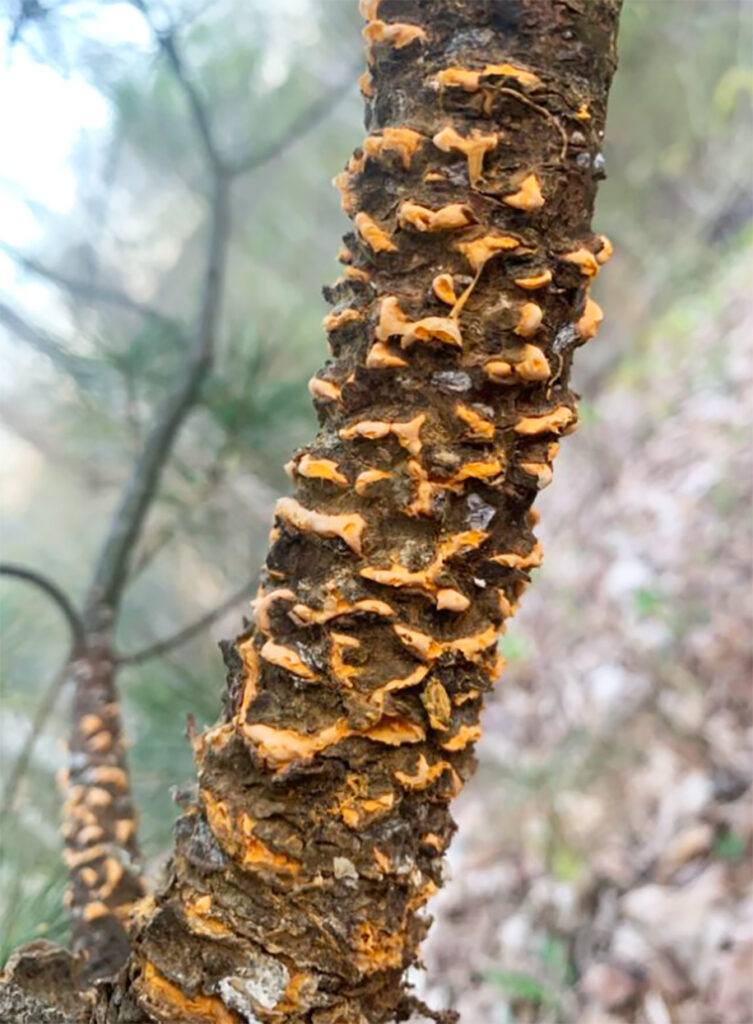
photo by Levi Smith via iNaturalist, licensed under CC-BY-NC
Infections on pines typically begin on the branches and progress towards the trunk over several years, so prune off infected pine branches as soon as you notice blister rusts and cankers. Rust-resistant varieties of native Ribes species (e.g., Red Currant, Ribes rubrum) are available commercially, but already-infected Ribes plants may require annual professional treatment with a fungicide or removal of the entire plant to protect nearby pines.
Still, don’t be discouraged from growing currants and gooseberries in your yard. I’ve had rust-free Eastern White Pines and a Red Currant growing side-by-side for the last decade next to my house. If you want to find the wild version, check out all the observations of Skunk Currant on iNaturalist Vermont, its phenology chart and add your observations, too.
Jason Hill is a member of the staff at the Vermont Center for Ecostudies.


