

HARDWICK – Beavers and their place in the environment, along with man-made ways of imitating their beneficial work, was the subject of the second Ripple Effects – Watershed Forum. at the Jeudevine Memorial Library, the evening of September 10
courtesy photo
The evening’s panel discussion, “Beavers and Natural Infrastructure,” was moderated by Alison Spasyk, a resilience educator with Lake Champlain Sea Grants. She introduced Hardwick Zoning Administrator Kristin Leahy, who had the idea for the gatherings and worked with Emily Finnegan, Caledonia County Natural Resources Conservation District General Manager, and others to develop the series of four forums involving what Spasyk called “hot topics around water and water resources.”

courtesy photo
Spasyk introduced Kyle Dwyer, a Northeastern Vermont Development Association Regional Planner, who said he was representing Senior Planner Alison Low, who had helped organize the forum; and Alexis Nevins, who said she is the new floodplain manager for the Northeast region of Vermont, working with the Department of Environmental Conservation.
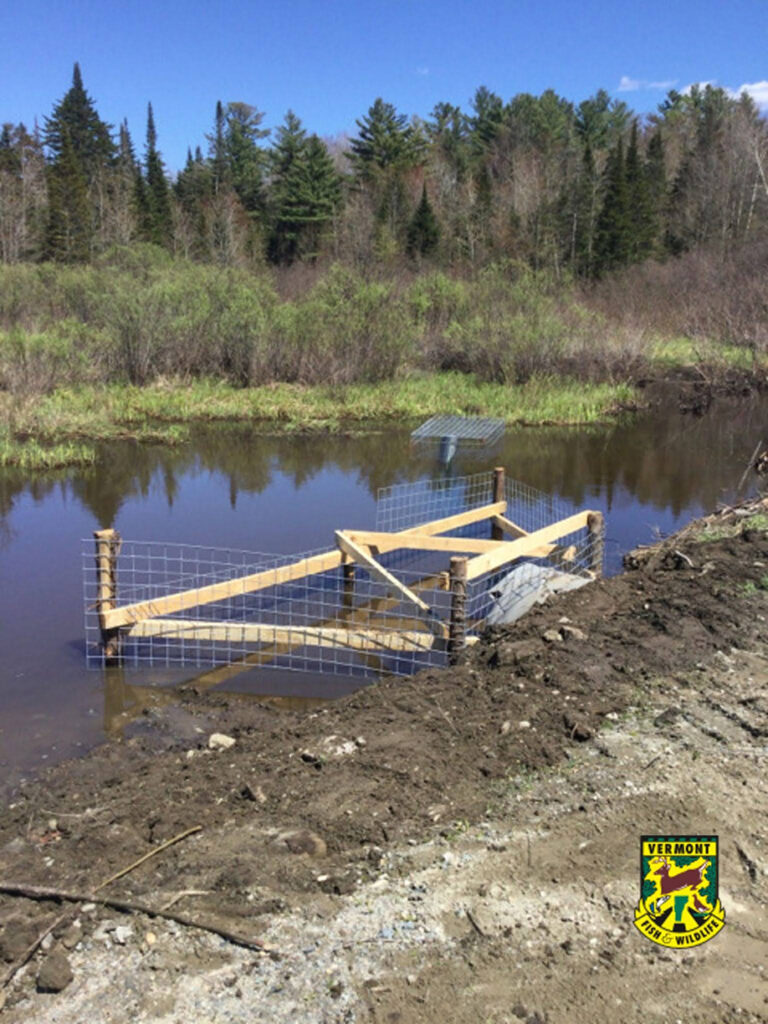
Each of the panelists introduced themselves, explaining their expertise: Meg Carter, Northwood Stewardship Center Conservation Science Director, specializes in the implementation of projects with positive water quality and wildlife habitat benefits. They’ve installed quite a few beaver dam analogs, worked with Trout Unlimited to do strategic woody additions and recently installed a beaver deceiver on Mount Pisgah, she said..
courtesy photo
Vermont Fish & Wildlife Department Wildlife Specialist Tyler Brown, said he’s been with the Department since 2012, where he worked in the fisheries division with trout and Sturgeon. He transitioned to the wildlife division in 2016 to work with the beaver wetlands conservation project. That project, established in 2000 assists landowners with resolving conflicts with beavers.
Erin Rogers, a Trout Unlimited Program Manager with the national organization, works as a restoration scientist, primarily in Vermont and Massachusetts. Her work involves trout that require cold, clean and connected water to survive. Healthier, more resilient rivers for fish, means healthier rivers for humans and for flood resilience, she said. Her work involves in-stream habitat restoration, replacing culverts, taking out dams, flood plain restoration and erosion control; essentially anything that involves trout habitat.

courtesy photo
During the wide-ranging presentation and subsequent discussion, Brown talked about the importance of beavers in creating wetlands to support biodiversity and plants for wildlife. Beaver dams slow the flow of water, catching sediment, and reconnect streams to their floodplains, she said.
Rodgers noted that beaver dams restore sinuosity to streams, which is important in upstream areas. Carter commented that inefficiencies are good, with intact woody areas being important. Duff on the forest floor absorbs water, releasing it later, providing flood attenuation. “Making spaces for beavers is good,” she said.
A lot of questions were about beavers and their interactions with humans. In answer to a question about beavers coexisting with humans vs. managing them, Brown said he gets about 400 calls a year about conflicts, but the real challenges come when beavers affect infrastructure.
Running water triggers beavers to build dams, but beavers were absent from Vermont when much of the state’s infrastructure was built. They were reintroduced in the 1920s and ’30s and a regulated trapping season was introduced in 1950, he said. He also noted that relocating beavers is not permitted in Vermont. They will return if they aren’t moved far enough and are likely to have difficulty with other beavers because they are territorial and very common in the state.
Brown said the number of beavers in Vermont is unknown. Management involves monitoring trends through reports by trappers. Complaints have increased since 2016, he said.
Strategies to reduce the impact of beavers on infrastructure can involve placing drains through beaver dams with inlets well away from the dam, which can reduce the water level without impacting the beavers. Beaver deceivers, porous barriers placed before culverts, make it hard for beavers and plug to dam the culverts.
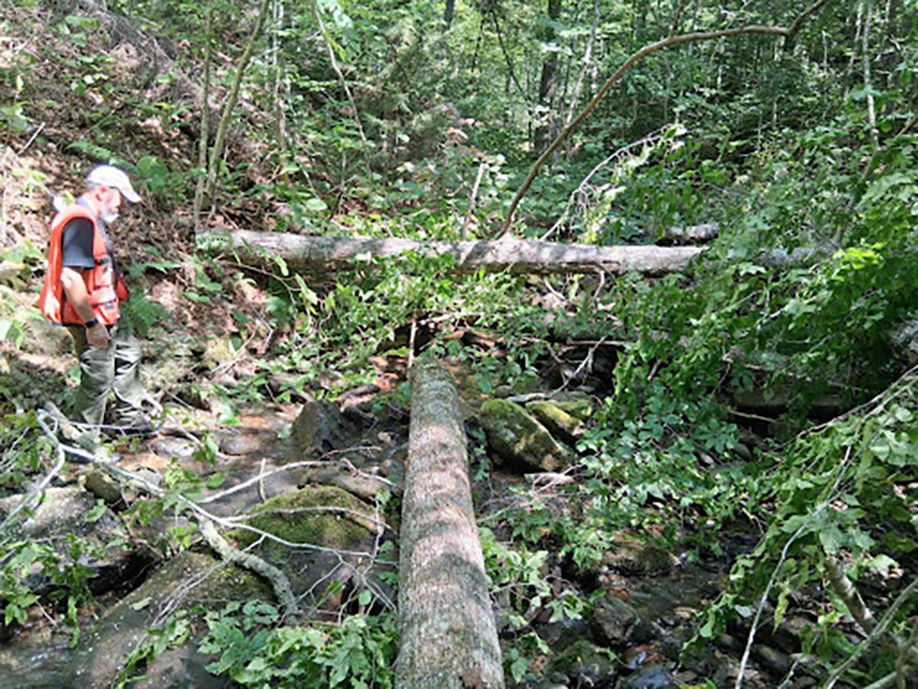
Using beaver dam analogs is a strategy to restore habitat, with Rodgers talking about the benefits of strategically placing wood in streams during restoration projects. Beaver dams are leaky enough that fish can pass through and several options can mimic that. One option is dropping trees across streams. Placing brush in them and driving a row of stakes into the stream bottom, then weaving brush between them, are others.
Beavers live about 10 years and eventually use up the available plants in an area, which they use both for food, by eating the cambium, and for their dams. They then move on to other habitat, leaving behind nutrient rich sediment, which creates a rich habitat for new plants to grow. That process may take anywhere from two to 10 years. Eventually the abandoned habitat will support beavers again, and the cycle continues.
The forum can be watched in its entirety on Hardwick Community TV (HCTV) at hctv.us/ripple-effects-watershed-forum-september-3-2025/
The September 3 forum, “Dredging Rivers,” can be seen on HCTV at hctv.us/ripple-effects-watershed-forum-september-3-2025.
The next forum in the series, “Dam Removal and Rivers,” happens at the library Wednesday, September 24, 6 to 7:30 p.m., followed by “Climatology and the Future of Vermont’s Watersheds,” at the same time and place, October 1.

Paul Fixx is editor of The Hardwick Gazette and lives in Hardwick.


