


courtesy photo
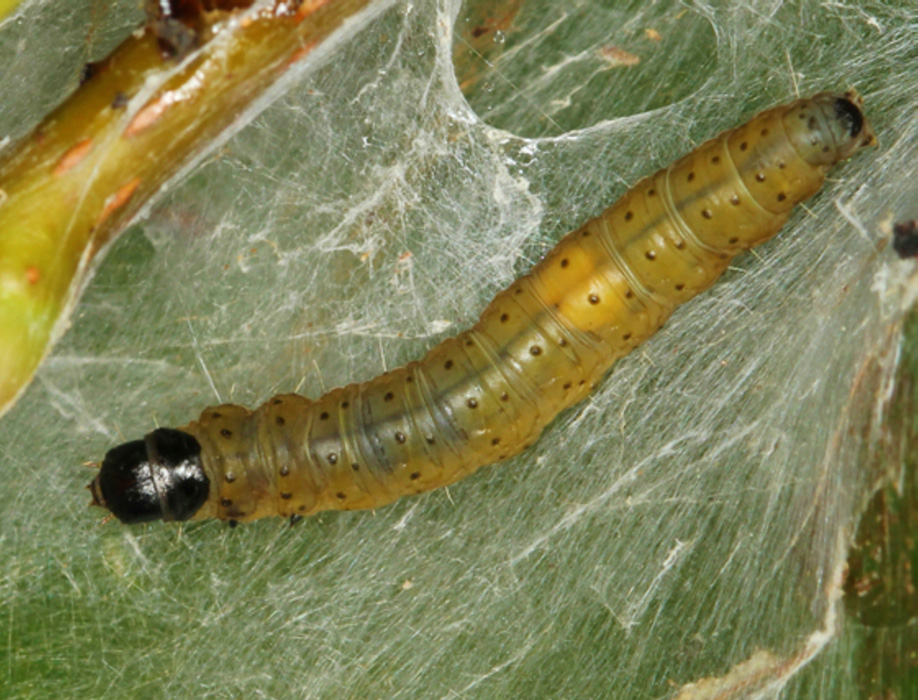
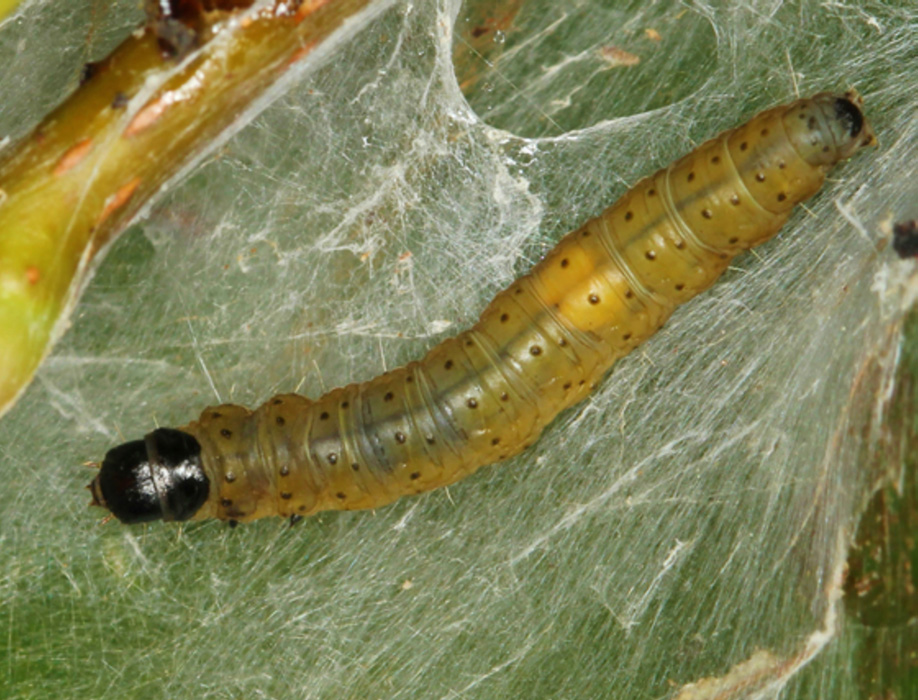
Uglynest caterpillars are yellow with a black head capsule and are fully grown at about three-fourths inch when they pupate in the nest.
by Ann Hazelrigg, Extension Plant Pathologist, University of Vermont
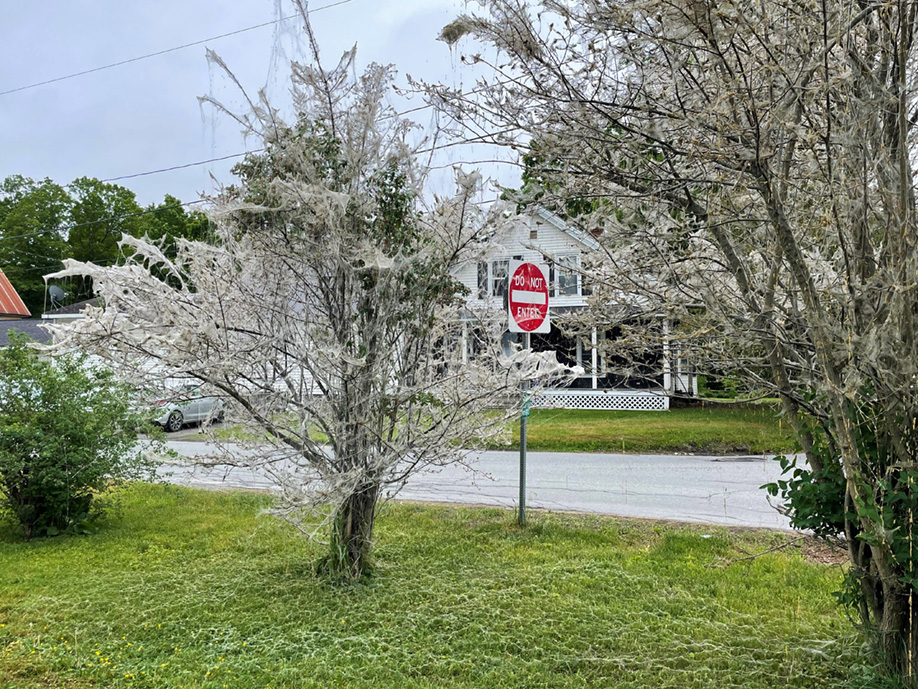
BURLINGTON – If you spot any trees or shrubs that appear to be covered in fake spider webs, those aren’t early Halloween decorations, but rather the work of the uglynest caterpillar (Archips cerasivorana), which can be found throughout Vermont.
This pest feeds on several types of hardwood trees and shrubs and is often found on chokecherries, pin cherry and black cherry. The caterpillar’s eggs hatch when the leaves flush although, thankfully, there is only one generation of the pest per year.
The larvae feed from May to September in unsightly webbed nests made up of bits of foliage, frass and silk, hence the name uglynest caterpillar. The yellow caterpillars have a black head capsule and are fully grown at about three-fourths inch when they pupate in the nest.
Adult moths emerge and are active from the end of June to September, when eggs are laid on the bark of host plants. Although ugly, these nests and pests cause minimal permanent damage.
The caterpillars are best controlled when small if you spot them early. If you are able, and there are only a few nests, removal of the nests and caterpillars by hand and then dropped into soapy water would reduce the damage.
Once they have approached three-fourth inch in size, they are tough to control as they are protected within the nests. At this point, they are likely to be getting ready to pupate and will not cause further damage.
If the tree has been decimated by the pest, anything you can do to remove further stress in the tree, such as thorough watering during drought conditions, will help it withstand the attack. There should be no long-term health issues for the tree, however, but you may want to watch for the pests next year when the leaves flush to try to manage any infestations.
[Dr. Ann Hazelrigg is the University of Vermont Extension plant pathologist and director of the UVM Plant Diagnostic Clinic.]
courtesy photo
Found throughout Vermont, uglynest caterpillars make their nests by spinning a dense web of foliage, frass and silk around branches and leaves of many species of hardwood trees and shrubs.


