



by Liz Dengate
MINNEAPOLIS, Minn. — Spittlebugs are the color of a new spring leaf, their bodies both tiny and so fat that you hardly notice their six miniature legs underneath. This plumpness makes them an appetizing snack for various insect predators – or would, anyway, if spittlebugs didn’t have an elaborate adaptation to keep them safe.
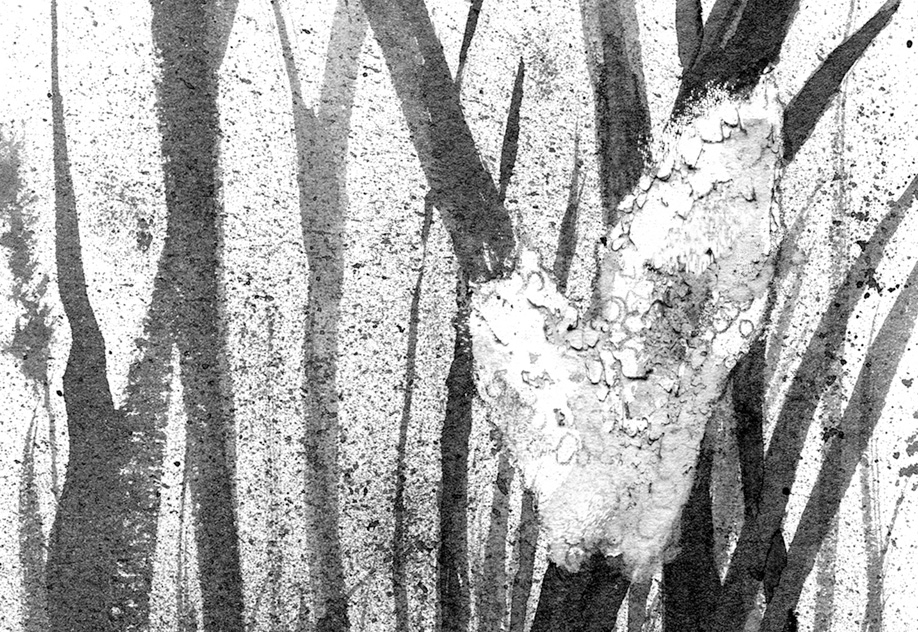
Spittlebugs live in a variety of habitats throughout North America. They are especially noticeable in open, sunny meadows and along the edges of forests – every few feet, sometimes every few inches: a blob of white froth clinging to a stem.
When I guided visitor hikes during my three summers as an interpretive park ranger on Isle Royale National Park in Michigan, I’d see these characteristic dollops of foam on the stems of thimbleberry bushes, tall asters, and all manner of other shrubs and wildflowers along the trails. I often stopped and swiped a finger through the foam, then held it up for visitors to see: a hapless creature clinging there in the remnants of its cover. I could have fit 10 of them on the pad of my index finger. “I thought someone was just spitting on the plants!” one of my program attendees said.
Spittlebugs are the nymphs of froghoppers, insects in the order Hemiptera and the superfamily Cercopoidea. These nymphs hatch from their eggs in the spring and progress through a series of molts through the summer, growing larger and sometimes changing color. Spittlebugs spend their days sucking the juices of plant stems. In order to do this without becoming food themselves, they urinate a whopping amount, blow bubbles into this foul-smelling substance to create the world’s grossest bubble bath, and bury themselves within it. No wonder no one eats them! If people urinated the same quantity proportionate to our body size, it would translate to about 2,700 gallons a day.
Like many other insects, spittlebugs can respirate through microscopic openings in their exoskeleton called spiracles. These pores on their abdomens allow spittlebugs to breathe even through their protective foam. Researchers have found that spittlebugs use their abdomens like snorkels to break the surface of the foam. The insects can also retreat deeper into the foam and pause breathing when frightened. In especially dire situations – perhaps a spider looming nearby – spittlebugs can pop several of the tiny bubbles in their froth and breathe the oxygen trapped within until the threat passes.
On my ranger walks, after revealing the tiny bug to my impressed and vaguely disgusted audience, I’d gently deposit it back on a stem in what was left of its froth, and wipe my hands on my green ranger pants. As we walked on, the nymph would remain, emerging as an adult froghopper in late summer to mate. If it was female, it would lay its eggs on a nearby stem. Either way, it would perish before winter hit, the tiny eggs its legacy.
Although they are ubiquitous, spittlebugs don’t play an outsize role in any ecosystem. They suck diluted sap from plants’ xylem, but not enough to really damage a plant. They are no animal’s primary food source. As adults, their most notable trait is what gives them their “froghopper” name – they can hop farther, relative to body size, than even fleas, leaping as high as 70 cm: wild, when you consider they’re less than a centimeter tall. Froghoppers’ legs contain structures shaped like archery bows, and they are constantly ready to launch. Whether as young or adults, these critters are not often caught by predators.
There is something to be said about a curiosity hidden in plain sight. On my walks through what seemed like ordinary scenery, a swath of green shrubbery, I was able to reveal something surprising. When someone has a moment of discovery or surprise in the wild, it often provokes delight and then a desire to continue exploring. I couldn’t guarantee a sighting of a moose or even a loon on my ranger walks, but I could always guarantee a spittlebug encounter.
I encourage readers to pass on that moment of discovery on their own nature walks with friends: dive in, swipe a finger into the mess of nature, and discover what tiny treasures lie within.
[Liz Dengate is an environmental science teacher at a public high school in Minnesota. She loves to travel throughout the U.S. with her husband and toddler, who is learning to camp. Illustration by Adelaide Murphy Tyrol.]


