
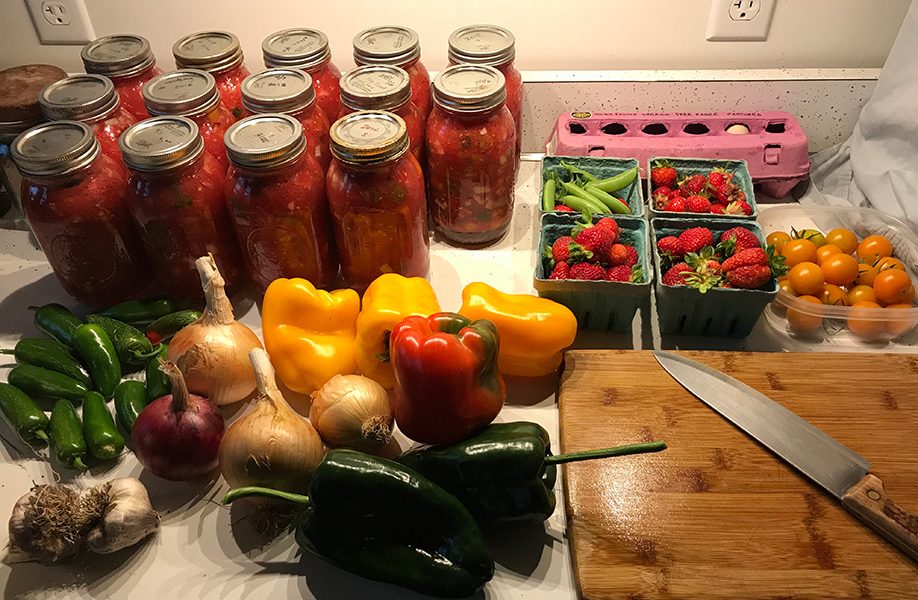



CABOT — It’s the heart of summer in Vermont, and vegetable gardens and orchards are overflowing. It’s wonderful (and healthful) to have a table full of local foods from your garden and neighboring farms. And all this great food doesn’t have to be a fleeting pleasure. With a little planning and work, enjoy local food for months, or even year-round. Intimidated by canning? No worries! There are lots of other ways to preserve food: freezing, dehydration, fermenting, and root cellaring, and room temperature storage. Regardless of the method, always use the best, freshest produce; don’t bother saving fruits and veggies that are past their prime.
Freezing foods is fast and simple. Freeze food on a baking sheet before bagging and the frozen food stays separated for easy use. Berries can be frozen as they are; other fruits may need pitting or peeling. Vegetables need to be blanched (a quick dunk in boiling water followed by ice water) before freezing, to destroy enzymes that cause them to get tough and stringy. Cooked foods freeze great: think pureed squash, jam, pie filling or extra corn cut from the cob after boiling a vat full for company. To avoid freezer burn, store frozen foods in airtight wrapping with all the air removed. Vacuum baggers are great, but use a drinking straw to suck the air out of a good quality plastic bag.
Dehydrating is great for herbs. To preserve the flavor in herbs, store them as whole or lightly crumbled leaves in jars or airtight bags, and crumble them finer when you added them to cooking. Fruits and veggies need to be sliced thinly and evenly before drying, or make your own fruit leather, excellent for lunchboxes or hiking, and less expensive than store-bought.
Many vegetables can be fermented for storage, with the side benefit of adding probiotics to a diet. Cut or shred vegetables, pack into jars, add salt brine and herbs and spices, allow to sit at room temperature for three to four days, and another four to six weeks in a cool dark place for flavors to develop. Sauerkraut, kimchi, cucumber pickles, ginger carrots and salsa are all great fermented foods.
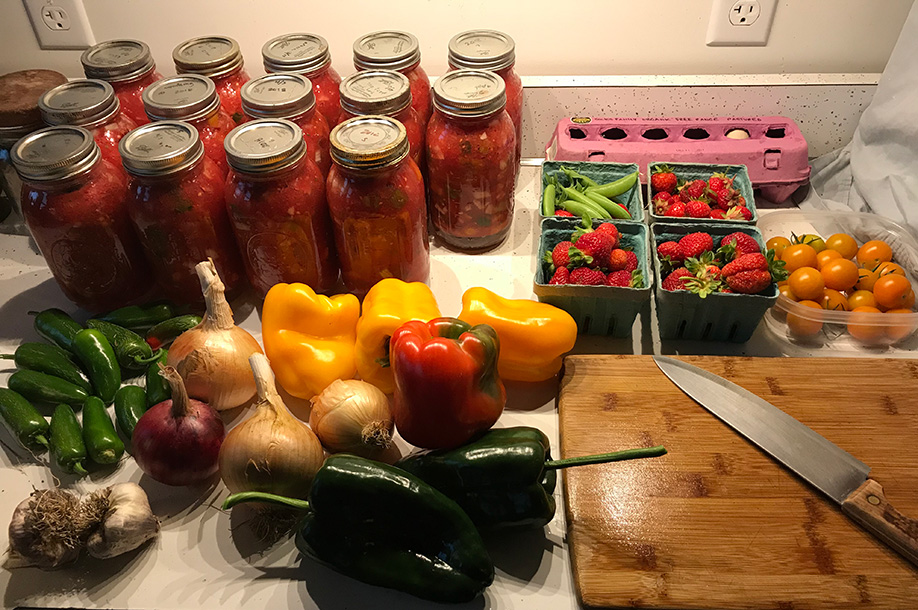
When preserving produce, use the best, freshest and those in their prime.
Lots of root crops (potatoes, carrots, turnips, rutabaga) will keep all winter in a root cellar space. A separate cellar isn’t needed, just a space that stays a bit above freezing, a bit damp, dark and with a little air flow. We keep unwashed potatoes and carrots in feed bags through March, in a boxed-in section of uninsulated basement wall. Some apple varieties also store well in a root cellar, but because they give off gas that causes ripening and spoilage, don’t store other produce with apples.
Winter squash, onions, and shallots keep well at 50-55 F, about the temperature of most unheated basements. Softneck garlic (the type you see braided) does just fine hanging in the kitchen all winter.
I hope you’ll be inspired to try one of these methods to save some of this summer’s goodies for later use. In midwinter, when opening a jar of herbs, or tasting frozen raspberries with a splash of maple, you’ll be glad you took the time to put a little something by.
If you feel you need a little guidance on food preservation, check out the following books, or feel free to reach out to me, the Garden Goddess; it’s one of my consulting services: “Putting Food By,” by Green, Hertzberg, and Vaughan; “The Art Of Fermentation,” by Sandor Katz; “The Beginner’s Guide To Dehydrating Food,” by Theresa Marrone; “Root Cellaring: Natural Cold Storage Of Fruits and Vegetables,” by Mike and Nancy Bubel.


