
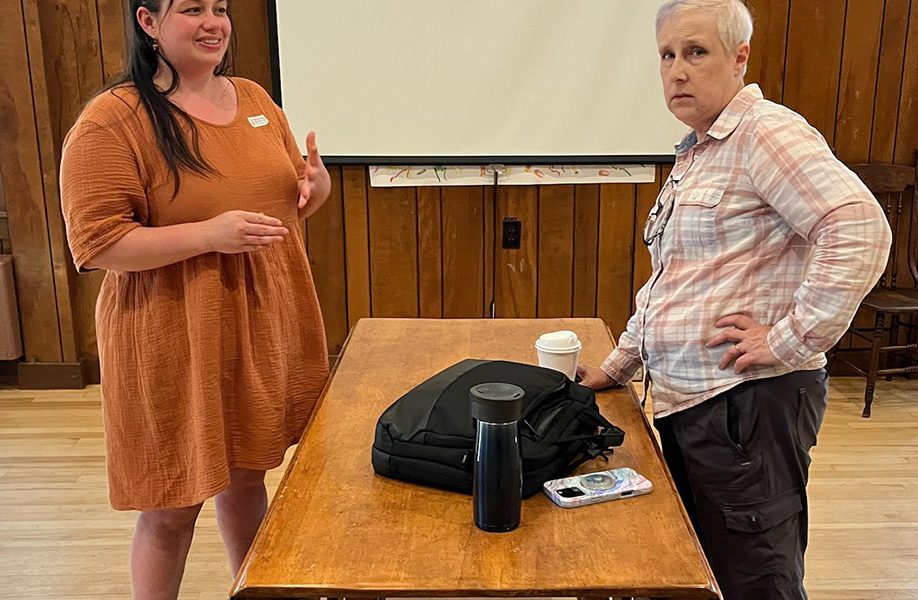
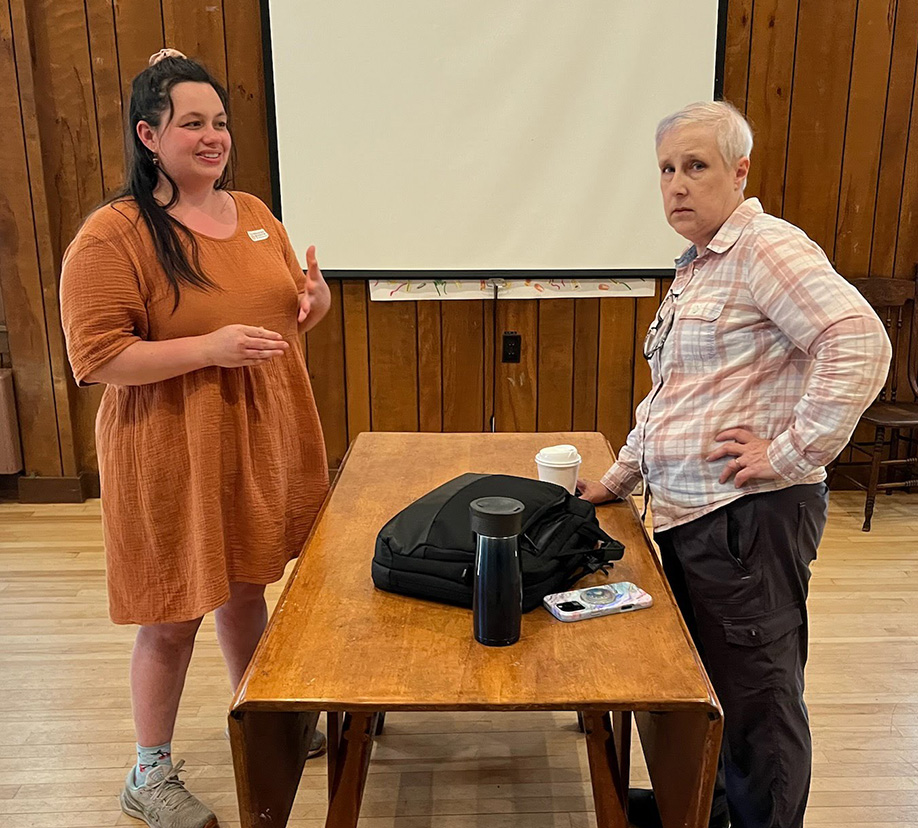
GREENSBORO – Deb Helfrich led a program titled “Woof! What’s the dog saying?” in Fellowship Hall Friday for about fifteen people in which she demystified aspects of dog communication and being safe near them.
She walked those who attended the Greensboro Free Library program through observing ways a dog can respond to events in its environment and understanding how it may be feeling based on its body language. She helped identify common dog-human misunderstandings too, saying “Dogs are individuals.”
While many people worry about safety around dogs they are unfamiliar with, she said 77 percent of dog bites come from a family pet, making it important to understand what they are communicating.
Training approaches have changed as a greater understanding of how dogs communicate has developed in recent decades, Helfrich said. She shared many benefits of understanding what the body language of a dog may mean that include helping people bond with new puppies, identify and prevent behavioral issues, prevent bites and injuries and inform approaches to training.
Dogs and humans communicate in very different ways, she said. Understanding the ways dogs communicate leads to a better understanding of how they interpret the world, view people, learn to cope and fit in. A head raised or lowered; ears up, down, turned forward or back; a mouth open or closed, with a tongue in or out; a head turned toward or away from a visitor or disturbance; a raised paw forward, or back and many other things, all contribute to understanding a dog’s response.
Noticing when a dog’s body language shows it is relaxed, happy, warm and fuzzy or not so, is sometimes easy to tell from its body language, but can be subtle, she said. A dog’s eyes are among the first cues to its response. They can be relaxed and set apart, or narrowed with a furrowed brow, indicating worry, helping to identify its state. Ears perked up and turned forward can indicate alertness, while drooping or turned back, a more relaxed state.
After talking about how to deconstruct a dog’s body language, Helfrich gave audience members a chance to test their skills by showing photos of dogs interacting with other dogs, people, cats and noises; asking what each response might mean. Most interesting for those attending the program seemed to be photos of dogs in which elements had been masked out. Her reveal of the masked sections, showing other dogs, humans and cats, to which the original dog was responding, made each response more clear.
Helfrich’s primary goal was to help dogs and humans live safely and happily together, she said. At the end of the program she answered audience questions and provided web addresses for free access to supplementary learning materials.

Raymonda Parchment is a Hardwick Gazette reporter. She recently graduated from Vermont State University - Castleton with a Bachelor’s Degree in English. She is a strong supporter of freedom of speech, and the right to publish information, opinions, and ideas without censorship or restraint. She is a lifelong lover of the written word, and is excited to join the team as a staff member.


