


WHITE RIVER JUNCTION – Step outside on a brisk December day, and you’re likely to be surrounded by bees. No, you’re not likely to observe a bee visiting your snowman or investigating your yellow parka while you shovel the walk; yet they are all around us, probably much closer than you would imagine.
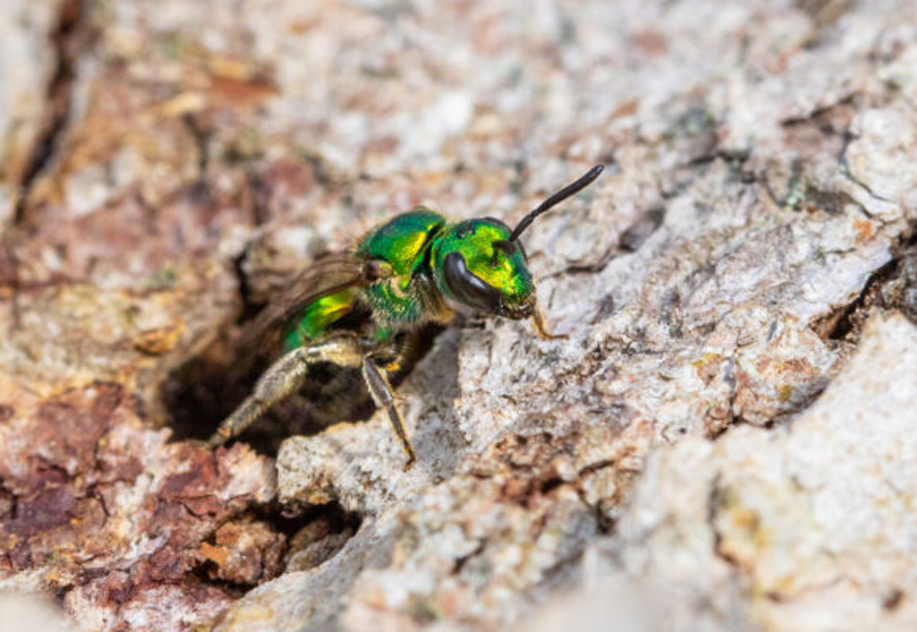
photo by Spencer Hardy
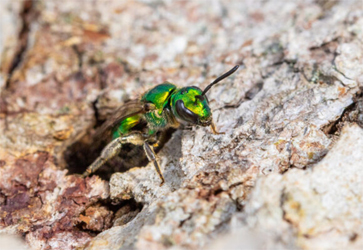
A rotten stump next to the mailbox? Yup: Pure Green Sweat Bee (Augochlora pura), Cresson’s Metallic-Sweat Bee (Lasioglossum cressonii), and maybe Black-and-green Metallic-Sweat Bee (Lasioglossum nigroviride). The patch of dirt at the edge of the driveway that never seems to grow grass? Yup: Probably Unequal Cellophane Bee (Colletes inaequalis) and likely many more. The raspberry patch in the garden that has gotten a little out of hand? For sure: Spurred Small Carpenter (Ceratina calcarata). The wooded slope down to the river? Right again! That’s where the queens are. (Bombus spp.)
Native bees in New England have evolved a number of different ways to survive a long, cold winter.
Bumble bees (genus Bombus) are our most familiar native bees, and one of a handful of social species with distinct castes (queens, workers, drones). In autumn, all of our bumble bees except the future queens die off. These future queens store the sperm acquired from their late‐summer matings and seek out a sheltered spot like a rodent burrow, thick leaf litter, or a mossy bank to spend the winter.
Of the few studies that have monitored bumble bee overwinter survival in the wild, one from New England found that perhaps 60% of these future queens survive cold winters. As temperatures warm in spring and day length increases, the soon-to-be queen wakes to initiate a new colony, relying on the early pollen and nectar provided by blooming maples and willows.
Halictidae, the sweat bee family, is a large group (97 species in Vermont) of small and often colorful bees. Mos share a similar overwintering strategy with the bumble bees in that only the females survive the winter, having mated and stored all the necessary genetic material needed for the following season. Male bumble bees and male sweat bees simply don’t exist for six or more months of the year.
When the overwintered female is ready to start the next generation, she will lay some unfertilized eggs, which will develop into males with a single set of chromosomes, and some fertilized eggs, which will develop into females with two sets of chromosomes.
Clearly this overwintering period is critical for the long-term survival of a species and we can help make it a little easier for them with small modifications to our landscapes.
Promoting overwinter wild bee survival often means doing less around a property in autumn, not more. Leave some yard or garden a little wild through fall and winter: skip the raking and trimming in a few spots, and let stems, stumps, and leaf litter stay put until late spring. That messiness provides crucial insulation for overwintering queens and solitary females tucked into soil, hollow stems, and rotting wood. Avoid tilling bare patches of ground or gardens where ground-nesting bees spend the cold months, and resist the urge to clean up flower beds too early. Even potted plants or brush piles can shelter dormant bees. Also avoid pesticide use, especially in late summer when bees are building fat reserves for winter.
If you’re worried about what the neighbors might think of your untidy yard (oh, my), then treat your property like a mullet for bees: business up front and a party for bees in the back. A little patience and untidiness now will reward spring flowers with the quiet activity of native bees when the snow melts.
Spencer Hardy and Jason Hill are staff members at the Vermont Center for Ecostudies.

Spencer Hardy


