


BURLINGTON – Winter has officially arrived, bringing unique challenges in caring for houseplants.
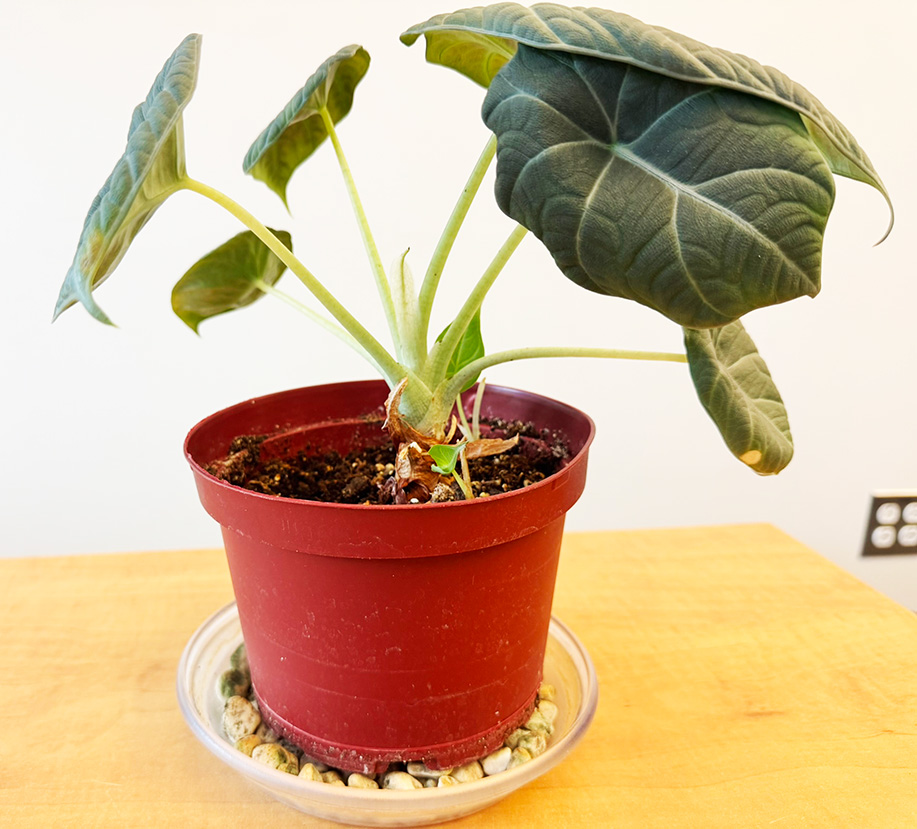
photo by Debra Heleba.
At this time of year, we experience less intense and fewer hours of sunlight. For most indoor plants, the lack of daylight signals a special kind of dormancy called quiescence. During this period, plants conserve their energy and enter a resting period. For most houseplants, quiescence means that their growth slows considerably. Some plants, like alocasias and caladiums, may even lose their leaves during this period. This is completely normal, and they should rebound in the spring.
Some varieties of cacti and succulents may experience a deeper dormancy to protect themselves from the stress of shorter daylight hours.
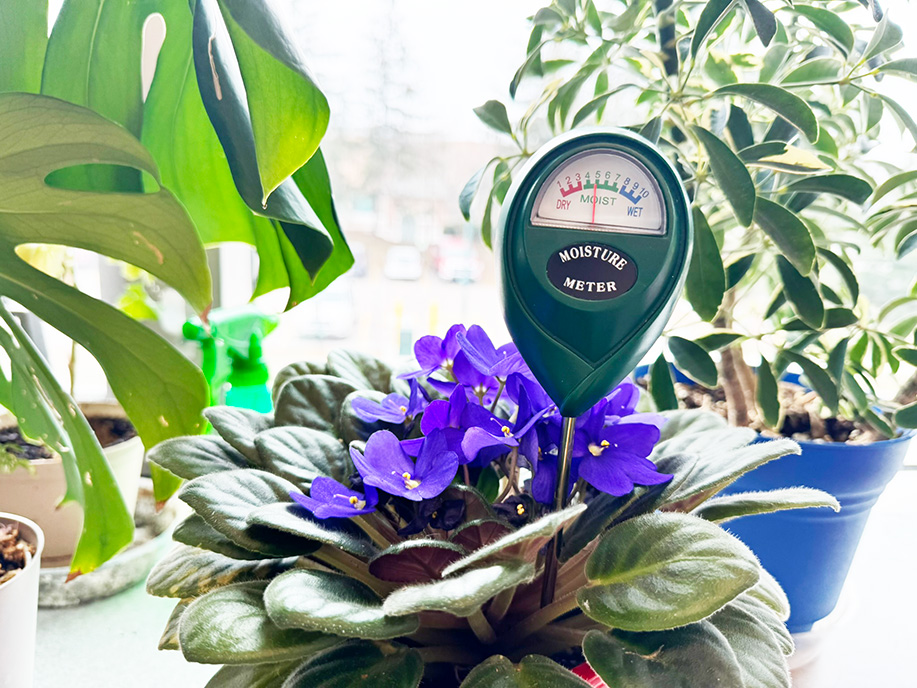
photo by Debra Heleba.
For all houseplants, winter care starts with reducing water. UVM Extension Master Gardener volunteer Judy Mirro, affectionately known as the Houseplant Hero, says we tend to over-love our plants by giving them too much water. This is especially true in the winter. We need to hold off watering our houseplants until the potting media is truly dry. A moisture meter is a helpful tool to gauge when to water plants. It measures the moisture of the soil media so you can tell when it is dry, and plants need to be watered. An inexpensive alternative is a chopstick. Insert it into the potting media. If soil sticks to the chopstick, the soil is moist, and the plant doesn’t need to be watered. If no soil sticks, it is time to water.
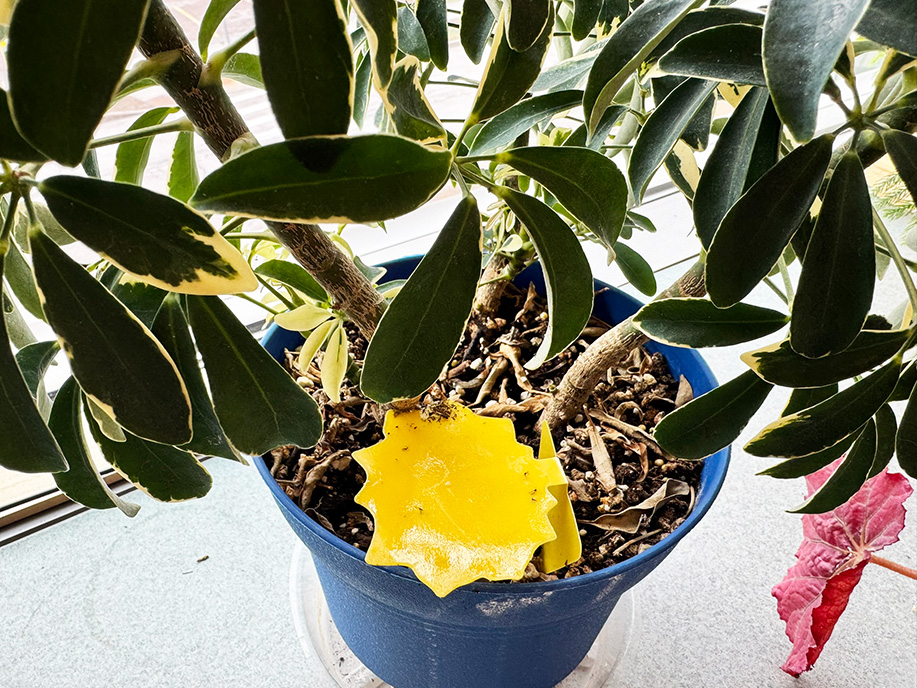
photo by Debra Heleba.
While plants need less water during the winter, many need increased humidity. The colder temperatures and indoor heating we experience during Vermont winters mean that humidity levels drop. Tropical plants will especially benefit from boosting humidity from a humidifier or grouping plants together. Alternatively, use pebble trays filled with water under the plants and avoid placing plants near heat sources, such as the woodstove and vents.
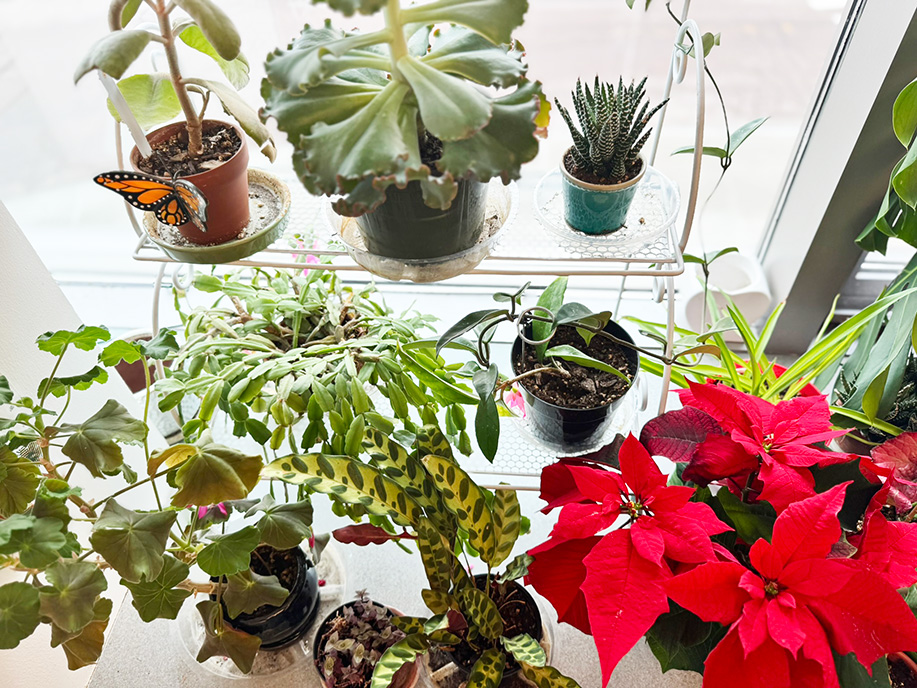
photo by Debra Heleba.
You will also want to place plants away from drafty spots. Houseplants thrive best in consistent temperatures, so avoid placing them too close to windows.
Because houseplants are in a resting state, winter is also a time to refrain from fertilizing and transplanting unless absolutely necessary. It’s best to wait to renovate plants until spring. However, one important winter care practice is cleaning leaves. Use a damp cloth to wipe any dust from houseplant leaves to maximize sunlight absorption during winter’s low light conditions. You can also give them a gentle, lukewarm shower, ensuring that all water drains from their pots.
Cleaning leaves is also a great time to scout for pests on houseplants. Spider mites are a common foe in the winter as they thrive in low-humidity conditions. Fungus gnats are also common winter houseplant pests and become problematic with overwatering. Keep an eye out for symptoms like the webbing of spider mites, sticky honeydew left by aphids, white cottony mealybugs, and bumps along stems that may be scale. You can also use yellow sticky traps to monitor for fungus gnats.
If you note any of these or other symptoms of decline with your houseplants, feel free to contact the UVM Extension Master Gardener (EMG) Helpline at: https://go.uvm.edu/gardenhelpline, where you can upload a photo or two of the issue. Houseplant Hero Judy or another EMG volunteer will help you navigate your houseplant woes.
With a little extra attention to light, placement, and humidity, but not too much love in the form of water, your houseplants will survive the winter and be ready to thrive when spring returns.
Debra Heleba is the statewide outreach and education program manager for UVM Extension Community Horticulture program and leads the Extension Master Gardener and Vermont Master Composter programs.


